
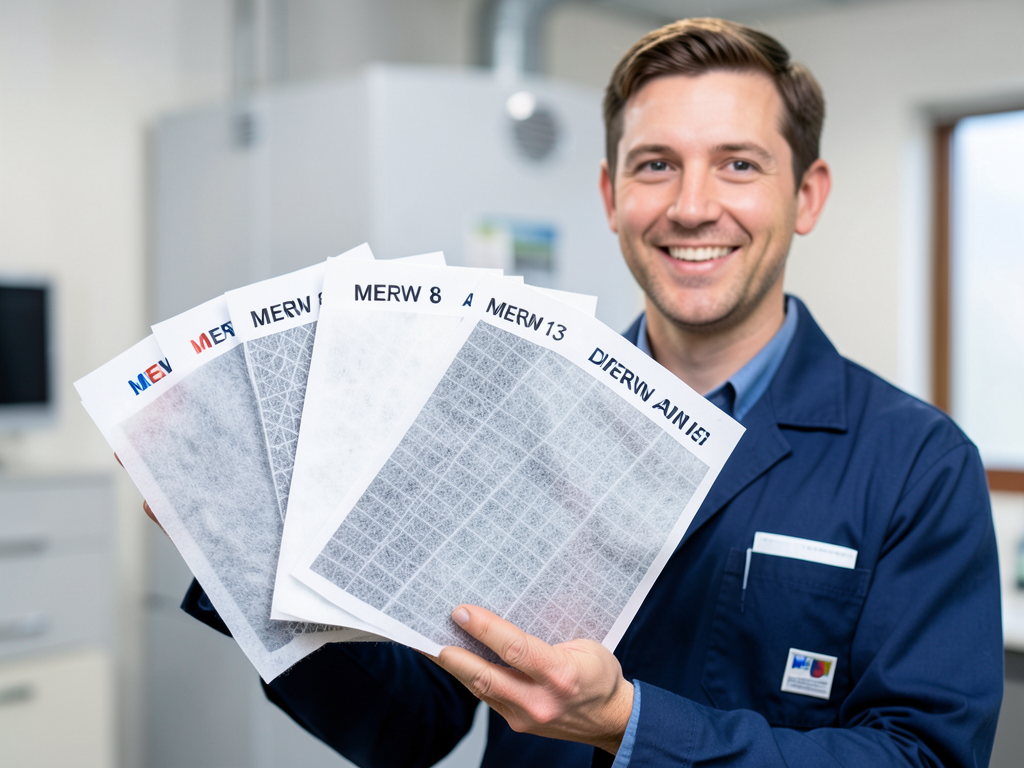
Choosing the Right MERV Rating for Your Brentwood Home
Finding the right air filter for your Brentwood home starts with understanding MERV ratings. These numbers tell you how well a filter captures airborne particles, but choosing the wrong rating can actually harm your HVAC system. Many Brentwood families struggle with this decision, especially when dealing with seasonal allergies or pet dander. The right filter balances air quality with system efficiency, keeping your family healthy without overworking your furnace or AC. Emergency Furnace Services for Families Living in Baldwin and Whitehall.
Before you buy another filter, you need to know how MERV ratings work and what makes sense for Pittsburgh’s unique climate. Higher isn’t always better, and the wrong choice can lead to restricted airflow, higher energy bills, or even system damage. Let’s break down what MERV ratings really mean and how to pick the perfect filter for your Brentwood family’s needs. Winterizing Your HVAC System.
What is a MERV Rating? (The ASHRAE Standard)
MERV stands for Minimum Efficiency Reporting Value, a standard created by the American Society of Heating, Refrigerating and Air-Conditioning Engineers (ASHRAE) in 1987. This rating system measures how effectively a filter captures particles between 0.3 and 10 microns in size. The scale runs from 1 to 20, though most residential systems use filters rated 1 through 16.
The MERV test measures arrestance (ability to capture larger particles) and dust spot efficiency (ability to capture smaller particles that cause stains). A higher MERV rating means the filter catches more and smaller particles, but it also means greater resistance to airflow. This resistance, called pressure drop, is measured in inches of water gauge (in. w.g.).. Read more about Fix Common Airflow Problems in Your Bellevue Victorian Without Adding More Vents.
For Brentwood homes, understanding this balance is crucial. Pittsburgh’s humid continental climate means your HVAC system works hard year-round, and adding too much resistance can strain the blower motor. The EPA recommends considering both filtration needs and system compatibility when selecting a MERV rating. Understanding Ductless Systems.
MERV Rating Chart: From 1 to 20
| MERV Rating | Particle Size Captured | Common Uses | Airflow Impact |
|---|---|---|---|
| 1-4 | 10+ microns | Window AC units, basic residential | Minimal resistance |
| 5-8 | 3-10 microns | Standard residential, commercial | Low resistance |
| 9-12 | 1-3 microns | Superior residential, better commercial | Moderate resistance |
| 13-16 | 0.3-1 microns | High-end residential, hospitals, smoking lounges | High resistance |
| 17-20 | 0.3 microns or less | Cleanrooms, pharmaceutical labs | Very high resistance |
For most Brentwood families, filters in the MERV 8 to MERV 13 range provide the best balance. MERV 1-4 filters only catch large particles like dust and pollen, while MERV 17-20 filters are too restrictive for residential HVAC systems without significant modifications.
The Trade-off: Air Quality vs. System Strain
Every MERV rating increase means better filtration but also higher resistance to airflow. This creates a critical trade-off that Brentwood homeowners must understand. When air can’t flow freely through a high-MERV filter, your system works harder to maintain the same airflow, leading to several problems. The Homeowners Guide to Replacing an Aging Boiler in Bloomfield.
First, increased static pressure forces your blower motor to consume more electricity, raising your energy bills. Second, the motor may overheat from working too hard, potentially burning out and requiring expensive replacement. Third, restricted airflow can cause your heat exchanger to overheat in winter or your evaporator coil to freeze in summer.
The pressure drop across a filter increases exponentially with MERV rating. A MERV 8 filter might add 0.05 inches of water gauge pressure drop, while a MERV 13 filter could add 0.25 inches or more. Most residential systems are designed for a total pressure drop of 0.5 inches or less across the entire system. Adding a high-MERV filter can consume half or more of that available pressure budget.
Before upgrading your filter, have a qualified HVAC technician measure your system’s static pressure with the current filter installed. This baseline measurement helps determine how much additional resistance your system can handle.
Why Pittsburgh’s Air Quality Affects Your Filter Choice
Pittsburgh’s unique air quality challenges make filter selection more complex for Brentwood families. The Ohio Valley experiences some of the highest pollen counts in the eastern United States, particularly during spring and fall. Local ragweed and tree pollen can trigger severe allergies, making higher MERV ratings appealing for many families.
Additionally, Pittsburgh’s industrial heritage means some neighborhoods still deal with particulate matter from legacy industrial sites and traffic emissions. While air quality has improved dramatically since the steel industry’s decline, fine particulate matter (PM2.5) remains a concern, especially during temperature inversions in winter.
Wildfire smoke from western states has become an increasing concern in recent years, affecting air quality across the Midwest and Northeast. These events can dramatically increase the need for better filtration, but they’re temporary. Using a MERV 13 filter year-round when your system isn’t designed for it can cause more problems than it solves.
Humidity also plays a role in filter selection. Pittsburgh’s humid summers can promote mold growth, and higher MERV filters can help capture mold spores before they circulate through your home. However, very high humidity can also cause filters to become damp and less effective, potentially creating a breeding ground for bacteria.
MERV 8 vs. MERV 11 vs. MERV 13: Which is Best?
Let’s compare the three most common MERV ratings for Brentwood homes and help you choose the right one for your family’s needs.
MERV 8: The Standard Choice
MERV 8 filters capture particles like dust, pollen, mold spores, and pet dander. They’re the most common choice for residential HVAC systems because they provide good filtration without significantly restricting airflow. These filters work well for families without severe allergies or respiratory issues.
The cost advantage is significant. MERV 8 filters typically cost $5-10 each and need replacement every 60-90 days. They put minimal strain on your system, making them ideal for older furnaces or air conditioners that might not handle higher resistance well.
MERV 11: The Balanced Upgrade
MERV 11 filters capture smaller particles including fine dust, smoke, and some bacteria. They’re a good choice for families with mild allergies or those who want better air quality without major system modifications. These filters typically cost $10-20 each and need replacement every 45-60 days.
The increased filtration comes with a modest increase in pressure drop. Most modern HVAC systems can handle MERV 11 filters without issues, but older systems (15+ years) might struggle. Check your system’s specifications or consult a technician before upgrading.
MERV 13: Maximum Filtration
MERV 13 filters capture particles as small as 0.3 microns, including bacteria, tobacco smoke, and some viruses. They’re ideal for families with severe allergies, asthma, or respiratory conditions. However, they come with significant trade-offs.
These filters typically cost $20-40 each and need replacement every 30-45 days. The high pressure drop means your system works much harder, potentially increasing energy costs by 10-20%. Some systems simply can’t handle MERV 13 filters without modifications like larger filter housings or variable-speed blowers.
For Brentwood families dealing with severe allergies or respiratory issues, MERV 13 might be worth the trade-off. But for most homes, MERV 11 provides the best balance of air quality and system efficiency.
How Often Should You Change High-MERV Filters in Western PA?
Filter replacement frequency depends on several factors unique to Western Pennsylvania’s climate. The humid summers, pollen-heavy springs and falls, and occasional wildfire smoke all affect how quickly filters become clogged.
Standard MERV 8 filters typically last 60-90 days in most homes. However, during peak pollen seasons (April-May and September-October), you might need to replace them every 30-45 days. Homes with pets or multiple occupants may also need more frequent changes.
MERV 11 filters generally last 45-60 days under normal conditions but may need replacement every 30 days during high pollen counts or after significant dust events. The higher density of these filters means they trap more particles, filling up faster than MERV 8 filters.
MERV 13 filters require the most frequent replacement, typically every 30-45 days. Their dense filtration media captures particles quickly, and once clogged, they can severely restrict airflow. Never run a MERV 13 filter longer than 60 days, as the pressure drop can damage your system.
A simple test: hold your filter up to a bright light. If you can’t see light through at least 50% of the surface area, it’s time for replacement. Also watch for signs of restricted airflow like weak air coming from vents or your system running longer cycles than usual.
Signs Your Filter is Restricted
Knowing when your filter needs changing can prevent system damage and maintain air quality. Watch for these warning signs:
- Weak airflow from vents throughout your home
- System running constantly without reaching set temperature
- Unusual noises from the blower motor (straining or grinding sounds)
- Higher than normal energy bills
- Visible dust accumulation on vents and registers
- System short-cycling (turning on and off frequently)
If you notice these symptoms, check your filter immediately. A clogged filter can cause your heat exchanger to overheat, potentially cracking and releasing carbon monoxide. It can also cause your evaporator coil to freeze, leading to water damage and system shutdown.
Special Considerations for Brentwood’s Historic Homes
Many Brentwood homes were built between 1940 and 1970, featuring older HVAC systems that weren’t designed for high-MERV filtration. These systems often have single-speed blowers that operate at a fixed speed, making them particularly sensitive to pressure drops.
Before upgrading to a MERV 11 or 13 filter in an older home, check your furnace’s specifications. Look for the maximum static pressure rating, usually listed as ESP (external static pressure) in inches of water gauge. If your system is rated for 0.3 inches or less, a MERV 13 filter might be too restrictive.
Some older systems can be modified to handle higher-MERV filters. Options include installing a larger filter cabinet to increase surface area, upgrading to a variable-speed blower motor, or adding a separate air cleaner unit designed for high-efficiency filtration without restricting system airflow.
Another consideration for older homes is duct leakage. Many pre-1980 homes have duct systems with significant air leaks, which can actually help compensate for filter restriction by allowing air to bypass the filter. However, this also means your system is losing conditioned air, reducing efficiency.
Cost-Benefit Analysis for Brentwood Families
Let’s break down the real costs and benefits of different MERV ratings for typical Brentwood households.
A MERV 8 filter costs about $7 and lasts 90 days, totaling $28 per year. The minimal pressure drop means your system operates at peak efficiency, with no additional energy costs. Air quality is good but not excellent for allergy sufferers.
A MERV 11 filter costs about $15 and lasts 60 days, totaling $91 per year. The moderate pressure drop might increase your energy bill by $20-30 annually. Air quality improves significantly, especially for dust and pollen.
A MERV 13 filter costs about $30 and lasts 45 days, totaling $243 per year. The high pressure drop can increase energy costs by $50-100 annually. Air quality is excellent for allergens and fine particles, but the system works much harder.
For most Brentwood families, MERV 11 provides the best value. The improved air quality justifies the modest additional cost, and most modern HVAC systems can handle the slight increase in pressure drop without issues.
Professional Assessment: When to Call an Expert
While this guide helps you understand MERV ratings, every HVAC system is unique. Before making significant changes to your filtration, consider a professional assessment. A qualified technician can measure your system’s static pressure, check for duct leaks, and verify that your system can handle higher-MERV filters.
Look for these signs that you need professional help:
- Your system is over 15 years old
- You’ve experienced repeated blower motor failures
- Your home has uneven temperatures or weak airflow
- You’re considering MERV 13 filtration for health reasons
- You want to improve air quality but aren’t sure where to start
A professional assessment typically costs $100-200 but can save you thousands by preventing system damage or identifying efficiency improvements. The technician can also recommend specific filter brands that work well with your system model.
Frequently Asked Questions
Can I use a HEPA filter in my home furnace?
Standard HEPA filters (MERV 17-20) are too restrictive for most residential HVAC systems. They require specialized housings and often need dedicated fans. However, some systems can accommodate HEPA-grade filters (MERV 16) with modifications. Always consult a professional before attempting this upgrade.
How do I know if my system can handle a higher MERV filter?
Check your furnace manual for the maximum static pressure rating, usually listed as ESP in inches of water gauge. If it’s 0.5 inches or higher, you can likely use MERV 11 filters. For MERV 13, you need at least 0.7 inches of available static pressure. When in doubt, have a technician measure your system’s current pressure.
Does a higher MERV rating mean better energy efficiency?
No, higher MERV ratings typically reduce energy efficiency because they restrict airflow, forcing your system to work harder. The trade-off is better air quality. Some high-end systems with variable-speed blowers can maintain efficiency with higher MERV filters, but standard systems will see increased energy consumption.
Should I change my filter more often during Pittsburgh’s allergy seasons?
Yes, during peak pollen seasons (April-May and September-October), replace your filter every 30 days instead of the standard 60-90 days. This is especially important if you use MERV 11 or 13 filters, as they’ll capture more pollen and fill up faster during these high-count periods.
Can a dirty filter really damage my HVAC system?
Absolutely. A clogged filter restricts airflow, causing your system to overheat in winter or freeze in summer. This can crack heat exchangers, burn out blower motors, and damage compressors. The repair costs far exceed the price of regular filter replacement.
Making the Right Choice for Your Brentwood Family
Choosing the right MERV rating comes down to balancing your family’s health needs with your HVAC system’s capabilities. For most Brentwood homes, MERV 8 provides adequate filtration for general dust and pollen control. Families with mild allergies often benefit from upgrading to MERV 11, while those with severe respiratory issues might need MERV 13.
Remember that proper filter maintenance is just as important as the rating you choose. Even the best MERV 13 filter won’t help if it’s clogged and restricting airflow. Set calendar reminders for filter changes, and consider signing up for automatic delivery from a reputable supplier.
If you’re unsure about your system’s capabilities or want to improve your home’s air quality, don’t guess. The cost of a professional assessment is minimal compared to the potential damage from using the wrong filter. Your family’s health and your HVAC system’s longevity depend on making the right choice.
Ready to breathe easier in your Brentwood home? Call (412) 387-0477 today to schedule a professional HVAC assessment. Our experienced technicians will evaluate your system and recommend the perfect filtration solution for your family’s needs. Don’t wait until allergy season hits or your system shows signs of strain. Pick up the phone and call (412) 387-0477 before the next pollen wave arrives. Your family deserves clean air and a healthy HVAC system that works efficiently year-round.
Additional Resources
For more information about indoor air quality and HVAC maintenance, visit these trusted sources:
Understanding MERV ratings is just the first step toward better indoor air quality. With the right information and professional guidance, you can create a healthier home environment for your Brentwood family while protecting your HVAC investment for years to come. Protecting Your McCandless Home from Seasonal Allergies with Better Air Filtration.
{
“@context”: “https://schema.org”,
“@type”: “BlogPosting”,
“headline”: “Comparing MERV Ratings to Find the Right Air Filter for Your Brentwood Family”,
“description”: “Confused about MERV ratings? Learn how to choose the right air filter for your Brentwood home. Compare MERV 8, 11, and 13 filters with expert HVAC advice.”,
“wordCount”: 2596,
“datePublished”: “2026-04-14T10:11:00.000Z”,
“dateModified”: “2026-04-14T10:11:00.000Z”,
“inLanguage”: “en-US”,
“mainEntityOfPage”: {
“@type”: “WebPage”,
“@id”: “https://apexhvacpittsburgh.com”
},
“publisher”: {
“@type”: “LocalBusiness”,
“name”: “Apex HVAC Pittsburgh”,
“url”: “https://apexhvacpittsburgh.com”
},
“author”: {
“@type”: “Organization”,
“name”: “Apex HVAC Pittsburgh”,
“url”: “https://apexhvacpittsburgh.com”
},
“image”: {
“@type”: “ImageObject”,
“url”: “https://apexhvacpittsburgh.com/wp-content/uploads/2026/03/comparing-merv-ratings-to-find-the-right-air-filte-1.png”
}
}
{
“@context”: “https://schema.org”,
“@type”: “HVACBusiness”,
“name”: “Apex HVAC Pittsburgh”,
“url”: “https://apexhvacpittsburgh.com”,
“address”: {
“@type”: “PostalAddress”,
“addressLocality”: “Pittsburgh”
},
“areaServed”: {
“@type”: “City”,
“name”: “Pittsburgh”
}
}
{
“@context”: “https://schema.org”,
“@type”: “FAQPage”,
“mainEntity”: [
{
“@type”: “Question”,
“name”: “MERV 8 vs. MERV 11 vs. MERV 13: Which is Best?”,
“acceptedAnswer”: {
“@type”: “Answer”,
“text”: “Let’s compare the three most common MERV ratings for Brentwood homes and help you choose the right one for your family’s needs.”
}
},
{
“@type”: “Question”,
“name”: “How Often Should You Change High-MERV Filters in Western PA?”,
“acceptedAnswer”: {
“@type”: “Answer”,
“text”: “Filter replacement frequency depends on several factors unique to Western Pennsylvania’s climate. The humid summers, pollen-heavy springs and falls, and occasional wildfire smoke all affect how quickly filters become clogged.”
}
},
{
“@type”: “Question”,
“name”: “Can I use a HEPA filter in my home furnace?”,
“acceptedAnswer”: {
“@type”: “Answer”,
“text”: “Standard HEPA filters (MERV 17-20) are too restrictive for most residential HVAC systems. They require specialized housings and often need dedicated fans. However, some systems can accommodate HEPA-grade filters (MERV 16) with modifications. Always consult a professional before attempting this upgrade.”
}
},
{
“@type”: “Question”,
“name”: “How do I know if my system can handle a higher MERV filter?”,
“acceptedAnswer”: {
“@type”: “Answer”,
“text”: “Check your furnace manual for the maximum static pressure rating, usually listed as ESP in inches of water gauge. If it’s 0.5 inches or higher, you can likely use MERV 11 filters. For MERV 13, you need at least 0.7 inches of available static pressure. When in doubt, have a technician measure your system’s current pressure.”
}
},
{
“@type”: “Question”,
“name”: “Does a higher MERV rating mean better energy efficiency?”,
“acceptedAnswer”: {
“@type”: “Answer”,
“text”: “No, higher MERV ratings typically reduce energy efficiency because they restrict airflow, forcing your system to work harder. The trade-off is better air quality. Some high-end systems with variable-speed blowers can maintain efficiency with higher MERV filters, but standard systems will see increased energy consumption.”
}
},
{
“@type”: “Question”,
“name”: “Should I change my filter more often during Pittsburgh’s allergy seasons?”,
“acceptedAnswer”: {
“@type”: “Answer”,
“text”: “Yes, during peak pollen seasons (April-May and September-October), replace your filter every 30 days instead of the standard 60-90 days. This is especially important if you use MERV 11 or 13 filters, as they’ll capture more pollen and fill up faster during these high-count periods.”
}
},
{
“@type”: “Question”,
“name”: “Can a dirty filter really damage my HVAC system?”,
“acceptedAnswer”: {
“@type”: “Answer”,
“text”: “Absolutely. A clogged filter restricts airflow, causing your system to overheat in winter or freeze in summer. This can crack heat exchangers, burn out blower motors, and damage compressors. The repair costs far exceed the price of regular filter replacement.”
}
}
]
}
{
“@context”: “https://schema.org”,
“@type”: “BreadcrumbList”,
“itemListElement”: [
{
“@type”: “ListItem”,
“position”: 1,
“name”: “Home”,
“item”: “https://apexhvacpittsburgh.com”
},
{
“@type”: “ListItem”,
“position”: 2,
“name”: “Blog”,
“item”: “https://apexhvacpittsburgh.com/blog”
},
{
“@type”: “ListItem”,
“position”: 3,
“name”: “Comparing MERV Ratings to Find the Right Air Filter for Your Brentwood Family”
}
]
}
{
“@context”: “https://schema.org”,
“@type”: “Service”,
“serviceType”: “HVAC”,
“provider”: {
“@type”: “LocalBusiness”,
“name”: “Apex HVAC Pittsburgh”,
“url”: “https://apexhvacpittsburgh.com”
},
“areaServed”: {
“@type”: “City”,
“name”: “Pittsburgh”
},
“description”: “Confused about MERV ratings? Learn how to choose the right air filter for your Brentwood home. Compare MERV 8, 11, and 13 filters with expert HVAC advice.”
}