menu

Gas Furnace Leak Repair in Pittsburgh | Emergency Response Within 60 Minutes

When you smell gas or hear a hissing sound near your furnace, every minute counts. Apex HVAC Pittsburgh dispatches certified technicians immediately to stop gas furnace leaks before they threaten your family's safety or force a full system replacement.

Slider Image 1
Slider Image 2
Slider Image 3
Slider Image 4
Slider Image 5
Slider Image 7
Slider Image 8
Slider Image 9
Slider Image 10
Slider Image 11

Why Gas Furnace Leaks Are More Dangerous in Pittsburgh Homes

You smell rotten eggs. You hear a faint hissing near your basement furnace. Your carbon monoxide detector just went off. These are not problems you can wait on.

Pittsburgh's freeze-thaw cycles create unique stress on gas lines feeding your furnace. When temperatures swing from 15 degrees to 45 degrees in a single week, the expansion and contraction can crack aged gas connectors, loosen threaded fittings, or compromise corroded pipes. Many homes in neighborhoods like Squirrel Hill and Shadyside still have original brass fittings from the 1960s that were never upgraded.

A gas heater leak repair is not a DIY project. Natural gas is combustible. Even a small leak in a confined basement can reach explosive concentrations in under an hour. Carbon monoxide, which has no smell, can accumulate simultaneously if the furnace is running with a cracked heat exchanger.

Pittsburgh's high humidity also accelerates corrosion on gas valves and manifold connections. If you see rust staining around your furnace or near the gas line, you already have an advanced problem. The gas line itself may look intact, but the threaded connection behind the valve can be silently weeping gas into your mechanical room.

When you need to fix gas leak in furnace, you need a technician who understands how Pittsburgh's soil movement and settling foundations affect gas line integrity. You need someone who can isolate the leak, execute an emergency furnace gas leak service, and restore safe operation before your family goes to bed.

Why Gas Furnace Leaks Are More Dangerous in Pittsburgh Homes
How We Stop Gas Furnace Leaks Fast and Safely

How We Stop Gas Furnace Leaks Fast and Safely

We do not guess. We use calibrated combustible gas detectors that measure concentrations in parts per million. The moment we arrive, we verify whether the leak is active, where it originates, and whether your home is at immediate risk.

Most furnace gas line leak repair calls involve one of three failure points. The flex connector between your gas line and furnace inlet cracks due to vibration or age. The gas valve stem seal degrades and weeps gas when the valve cycles. Or the manifold gasket inside the burner assembly fails and allows gas to escape during ignition.

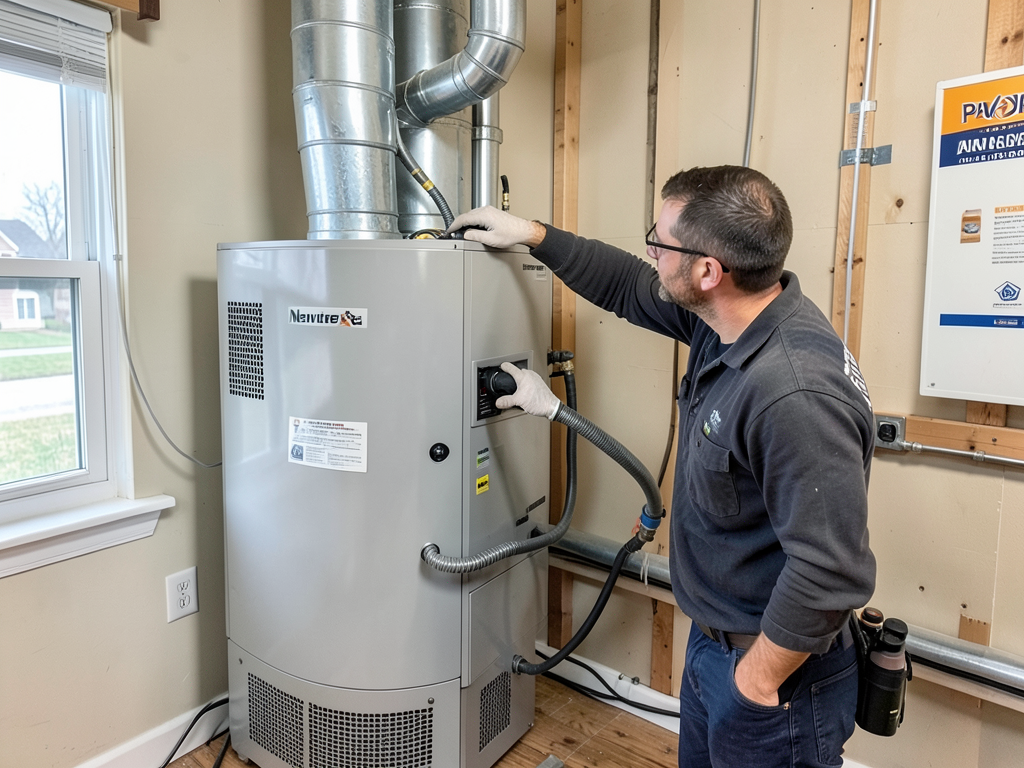
We shut off the gas supply at the appliance valve or the meter if needed. We purge the line, test for pressure drop, and use leak detection solution on every fitting and joint. If the leak is at the connector, we replace it with a new corrugated stainless steel tubing line rated for your BTU load. If the valve is leaking, we remove it, inspect the seat, and install a new ball valve with redundant sealing.

For leaks inside the furnace cabinet, we disassemble the burner assembly, inspect the manifold, and replace the gasket or the entire manifold if corrosion is present. We then pressure-test the entire system, check for secondary leaks, and verify safe combustion with a flue gas analyzer.

Every repair gas leak on furnace job ends with a full system function test. We measure gas pressure at the manifold, check ignition sequence, and verify that the heat exchanger is intact. If we find a cracked heat exchanger during a leak call, we shut down the furnace immediately and explain your replacement options.

What Happens During Your Emergency Gas Leak Call

Gas Furnace Leak Repair in Pittsburgh | Emergency Response Within 60 Minutes
01

Immediate Safety Assessment

We arrive with gas detection equipment and immediately measure air quality in your mechanical room and living spaces. If concentrations are dangerous, we evacuate the area, shut off gas at the meter, and ventilate your home. We do not proceed with repairs until the environment is safe. You will know within five minutes whether your family can stay in the house or needs temporary relocation.
02

Leak Isolation and Diagnosis

We trace the gas supply from your meter to the furnace, testing every joint and connection. We remove the furnace access panels and inspect the burner assembly, manifold, gas valve, and heat exchanger. We use pressure testing and bubble solution to pinpoint the exact failure point. You get a clear explanation of what failed, why it failed, and what we need to do to fix it.
03

Repair and System Verification

We replace the failed component, restore gas supply, and test the system under full operational load. We verify proper manifold pressure, check ignition timing, and measure combustion efficiency. Before we leave, we walk you through what we repaired, what you should monitor, and when your furnace needs its next inspection. You get documentation of the repair for your records and insurance.

Why Pittsburgh Residents Call Apex HVAC for Gas Furnace Emergencies

We operate 24 hours a day because gas leaks do not wait for business hours. When you call us at 3 a.m. on a Sunday, you reach a dispatcher who sends a fully stocked service truck immediately. We do not schedule you for the next available appointment. We come now.

Our technicians carry every part needed to repair gas leak on furnace in one trip. We stock flex connectors in every diameter, gas valves for all major furnace brands, manifold gaskets, burner orifices, and pressure regulators. We do not leave your home without heat unless your furnace is unsafe to operate.

We understand Pittsburgh's building codes and the updated requirements for gas appliance installations under the International Fuel Gas Code as adopted by Allegheny County. If your home still has black iron pipe with outdated fittings, we can bring it up to current safety standards during the same visit.

Many Pittsburgh homes were built when gas appliances vented through unlined chimneys. If your furnace shares a chimney with a water heater and you are getting spillage or backdrafting, we identify it during the leak inspection. We do not just patch the leak and leave you with a carbon monoxide hazard.

We also know the soil conditions in Pittsburgh. Homes built on clay in areas like Mount Lebanon or Bethel Park experience foundation movement that stresses gas lines entering through the basement wall. If your gas line is pulling away from the wall penetration, we re-support it and add flexible couplings to prevent future stress fractures.

You are not hiring a generalist who works on air conditioners in the summer and furnaces in the winter. You are hiring a team that handles emergency furnace gas leak service every week and knows how to protect your family without wasting your time.

What You Can Expect When We Respond to Your Gas Leak

Response Time and Availability

We dispatch a technician within 60 minutes of your call, regardless of the time or day. Gas leaks are life safety emergencies. We do not put you in a queue. If you call us at 2 a.m., we answer the phone and send someone immediately. Our trucks carry full diagnostic equipment and common repair parts so we can complete most repairs in one visit. If your situation requires a full gas line replacement or furnace replacement, we stabilize the system, make your home safe, and return first thing in the morning to finish the work.

Diagnosis and Inspection Process

We do not guess. We use electronic gas detectors, manometers, and combustion analyzers to measure what is happening inside your system. You will see us test gas pressure at the meter, at the furnace inlet, and at the manifold. We inspect the heat exchanger with a camera if needed. We check your venting system for blockages or corrosion. We measure carbon monoxide in your flue gases. You get a written report that explains what we found, what we repaired, and what additional issues exist if any. We take photos of corroded components so you understand what failed.

Quality of the Repair

We use manufacturer-specified parts and follow National Fuel Gas Code installation standards. If we replace a gas valve, we install the exact OEM replacement, not a universal substitute. If we replace a flex connector, we use corrugated stainless steel tubing with the correct BTU rating and length to prevent stress. We do not use pipe dope or Teflon tape on flare fittings. We torque every connection to specification. After the repair, we soap-test every joint, measure gas pressure under load, and verify that your furnace cycles properly. You get a system that works correctly, not a temporary patch.

Follow-Up and Ongoing Safety

After we complete a gas heater leak repair, we provide written documentation of what was replaced and what you should monitor going forward. If your furnace is older than 15 years or showing signs of heat exchanger fatigue, we explain your options for replacement before you face another emergency. We do not sell you a new furnace unless your current one is unsafe. We offer annual safety inspections that include gas leak testing, heat exchanger inspection, and combustion analysis. Many of our customers schedule these inspections after an emergency repair to catch problems before they become dangerous.

Frequently Asked Questions

You Have Questions,
We Have Answers

How much does it cost to fix a gas leak in a furnace? +

Gas furnace leak repair costs in Pittsburgh vary based on leak severity and location. Minor valve or fitting repairs typically run lower, while cracked heat exchangers require significant work. Diagnostic fees apply first to pinpoint the source. Emergency after-hours service costs more but prevents dangerous carbon monoxide exposure. Older furnaces with corroded components often need multiple repairs. Pittsburgh's freeze-thaw cycles accelerate furnace wear, especially in systems over 15 years old. Never delay gas leak repairs to save money. The risk to your family and property far outweighs repair costs. Licensed technicians provide accurate quotes after inspection.

Can I fix a furnace leak myself? +

Never attempt DIY gas furnace leak repair. This is a hard stop. Gas leaks pose immediate explosion and carbon monoxide poisoning risks. Pennsylvania law requires licensed professionals to work on gas appliances. You lack the proper tools, leak detection equipment, and training to safely diagnose or repair gas systems. Incorrect repairs can create bigger leaks, void insurance claims, and endanger your household. Evacuate immediately if you smell gas, then call 911 and your gas company. Only licensed HVAC technicians should touch your furnace. Protect your family and let professionals handle gas emergencies.

Does homeowners insurance cover furnace leaks? +

Homeowners insurance typically does not cover routine furnace maintenance or wear-and-tear failures. Coverage depends on the leak cause. Sudden pipe bursts or storm damage may qualify, but gradual corrosion or neglected maintenance will not. Water leaks from condensate lines causing property damage might be covered under water damage provisions. Gas leaks from faulty installation or manufacturer defects could trigger coverage. Review your policy's equipment breakdown endorsement. Document everything with photos and professional reports. Pittsburgh homeowners should verify coverage limits before winter hits. Contact your insurance agent immediately after discovering a leak to understand your specific policy terms.

Whose responsibility is it to fix a gas leak? +

Homeowners are responsible for gas leaks inside their property, starting at the meter. The gas utility company owns and maintains lines from the street to your meter. You own everything beyond that point, including the furnace, piping, and connections. If you rent, landlords must maintain heating equipment and address gas leaks immediately. This is non-negotiable under Pennsylvania tenant law. In multi-unit buildings, responsibility depends on lease terms and where the leak originates. Never assume someone else will fix a gas leak. Evacuate, call 911, then contact Peoples Gas or your provider to shut off supply. Get a licensed technician onsite fast.

Are gas leaks covered by insurance? +

Standard homeowners insurance rarely covers gas leaks from aging equipment or deferred maintenance. Sudden, accidental events like physical damage from a car hitting your home might qualify. Gradual deterioration, rust, or normal wear gets denied. Some policies offer optional equipment breakdown coverage that includes furnace failures. Check if you have a home warranty or service contract covering HVAC systems. Review exclusions carefully. Pittsburgh homeowners face higher furnace stress from temperature swings, accelerating component failure. Document the leak source with professional inspection reports. Insurance adjusters need proof the damage was sudden and unforeseeable, not preventable through regular maintenance.

What is the $5000 rule for HVAC? +

The 5000 rule states that if repair costs exceed 5000 divided by the furnace age in years, replacement makes more financial sense than repair. For a 10-year-old furnace, repairs over 500 dollars suggest replacement. A 20-year-old unit should be replaced if repairs exceed 250 dollars. This guideline accounts for efficiency losses, future breakdown probability, and cumulative repair costs. Pittsburgh winters demand reliable heat. Older furnaces waste energy and fail during polar vortex events when you need them most. Factor in new furnace rebates and energy savings. A licensed technician can run the numbers specific to your situation.

Can you stay in a house with a small gas leak? +

Evacuate immediately. Do not stay in a house with any gas leak, regardless of size. Small leaks rapidly escalate into explosive concentrations or deadly carbon monoxide buildup. You cannot accurately gauge leak severity without professional equipment. Natural gas is odorless, the smell comes from added mercaptan, which your nose adapts to quickly. Pittsburgh homes with older furnaces in basements face higher carbon monoxide risks due to poor ventilation. Do not flip light switches, use phones inside, or create any ignition source. Leave doors open as you exit. Call 911 and Peoples Gas from outside. Only return after professionals clear your home.

What is the most expensive part to fix on a furnace? +

The heat exchanger is the most expensive furnace component to replace. This metal chamber transfers heat from combustion gases to your home's air. Cracks develop from thermal stress, corrosion, or age, allowing carbon monoxide into your living space. Replacement requires extensive labor, often costing as much as a new mid-grade furnace. Pittsburgh's temperature swings accelerate heat exchanger fatigue through constant expansion and contraction cycles. Many technicians recommend full furnace replacement instead of heat exchanger repair, especially for units over 12 years old. Cracked heat exchangers pose serious health risks and cannot be patched or temporarily fixed safely.

Who do you call if your furnace is leaking? +

Call a licensed HVAC technician immediately if your furnace is leaking. For gas leaks, evacuate first, then call 911 and Peoples Gas from outside your home. Do not attempt diagnosis or repairs yourself. Gas leaks demand emergency response, available 24/7 in Pittsburgh. For water leaks from condensate lines, you still need professional help but can shut off your furnace safely at the thermostat first. Avoid online handymen or unlicensed contractors. Pennsylvania requires proper licensing and insurance for gas work. Emergency HVAC services arrive fast during Pittsburgh winters when furnace failures spike. Speed matters to prevent property damage and health risks.

What happens if my furnace is leaking? +

Furnace leaks fall into two categories with different consequences. Gas leaks create immediate explosion and carbon monoxide poisoning risks requiring instant evacuation. Water leaks from condensate lines or humidifiers cause mold growth, structural damage, and system corrosion if ignored. Both demand professional attention. Pittsburgh basements with poor drainage see worse water damage from leaking furnaces. Continued operation with any leak damages components and increases repair costs. Gas leaks can migrate through walls to ignition sources. Water leaks short electrical components and rust ductwork. Shut down your system and call a licensed technician immediately. Never wait to see if leaks resolve themselves.

How Pittsburgh's Aging Housing Stock Increases Gas Furnace Leak Risk

Pittsburgh has one of the oldest housing stocks in the country. Homes in neighborhoods like Highland Park, Point Breeze, and Polish Hill were built between 1900 and 1950, long before modern gas codes existed. Many still have original gas piping with threaded fittings that were never designed for today's high-efficiency furnaces. When you combine aged infrastructure with Pittsburgh's freeze-thaw cycles and soil movement from clay substrates, you create an environment where gas line failures happen more frequently. The city's transition from manufactured gas to natural gas in the mid-20th century also means some homes have mixed piping materials that corrode at different rates.

Allegheny County enforces strict gas appliance regulations, and any repair work must meet current International Fuel Gas Code standards. Local inspectors are familiar with common failure points in Pittsburgh's housing stock and expect contractors to address not just the immediate leak but any upstream hazards. Apex HVAC Pittsburgh works with these standards daily. We understand the permit requirements for gas line modifications, and we know how to navigate the inspection process if your repair requires documentation. Choosing a contractor who operates outside these guidelines puts you at risk for failed inspections, insurance complications, and unsafe installations.
HVAC Services in The Pittsburgh Area

We are proud to serve the community and its surrounding areas, providing superior heating and cooling services where they are needed most. Whether you’re a residential homeowner or a business owner, you can find our location on the map below. We are committed to being easily accessible and ready to respond quickly, ensuring that professional and reliable HVAC help is always just a call away.

Address:
Apex HVAC Pittsburgh, 450 Melwood Ave, Pittsburgh, PA, 15213

Additional Services We Offer

Our news updates

Latest Articles & News from The Blogs

Stylish Ways to Cover Ugly Radiators in Your Historic Friendship House \n\n Living in Friendship means embracing the charm of…

Stylish Ways to Cover Ugly Radiators in Your Historic Friendship House

Stylish Ways to Cover Ugly Radiators in Your Historic Friendship House \n\n Living in Friendship means embracing the charm of…

How to Keep Your Dog or Cat Safe Around the Outdoor AC Unit in Your North Huntington Yard

How to Keep Your Dog or Cat Safe Around the Outdoor AC Unit in Your North Huntington Yard Your outdoor…

Managing Your Mount Washington Short Term Rental Temperature from Anywhere in the World

Managing Your Mount Washington Short Term Rental Temperature from Anywhere in the World \n\n Managing a short-term rental in Mount…

Contact Us

Gas leaks do not fix themselves. Call Apex HVAC Pittsburgh now at (412) 387-0477. We dispatch immediately, diagnose accurately, and repair safely. Your family's safety is not something you postpone.