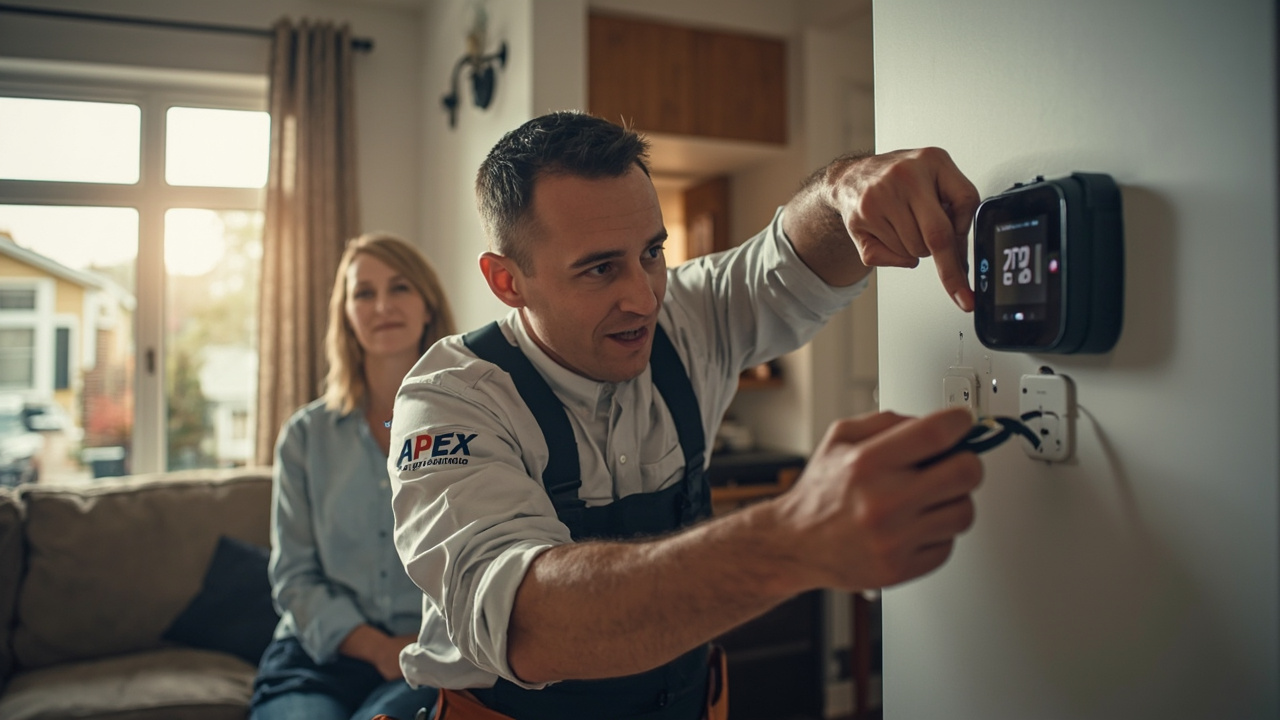
Pittsburgh's temperature swings between subzero winter mornings and 90-degree summer afternoons, often within the same week during spring and fall. This volatility forces your HVAC system to switch between heating and cooling modes frequently, which wastes energy if your thermostat cannot adapt. Smart thermostat setup allows the system to monitor outdoor temperature and delay mode changes until necessary, reducing wear on your compressor and furnace. Homes in microclimates near the Monongahela or Ohio rivers experience higher humidity, which affects comfort even when temperature setpoints are correct. A Wi-Fi thermostat installation with humidity sensors prevents that clammy feeling by adjusting fan speed and runtime to pull moisture from the air.
Pittsburgh homeowners deal with steep hills, older housing stock, and variable insulation quality, all of which affect heating and cooling efficiency. A smart thermostat replacement gives you control over zone-specific temperature issues, like second floors that overheat in summer or basements that stay cold in winter. Local HVAC contractors who understand Pittsburgh's mix of forced air, radiant, and steam heat systems can configure your thermostat to match your equipment. Apex HVAC Pittsburgh knows the quirks of homes in Shadyside, Dormont, and Sewickley, where ductwork layouts and insulation vary widely. When you choose local expertise for installing a smart thermostat, you get setup that works with your home's unique challenges, not a generic installation that ignores Pittsburgh's climate realities.