menu

Commercial HVAC Contractors in Pittsburgh – Minimize Downtime with Industrial-Grade Climate Control

Apex HVAC Pittsburgh delivers commercial mechanical services engineered for business continuity, from multi-zone office systems to heavy-duty industrial installations across the greater Pittsburgh metro.

Slider Image 1
Slider Image 2
Slider Image 3
Slider Image 4
Slider Image 5
Slider Image 7
Slider Image 8
Slider Image 9
Slider Image 10
Slider Image 11

Pittsburgh's Four-Season Climate Demands Commercial Systems Built for Extremes

Your commercial facility operates year-round. Pittsburgh's humid summers and sub-freezing winters place constant strain on commercial HVAC systems, particularly in older buildings across the Strip District, Oakland, and Downtown corridors where aging infrastructure meets modern tenant demands.

When a rooftop unit fails during a July heatwave or a boiler quits in January, you face immediate consequences. Lost productivity. Uncomfortable employees. Violated lease agreements. Potential code violations if temperature or humidity thresholds are breached in regulated environments like medical offices or food service operations.

Commercial heating and cooling services require different engineering than residential work. You need contractors who understand three-phase power, building automation systems, and the ventilation requirements specific to Pittsburgh's mixed-use developments. A system sized incorrectly for your square footage wastes energy. Ductwork designed without understanding your occupancy patterns creates hot spots and cold zones.

Industrial HVAC contractors must account for Pittsburgh's specific challenges. High humidity accelerates corrosion on rooftop units exposed to Ohio River valley moisture. Freeze-thaw cycles stress refrigerant lines. Older buildings in Lawrenceville and Bloomfield lack the electrical capacity for modern high-efficiency equipment without panel upgrades.

Commercial HVAC service providers see different failure patterns than residential technicians. Economizers malfunction. VFD drives burn out. Glycol loops develop leaks. Gas train safeties trip during cold snaps. The diagnostic process requires commercial-specific training and test equipment you will not find on a residential service truck.

Your system is a business asset. When it fails, the cost is measured in hours of lost operation, not just repair bills.

Pittsburgh's Four-Season Climate Demands Commercial Systems Built for Extremes
Load Calculations and System Design Drive Efficiency in Commercial Applications

Load Calculations and System Design Drive Efficiency in Commercial Applications

Commercial HVAC companies approach projects differently than residential contractors. The process starts with accurate load calculations using ACCA Manual N for commercial applications, not guesswork. We measure your actual square footage, evaluate insulation R-values, account for window solar heat gain, and calculate occupancy-based ventilation requirements per ASHRAE 62.1 standards.

Pittsburgh's commercial building stock varies dramatically. A converted warehouse in Lawrenceville has different load characteristics than a modern glass-facade office in Downtown. Ceiling heights, exterior wall ratios, and internal heat loads from equipment or process machinery all factor into system sizing. Undersized equipment runs continuously and fails early. Oversized equipment short-cycles, wasting energy and failing to dehumidify properly.

We evaluate your existing infrastructure before proposing solutions. Can your electrical service handle a new rooftop unit. Does your gas meter have adequate capacity for additional heating load. Are your roof supports rated for the weight of replacement equipment. These questions prevent costly surprises during installation.

Ductwork design matters in commercial applications. We calculate friction loss, size supply and return grilles for proper air velocity, and design zones that match your occupancy patterns. A restaurant needs different ventilation than an office. A medical facility requires negative pressure rooms and HEPA filtration.

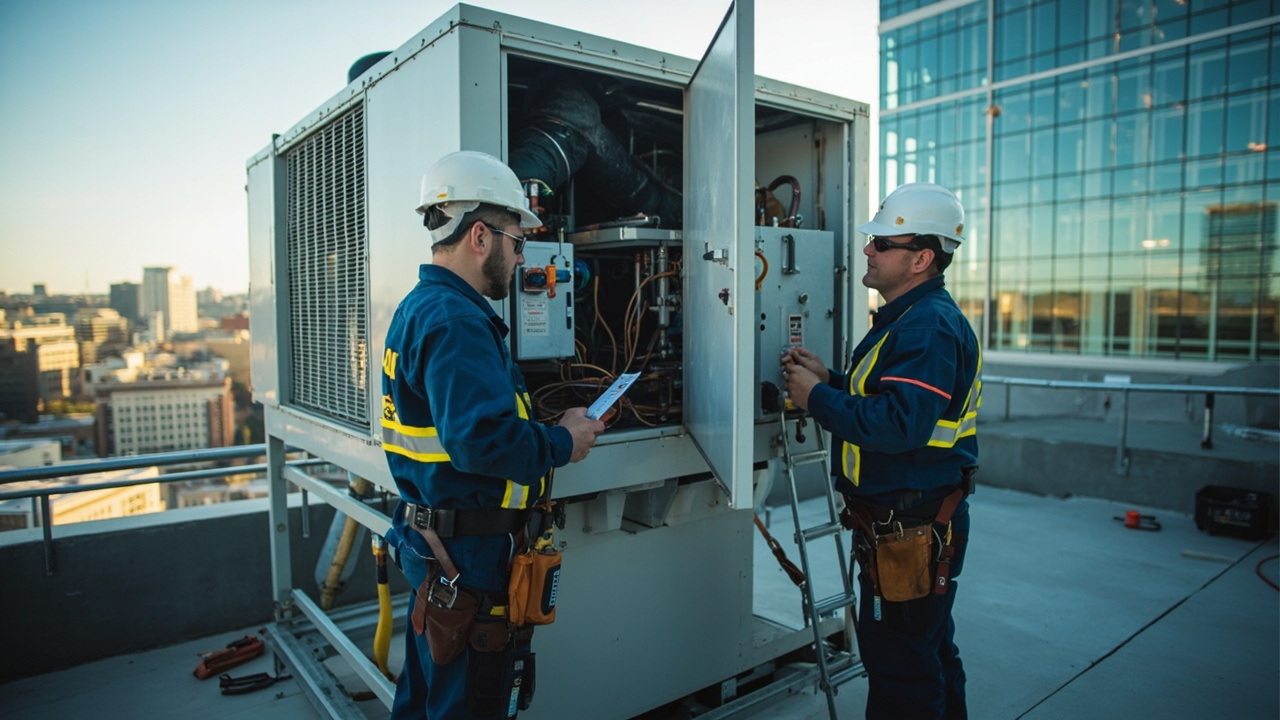
Commercial mechanical contractors must coordinate with other trades. We work around your business schedule, stage equipment deliveries to avoid blocking loading docks, and coordinate crane lifts for rooftop installations during off-hours. The goal is completing work without disrupting your operations.

System commissioning verifies performance. We test airflow at each diffuser, verify temperature control in each zone, calibrate economizers, and document baseline performance. This data becomes your reference point for future maintenance decisions.

The Commercial System Assessment and Installation Process

Commercial HVAC Contractors in Pittsburgh – Minimize Downtime with Industrial-Grade Climate Control
01

Site Evaluation and Load Analysis

We start with a comprehensive facility walkthrough, measuring your space, documenting existing equipment nameplate data, and evaluating your current system's performance. Load calculations account for Pittsburgh's design temperatures, your building envelope, internal heat gains from occupants and equipment, and ventilation requirements based on your specific use case. This engineering work determines the correct equipment capacity and configuration.
02

Equipment Specification and Coordination

Based on load calculations, we specify equipment matched to your needs. Rooftop units, split systems, or boiler and chiller plants depending on your application. We verify electrical capacity, coordinate gas line sizing with your utility provider, and plan rigging and access routes for equipment delivery. For occupied buildings, we schedule work to minimize disruption and maintain temporary conditioning during transitions.
03

System Commissioning and Documentation

After installation, we commission the system by testing each component. Airflow is measured and adjusted at every zone. Control sequences are verified. Safety devices are tested. We document baseline performance data, provide operation and maintenance manuals, and train your facility staff on system operation. You receive a complete record of equipment specifications, warranty information, and recommended maintenance schedules.

Pittsburgh Commercial Facilities Require Contractors Who Understand Local Codes and Infrastructure

Commercial work in Pittsburgh means navigating specific requirements. The City of Pittsburgh and Allegheny County enforce mechanical codes that govern equipment installation, venting, and combustion air requirements. Older buildings require special considerations. Many structures in the Cultural District or North Shore areas have historical designations that restrict exterior equipment placement or require specific screening methods.

Apex HVAC Pittsburgh works regularly with Pittsburgh's inspection departments. We understand permit requirements, know which inspections are required at each project phase, and schedule inspections to keep your project on timeline. When you hire inexperienced contractors, failed inspections delay completion and add costs.

We maintain relationships with local suppliers and equipment manufacturers. This matters when you need a proprietary part for a Trane, Carrier, or Lennox system. We get faster delivery than out-of-town contractors who lack local vendor networks. For emergency breakdowns, we can source hard-to-find components while other contractors are still searching online.

Our technicians understand Pittsburgh's commercial building types. We have worked in everything from Oakland's university facilities to the industrial buildings in Hazelwood. We know the common failure points in different building vintages and can anticipate problems before they cause downtime.

Commercial HVAC service providers need adequate capacity to handle your facility size. We maintain a fleet of service vehicles stocked with commercial-grade parts, diagnostic equipment, and refrigerant recovery systems. Our technicians carry commercial EPA certifications and manufacturer-specific training credentials.

Local presence matters for ongoing service. When you need quarterly maintenance or emergency repairs, we respond from Pittsburgh, not from a regional office three hours away. Your facility manager has a direct contact, not a national call center.

What Pittsburgh Businesses Should Expect from Commercial HVAC Services

Response Times and Service Availability

Commercial facilities cannot wait days for service. We prioritize commercial clients based on the business impact of system failures. A restaurant losing refrigeration gets immediate response. An office with no heat in January gets same-day service. For planned maintenance, we schedule around your operating hours to avoid disrupting business. Many commercial clients prefer evening or weekend service to keep systems running during business hours. We staff accordingly and provide advance notice of any required downtime so you can communicate with tenants or adjust operations.

Diagnostic Process for Commercial Systems

Commercial diagnostics differ from residential troubleshooting. We use data logging equipment to track system performance over time, thermal imaging to identify heat loss or air leakage, and combustion analyzers to verify boiler efficiency. For complex systems with building automation, we interface with your BAS to review alarm histories and trending data. The goal is identifying root causes, not just treating symptoms. A compressor failure might result from a failing economizer that caused the system to over-work. We find the underlying issue and prevent repeat failures.

Installation Quality and Code Compliance

Commercial installations require precision. We follow manufacturer specifications for equipment placement, clearances, and venting. Refrigerant lines are brazed with nitrogen purge to prevent oxidation. Condensate drains are pitched correctly and trapped per code. Electrical connections are sized for actual load with proper overcurrent protection. Gas piping is pressure-tested and leak-checked. We pull permits for all work requiring inspection and coordinate with local authorities having jurisdiction. You receive documentation proving code compliance, which protects you during lease audits or property sales.

Preventive Maintenance Agreements

Commercial systems require scheduled maintenance to prevent failures. We offer customized maintenance agreements based on your equipment type and operating hours. Quarterly visits include filter changes, belt inspections, lubrication of moving parts, refrigerant level checks, and combustion analysis on gas-fired equipment. We test safety controls, verify proper airflow, and check electrical connections for signs of overheating. Maintenance visits identify small problems before they cause system failures. You receive detailed service reports documenting findings and recommendations, helping you budget for future repairs or replacements.

Frequently Asked Questions

You Have Questions,
We Have Answers

What is the $5000 rule for HVAC? +

The $5,000 rule is an IRS guideline for commercial property owners. If a repair or improvement costs less than $5,000, you can deduct it immediately as a maintenance expense. If it exceeds $5,000, you must capitalize it and depreciate the cost over time. This applies to HVAC repairs, replacements, and system upgrades in Pittsburgh commercial properties. The rule impacts your tax planning and cash flow. Consult your accountant when budgeting for commercial HVAC work. Replacing a rooftop unit might exceed the threshold, while repairing a compressor may fall under it. Documentation matters for compliance.

How much do commercial HVAC contractors make? +

Commercial HVAC contractor earnings in Pittsburgh vary widely based on specialization and business model. Self-employed contractors typically earn between $65,000 and $120,000 annually, depending on client base and contract size. Larger mechanical contracting firms serving Pittsburgh's industrial and healthcare sectors often generate higher revenues per principal. Pay scales reflect the complexity of commercial systems, code compliance requirements, and the seasonal demand fluctuations typical to Western Pennsylvania. Union scale rates and prevailing wage requirements on public projects also influence compensation. Experience with controls, chillers, and building automation systems commands premium rates in the Pittsburgh market.

How much does a HVAC contractor charge per hour? +

Commercial HVAC contractors in Pittsburgh typically charge between $95 and $175 per hour, depending on system complexity and service type. Emergency or after-hours service commands higher rates. Large-scale projects like rooftop unit installations or chiller overhauls are usually bid as flat-rate projects rather than hourly. Rates reflect technician expertise, specialized tools, liability insurance, and the complexity of commercial systems. Union labor rates on prevailing wage projects run higher. Diagnostic work and routine maintenance are often billed hourly, while retrofits and new installations use project pricing. Always request detailed quotes before authorizing work.

How much does a new commercial HVAC cost? +

A new commercial HVAC system in Pittsburgh varies dramatically based on building size, system type, and complexity. Small retail spaces might require $15,000 to $30,000 for packaged rooftop units. Mid-sized office buildings can range from $50,000 to $150,000 for split systems or variable refrigerant flow. Large industrial facilities or hospitals may exceed $500,000 for chillers, boilers, and building automation integration. Pittsburgh's freeze-thaw cycles demand robust equipment. Factors include ductwork replacement, building automation integration, code compliance upgrades, and energy efficiency requirements. Request multiple bids and consider lifecycle operating costs alongside installation price.

How Pittsburgh's Industrial Legacy and Building Stock Shape Commercial HVAC Requirements

Pittsburgh's commercial real estate includes everything from century-old industrial buildings repurposed as modern offices to new construction in the technology corridor. Older buildings in neighborhoods like the Strip District or South Side often lack modern HVAC infrastructure. These structures were built for manufacturing, with high ceilings, minimal insulation, and single-pane windows. Converting them to office or retail space requires commercial heating and cooling services designed for high heat loss and difficult zoning. Commercial HVAC service providers must engineer solutions that work within existing structural limitations while meeting current energy codes and tenant comfort expectations.

Commercial mechanical contractors working in Pittsburgh need familiarity with local inspection processes and utility coordination. Duquesne Light has specific requirements for electrical service upgrades. Peoples Gas requires permits and inspections for commercial gas line modifications. The City of Pittsburgh requires mechanical permits for equipment replacements exceeding certain tonnage thresholds. Contractors unfamiliar with these local requirements cause project delays and compliance issues. Apex HVAC Pittsburgh maintains working relationships with local inspectors and utility representatives, ensuring projects move forward without administrative obstacles that cost you time and money.
HVAC Services in The Pittsburgh Area

We are proud to serve the community and its surrounding areas, providing superior heating and cooling services where they are needed most. Whether you’re a residential homeowner or a business owner, you can find our location on the map below. We are committed to being easily accessible and ready to respond quickly, ensuring that professional and reliable HVAC help is always just a call away.

Address:
Apex HVAC Pittsburgh, 450 Melwood Ave, Pittsburgh, PA, 15213

Additional Services We Offer

Our news updates

Latest Articles & News from The Blogs

Your Brighton Heights air conditioner should run in steady cooling cycles, not shut off and start again every few minutes.…

Why Your Brighton Heights AC Keeps Turning Off and On Every Five Minutes

Your Brighton Heights air conditioner should run in steady cooling cycles, not shut off and start again every few minutes.…

Does Your HVAC System Actually Help with Radon Mitigation in Marshall Township

Does Your HVAC System Actually Help with Radon Mitigation in Marshall Township Your HVAC system is designed to heat and…

Stylish Ways to Cover Ugly Radiators in Your Historic Friendship House

Stylish Ways to Cover Ugly Radiators in Your Historic Friendship House \n\n Living in Friendship means embracing the charm of…

Contact Us

System failures disrupt your business. Call Apex HVAC Pittsburgh at (412) 387-0477 for commercial HVAC services engineered for reliability. We provide emergency repairs, planned installations, and preventive maintenance across the Pittsburgh metro area.