menu

New HVAC System Cost 2026 in Pittsburgh – Complete Price Breakdown and Equipment Comparison Guide

Understanding the average HVAC system price 2026 in Pittsburgh means knowing how local climate, installation complexity, and equipment efficiency ratings affect your total investment. Get the real numbers before you buy.

Slider Image 1
Slider Image 2
Slider Image 3
Slider Image 4
Slider Image 5
Slider Image 7
Slider Image 8
Slider Image 9
Slider Image 10
Slider Image 11

Why HVAC Replacement Costs in Pittsburgh Are Different Than National Averages

Pittsburgh's extreme seasonal swings put unique pressure on heating and cooling equipment. Your furnace runs hard through January when temperatures drop below 20 degrees, and your air conditioner battles July humidity levels that regularly hit 70 percent. This dual-load demand means 2026 HVAC replacement cost figures for Pittsburgh homes skew higher than sunbelt markets where cooling dominates.

The average HVAC system price 2026 in the Pittsburgh metro includes factors most national guides ignore. Your home likely sits on sloped terrain common to Allegheny County, which affects ductwork routing and adds installation labor. If you live in Shadyside, Squirrel Hill, or Highland Park, your century-old home may need updated electrical service before a modern high-efficiency system can operate safely. Knob-and-tube wiring cannot support the amperage draw of a 16 SEER heat pump with variable-speed air handler.

New HVAC installation pricing 2026 also reflects Pittsburgh's building code requirements. The city mandated updated refrigerant regulations ahead of federal deadlines, and contractors must now install R-410A or R-32 systems that meet stricter leak detection standards. If your current system uses R-22, you cannot simply swap the outdoor unit. You need full refrigerant line replacement, which increases material and labor costs.

The 2026 heating and cooling system cost for a 2,000 square foot Pittsburgh home differs dramatically based on whether you choose a single-stage furnace with builder-grade air conditioner or a two-stage variable-speed system with smart thermostat integration. Your actual investment depends on equipment tier, existing infrastructure, and whether your ductwork needs sealing or replacement. Understanding these variables protects you from both overpaying and underbuying inadequate equipment that fails during the next polar vortex.

Why HVAC Replacement Costs in Pittsburgh Are Different Than National Averages
How We Calculate Accurate System Pricing for Your Specific Home

How We Calculate Accurate System Pricing for Your Specific Home

Apex HVAC Pittsburgh uses Manual J load calculation software to determine exact heating and cooling requirements for your home. We measure window square footage, insulation R-values, and air infiltration rates rather than guessing based on square footage alone. A 1,800 square foot brick colonial in Mount Lebanon has different BTU requirements than an 1,800 square foot frame ranch in Penn Hills, even though both homes measure the same size.

We perform blower door testing to identify duct leakage before recommending equipment capacity. If your return air system loses 30 percent of airflow through basement rim joist gaps, installing a larger furnace wastes money. We seal the envelope first, then right-size the equipment. This approach prevents the short-cycling problems that kill compressors and limit equipment lifespan.

Our 2026 HVAC replacement price guide includes line-item breakdowns for equipment, labor, materials, permits, and disposal. You see exactly what you pay for the outdoor condensing unit, indoor air handler, refrigerant lines, condensate pump, thermostat, and ductwork modifications. We stock Carrier, Lennox, and Trane equipment, so you can compare warranties and efficiency ratings across manufacturers before deciding.

We also evaluate your electrical panel capacity during the initial assessment. Many Pittsburgh homes built before 1980 have 100-amp service, which cannot safely support a modern central air system plus electric range, water heater, and dryer running simultaneously. If you need a panel upgrade to 200-amp service, we coordinate with licensed electricians and include that cost in your total project estimate. No surprises after you sign the contract.

Combustion safety testing is non-negotiable for furnace installations in homes with tight building envelopes. We verify your existing chimney liner can handle condensing furnace exhaust or install PVC venting through an exterior wall if needed. Pittsburgh's vintage housing stock requires this level of diagnostic precision.

What Happens During Your HVAC Replacement Cost Consultation

New HVAC System Cost 2026 in Pittsburgh – Complete Price Breakdown and Equipment Comparison Guide
01

In-Home System Assessment

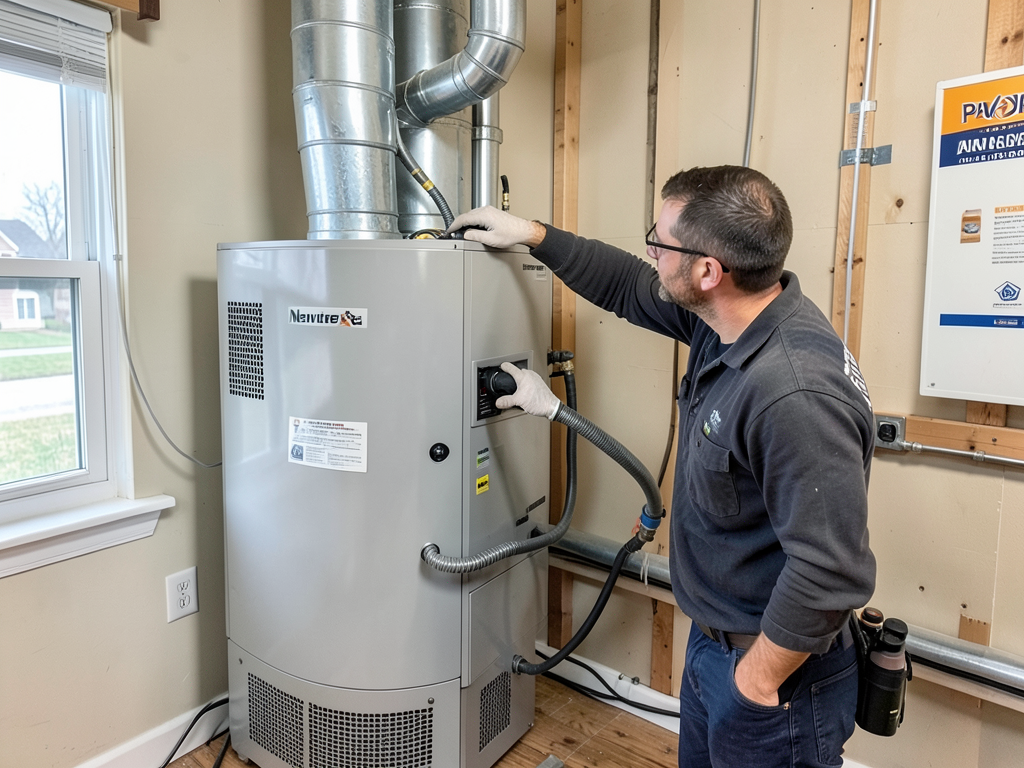
We inspect your existing equipment, ductwork, thermostat wiring, and electrical service during a 60-minute walkthrough. You receive a printed load calculation report showing your home's actual heating and cooling requirements in BTUs, along with current system deficiencies. We photograph problem areas like disconnected duct joints or undersized return air grilles so you understand what needs correction before new equipment arrives.
02

Equipment and Pricing Options

We present three equipment tiers with total installed pricing for each option. Base-level systems include single-stage furnaces and 14 SEER air conditioners suitable for budget-focused replacements. Mid-tier packages feature two-stage heating with variable-speed blowers for better humidity control. Premium options include modulating furnaces and heat pumps with SEER2 ratings above 18 for maximum efficiency in Pittsburgh's climate. Each proposal lists equipment model numbers, warranty terms, and projected annual operating costs.
03

Installation Scheduling and Completion

Once you approve the proposal, we pull permits and schedule installation within 5-7 business days. Most replacements take one full day for our two-technician crew to complete. You receive commissioning documentation showing refrigerant charge levels, airflow measurements, and combustion efficiency readings. We program your thermostat, explain maintenance schedules, and register your equipment warranty before leaving. Follow-up includes a 30-day system performance check to verify operation through your first billing cycle.

Why Pittsburgh Homeowners Trust Apex HVAC for Replacement Projects

Apex HVAC Pittsburgh has installed over 1,200 complete heating and cooling systems in Allegheny County since 2018. We understand the specific challenges Pittsburgh homes present, from undersized ductwork in post-war Cape Cods to asbestos-wrapped furnace plenums in pre-1970 construction. Our technicians hold NATE certification in installation and service, which means they passed third-party competency testing beyond basic trade licensing.

We stock equipment locally, so your installation does not wait three weeks for a distributor backorder. Our Moon Township warehouse maintains inventory of common residential furnaces, air handlers, and condensing units in the 2-5 ton capacity range that fits most Pittsburgh homes. If you need a same-week replacement because your furnace cracked mid-January, we can mobilize quickly.

Our pricing remains transparent because we know Pittsburgh homeowners compare multiple bids. We include permit fees, disposal charges for your old equipment, and concrete pad replacement if your existing condenser sits on a deteriorated slab. Other contractors hide these costs in vague line items, then add change orders during installation. We measure your existing ductwork and identify necessary modifications during the estimate phase so your final invoice matches the proposal.

We also maintain relationships with local building inspectors in Pittsburgh, Bethel Park, McCandless, and Monroeville. Our installation crews know current code requirements for refrigerant line protection, condensate drain routing, and combustion air supply. We pass inspection on the first visit, which keeps your project on schedule and prevents the delays that occur when contractors fail code compliance checks.

Financing options through Wells Fargo and Synchrony Bank let you spread payments across 24-60 months if replacing your HVAC system was not in this year's budget. We process applications during your consultation, so you know your approved amount before making equipment decisions.

What You Can Expect During Your HVAC System Replacement

Project Timeline and Scheduling

Complete HVAC replacements take 6-10 hours depending on installation complexity and ductwork modifications. We arrive at 8 AM and typically finish by 5 PM for straightforward changeouts. If your home needs electrical panel upgrades or extensive duct sealing, we schedule a two-day installation window. You receive a confirmed start date within one week of signing your contract during normal season, though winter emergency replacements may happen within 48 hours. We protect flooring with drop cloths and remove all packaging materials and old equipment before leaving your property.

Pre-Installation Assessment and Preparation

Our lead technician reviews your installation plan before the crew arrives with equipment. We verify attic access dimensions if your air handler sits in a cramped space, confirm outdoor condenser placement meets code setback requirements, and identify any structural obstacles that affect refrigerant line routing. You receive a call 24 hours before installation confirming arrival time and crew size. We ask you to clear a path to your furnace location and outdoor condenser pad, then move any stored items blocking basement access. This preparation prevents installation delays and protects your belongings from accidental damage.

System Commissioning and Performance Testing

After installing your new equipment, we spend 90 minutes commissioning the system to manufacturer specifications. We measure static pressure across the blower, verify refrigerant superheat and subcooling fall within acceptable ranges, and test thermostat staging functions. You receive a printed commissioning report showing airflow CFM at each register, supply air temperature, and combustion efficiency percentage for gas furnaces. We run your system through multiple heating and cooling cycles to confirm proper operation before leaving. This testing phase catches installation errors that cause premature equipment failure.

Warranty Registration and Maintenance Plans

We register your equipment warranty directly with the manufacturer using your installation date and serial numbers. Most furnaces and air conditioners include 10-year parts coverage, though labor warranties vary by brand. We offer annual maintenance agreements that include spring cooling system checks and fall heating system inspections. These visits maintain your manufacturer warranty compliance, which often requires annual professional service. Maintenance plan members receive priority scheduling during peak season and discounted repair rates if components fail outside warranty coverage. We track filter replacement schedules and send reminder emails every 90 days.

Frequently Asked Questions

You Have Questions,
We Have Answers

Will HVAC prices go down in 2026? +

HVAC prices are unlikely to drop significantly in 2026. Material costs, labor shortages, and inflation continue to push prices upward across the Pittsburgh metro. Supply chain improvements may stabilize costs, but expect pricing similar to or slightly higher than 2025 levels. Regional factors matter too. Pittsburgh's freeze-thaw cycles demand durable equipment that resists condensate line freezing and heat exchanger stress. High-efficiency units meeting stricter DOE standards will cost more upfront but save on energy bills long-term. Plan your budget now and get multiple quotes to lock in competitive pricing before seasonal demand spikes.

Will HVAC systems be more expensive in 2025? +

Yes, HVAC systems will be more expensive in 2025 compared to previous years. New federal efficiency standards took effect January 2025, requiring higher SEER2 and HSPF2 ratings. These advanced systems cost more to manufacture. Labor costs in Pittsburgh remain elevated due to skilled technician shortages. Material costs for copper, refrigerants, and electronic controls have increased. Pittsburgh homeowners replacing aging systems should budget 10 to 15 percent more than 2023 pricing. However, higher upfront costs offset through lower utility bills and potential federal tax credits. Get estimates now before further increases hit.

What is the $5000 rule for HVAC? +

The $5,000 rule is a repair-versus-replace guideline. Multiply the repair cost by your system's age in years. If the result exceeds $5,000, replacement makes more financial sense than repair. For example, a $400 repair on a 10-year-old unit equals $4,000, so repair it. A $600 repair on a 12-year-old system equals $7,200, so replace it. In Pittsburgh, where humidity and temperature swings stress components, older systems fail more often. This rule helps you avoid throwing money at a dying system when replacement delivers better efficiency and reliability.

How much is HVAC to cost in 2025? +

HVAC system costs in 2025 range from $5,000 to $12,000 or more for Pittsburgh homes, depending on size, efficiency, and complexity. A basic 2-ton gas furnace and AC replacement starts around $5,500. Mid-efficiency 3-ton systems with variable-speed blowers run $7,500 to $9,500. High-efficiency heat pumps or zoned systems cost $10,000 and up. Pittsburgh's mixed climate requires units that handle humid summers and cold winters. Ductwork repairs, permits, and removal of old equipment add to total cost. Get at least three quotes from licensed contractors to compare pricing and equipment options.

Is it better to buy a home in 2025 or 2026? +

This decision depends on personal finances and housing market conditions, not HVAC costs alone. Pittsburgh's housing market remains competitive in 2025, with inventory constraints in desirable neighborhoods. Waiting until 2026 may not yield lower home prices or better mortgage rates. If you buy in 2025 and the home needs HVAC replacement, factor $6,000 to $10,000 into your budget. Many sellers offer credits for aging systems. If you wait, HVAC equipment costs will likely stay flat or rise slightly. Focus on your readiness to buy and the home's overall condition, not just mechanical systems.

Is a new HVAC system tax deductible in 2025? +

A new HVAC system is not tax deductible in 2025 for most homeowners, but you may qualify for a federal energy tax credit if you install qualifying high-efficiency equipment. The Inflation Reduction Act extended credits through 2032. Heat pumps, central AC units with SEER2 ratings of 16 or higher, and gas furnaces with 95 percent AFUE or greater qualify for up to 30 percent of the cost, capped at $2,000 annually for certain equipment. Keep receipts and manufacturer certifications. Consult a tax professional to confirm eligibility and claim procedures specific to your situation.

How much does a new HVAC system cost 2000 sq ft? +

For a 2,000-square-foot Pittsburgh home, expect to pay $6,500 to $11,000 for a complete HVAC system replacement in 2025. This includes a 3- to 4-ton unit, gas furnace or heat pump, evaporator coil, and labor. Homes with poor insulation or older ductwork may need additional work, increasing costs. Pittsburgh's humidity and winter cold require properly sized equipment. Oversized units cycle inefficiently. Undersized units struggle in July heat or January freezes. A load calculation determines correct sizing. Get detailed quotes that include equipment specs, warranty coverage, and permitting costs before committing.

What are the HVAC trends for 2026? +

HVAC trends for 2026 include increased adoption of heat pump technology, smart thermostats with AI learning, and refrigerant transitions. Pittsburgh homeowners are switching to cold-climate heat pumps that handle winter temperatures below 15 degrees efficiently. Variable-speed compressors and blowers improve comfort and reduce energy use. Refrigerant R-454B replaces older R-410A to meet environmental regulations. Indoor air quality upgrades like whole-home dehumidifiers and UV air purifiers gain traction post-pandemic. Zoned systems with multiple thermostats allow room-by-room control, reducing energy waste. Expect quieter equipment and longer warranties as manufacturers compete for market share.

What is the 3 minute rule for AC? +

The 3-minute rule prevents short-cycling damage to your AC compressor. After your system shuts off, wait at least 3 minutes before restarting it. This allows refrigerant pressure to equalize between the condenser and evaporator coils. Restarting too soon forces the compressor to start against high pressure, stressing internal components and shortening lifespan. Most modern thermostats include built-in time delays to enforce this rule. In Pittsburgh's humid summers, frequent power outages or thermostat adjustments can trigger short-cycling. If your system cycles on and off rapidly, call a technician to diagnose potential refrigerant or electrical issues.

Can you get a tax credit for a new HVAC system? +

Yes, you can get a federal tax credit for qualifying high-efficiency HVAC systems installed through 2032. The Inflation Reduction Act allows credits up to 30 percent of equipment and installation costs, with annual caps. Central air conditioners with SEER2 ratings of 16 or higher, heat pumps meeting efficiency thresholds, and gas furnaces with 95 percent AFUE or greater qualify. Pittsburgh homeowners can claim up to $2,000 annually for specific equipment categories. Keep manufacturer certifications and receipts. Credits apply only to your primary residence. Consult a tax professional to ensure compliance and maximize savings on your filing.

How Pittsburgh's Freeze-Thaw Cycles and Humidity Affect HVAC System Selection and Cost

Pittsburgh experiences 120-140 freeze-thaw cycles annually, which creates condensate drainage challenges most southern cities never face. Your air conditioner produces 20-40 pints of water daily during summer operation, and that condensate must drain through pipes exposed to subfreezing temperatures five months each year. We install heat tape on exterior condensate lines and route drains through conditioned space when possible to prevent ice blockages that flood basements. This weatherization work adds material cost but prevents the service calls we see every January when condensate pumps freeze solid. The new HVAC installation pricing 2026 for Pittsburgh homes must account for these climate-specific requirements.

Apex HVAC Pittsburgh maintains an A-plus rating with the Better Business Bureau and has completed over 300 projects in Shadyside, Squirrel Hill, and Oakland neighborhoods where vintage housing stock demands specialized installation expertise. We understand how Pittsburgh's brick and stone construction affects ductwork routing and why homes built into hillsides need different zoning strategies than flat-lot construction. Our technicians live in the communities we serve and respond to the same weather conditions that stress your equipment. When you call for a 2026 heating and cooling system cost estimate, you speak with installers who have worked through Pittsburgh winters and know which equipment performs reliably in our climate.
HVAC Services in The Pittsburgh Area

We are proud to serve the community and its surrounding areas, providing superior heating and cooling services where they are needed most. Whether you’re a residential homeowner or a business owner, you can find our location on the map below. We are committed to being easily accessible and ready to respond quickly, ensuring that professional and reliable HVAC help is always just a call away.

Address:
Apex HVAC Pittsburgh, 450 Melwood Ave, Pittsburgh, PA, 15213

Additional Services We Offer

Our news updates

Latest Articles & News from The Blogs

Stylish Ways to Cover Ugly Radiators in Your Historic Friendship House \n\n Living in Friendship means embracing the charm of…

Stylish Ways to Cover Ugly Radiators in Your Historic Friendship House

Stylish Ways to Cover Ugly Radiators in Your Historic Friendship House \n\n Living in Friendship means embracing the charm of…

How to Keep Your Dog or Cat Safe Around the Outdoor AC Unit in Your North Huntington Yard

How to Keep Your Dog or Cat Safe Around the Outdoor AC Unit in Your North Huntington Yard Your outdoor…

Managing Your Mount Washington Short Term Rental Temperature from Anywhere in the World

Managing Your Mount Washington Short Term Rental Temperature from Anywhere in the World \n\n Managing a short-term rental in Mount…

Contact Us

Stop guessing about new HVAC system cost 2026 for your Pittsburgh home. Call (412) 387-0477 now to schedule your free in-home assessment and receive a detailed equipment proposal with transparent pricing. We provide same-day quotes and can start installation within one week.