menu

Commercial Duct Cleaning in Pittsburgh – Minimizing Downtime with Industrial-Grade Ductwork Solutions

Apex HVAC Pittsburgh delivers commercial duct cleaning that keeps your facility operational, compliant, and efficient through comprehensive industrial HVAC ductwork cleaning tailored to Pittsburgh's manufacturing and commercial environments.

Slider Image 1
Slider Image 2
Slider Image 3
Slider Image 4
Slider Image 5
Slider Image 7
Slider Image 8
Slider Image 9
Slider Image 10
Slider Image 11

Why Pittsburgh's Industrial Environment Demands Professional Commercial Duct Cleaning

Pittsburgh's legacy as a manufacturing hub means commercial buildings here contend with unique ductwork contamination challenges. The steel industry's historical footprint left particulate matter that still circulates through older commercial HVAC systems. Add the Ohio River valley's persistent humidity, and you create conditions where mold, dust, and industrial residue accumulate faster than in drier climates.

Your commercial HVAC ductwork acts as the respiratory system for your facility. When ducts collect debris from manufacturing processes, construction materials, or external pollutants, your system works harder to maintain airflow. This drives up energy costs and creates compliance risks under OSHA air quality standards.

Industrial ductwork cleaning addresses contamination that standard maintenance misses. Commercial air vent cleaning removes visible dust, but comprehensive commercial ductwork cleaning targets the accumulation deep within supply and return plenums. In Pittsburgh's commercial districts, from the Strip District warehouses to Lawrenceville manufacturing facilities, HVAC systems handle higher particulate loads than residential units.

The freeze-thaw cycles common to southwestern Pennsylvania also stress ductwork joints. Condensation forms when warm indoor air meets cold duct surfaces, creating moisture intrusion points. This moisture combines with accumulated dust to form paste-like buildup that restricts airflow and harbors biological growth.

Commercial HVAC duct cleaning prevents the cascade effect where restricted airflow forces your system into extended runtime, accelerating component wear and increasing failure risk. For facilities operating continuous shifts, system downtime translates directly to lost revenue and productivity penalties.

Why Pittsburgh's Industrial Environment Demands Professional Commercial Duct Cleaning
The Technical Approach to Commercial and Industrial Air Duct Cleaning

The Technical Approach to Commercial and Industrial Air Duct Cleaning

Commercial ductwork cleaning requires different equipment and methodology than residential service. Apex HVAC Pittsburgh uses portable negative air machines rated for industrial volumes, creating controlled negative pressure within your duct system. This prevents contaminated air from escaping into occupied spaces during cleaning.

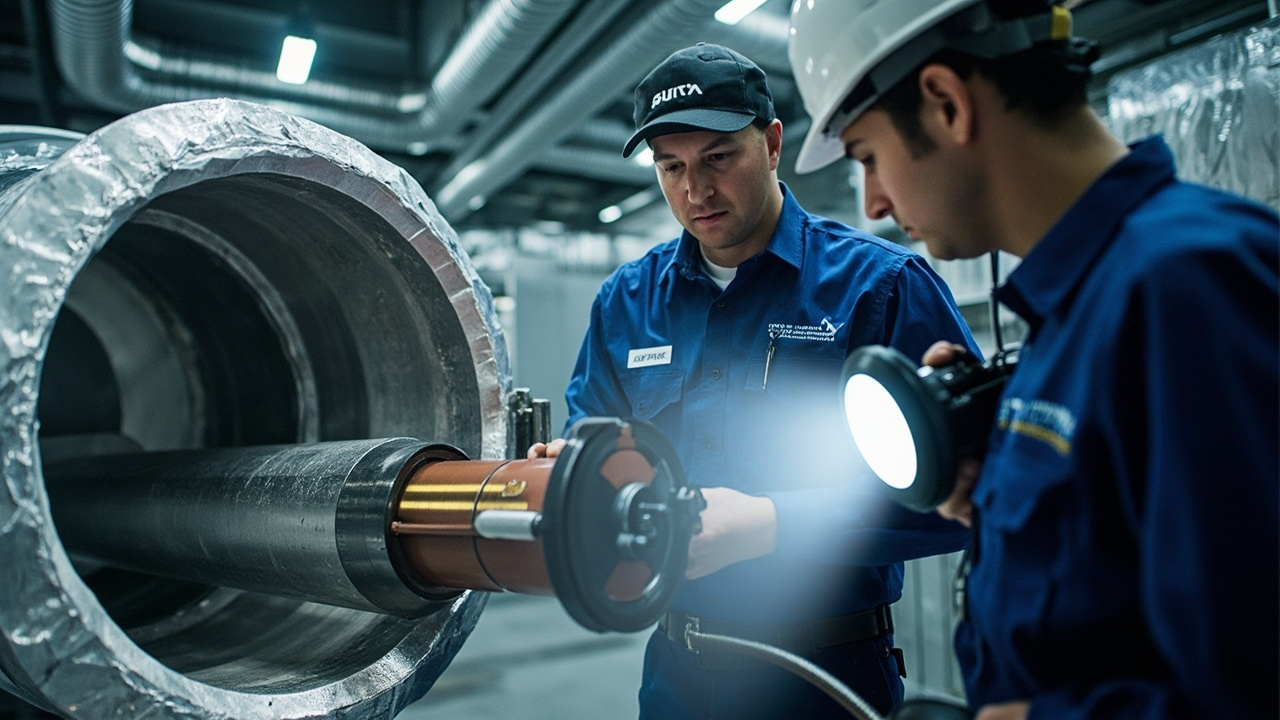
We start with video inspection using push cameras to document contamination levels and identify structural issues. This diagnostic phase maps your ductwork layout and pinpoints problem areas like collapsed flex duct, disconnected joints, or excessive buildup at bends and transitions. The footage provides baseline documentation for insurance and compliance purposes.

For industrial ductwork cleaning, we use rotary brush systems sized to your specific duct dimensions. The brushes dislodge caked-on debris while HEPA-filtered vacuum systems capture particulates at the source. This dual-action approach prevents cross-contamination between zones and maintains indoor air quality during the cleaning process.

Supply ducts require different treatment than return ducts. Supply-side cleaning focuses on removing construction debris, insulation fibers, and dust that settled during installation or renovation. Return duct cleaning targets biological growth, grease accumulation from kitchen exhaust, and the heavier particulate matter pulled from occupied spaces.

We seal and clean individual zones to maintain partial system operation when complete shutdown is not feasible. This staged approach allows manufacturing facilities and medical offices to continue critical operations while we systematically clean each section. The process includes cleaning supply registers, return grilles, diffusers, and the interior surfaces of air handling units.

Access panel installation provides future maintenance entry points, reducing the invasiveness of subsequent cleanings. We document all work with post-cleaning video to verify thoroughness and establish the new baseline for your maintenance schedule.

Our Commercial Duct Cleaning Workflow for Pittsburgh Facilities

Commercial Duct Cleaning in Pittsburgh – Minimizing Downtime with Industrial-Grade Ductwork Solutions
01

System Assessment and Documentation

We begin with comprehensive video inspection of your commercial HVAC ductwork, documenting current contamination levels and identifying structural deficiencies. This diagnostic phase includes airflow measurements at each register, static pressure readings, and thermal imaging to locate air leaks. You receive a detailed report with time-stamped footage showing exactly what exists within your duct system before any cleaning begins.
02

Controlled Extraction and Cleaning

We establish negative pressure containment and systematically clean each duct section using commercial-grade rotary brushes and HEPA-filtered vacuum systems. The process includes cleaning all supply and return plenums, main trunk lines, branch runs, and terminal devices. We treat coils with EPA-registered antimicrobial solutions when biological growth is present. Access panels are installed at strategic points for future maintenance efficiency.
03

Verification and Performance Testing

Post-cleaning video inspection confirms removal of all accessible debris and verifies duct integrity. We conduct airflow verification at each register and compare static pressure readings to pre-cleaning baseline measurements. You receive before-and-after documentation, recommended maintenance intervals based on your facility type, and a written report suitable for OSHA compliance documentation or insurance requirements. The system is tested under load to ensure proper operation.

Why Pittsburgh Facilities Choose Apex HVAC for Commercial Ductwork Cleaning

Commercial duct cleaning in Pittsburgh requires understanding the specific challenges of aging infrastructure combined with modern air quality standards. Many commercial buildings in neighborhoods like Bloomfield, Polish Hill, and the North Side were constructed when ductwork installation standards differed from current practice. Apex HVAC Pittsburgh brings experience working within these older buildings while meeting contemporary code requirements.

We understand Allegheny County's commercial building codes and the indoor air quality standards that apply to different facility types. Medical offices face different requirements than warehouses. Food processing facilities require different protocols than office buildings. Our approach adapts to your specific compliance obligations.

Pittsburgh's commercial HVAC systems often serve mixed-use spaces. A single building might house manufacturing on the ground floor, offices on the second, and storage on the third. Each zone has different contamination profiles and cleaning requirements. We treat each area according to its specific use rather than applying a one-size approach.

The Ohio River valley's industrial character means many facilities handle materials that create unique ductwork contamination. Metal fabrication shops generate fine metallic particulates. Woodworking facilities produce sawdust that packs into duct joints. Chemical facilities must prevent cross-contamination between ventilation zones. We customize our commercial air vent cleaning methods to address the specific contaminants your operation produces.

Our scheduling accommodates your operational constraints. We work overnight shifts, weekends, or during planned shutdowns to minimize business disruption. For facilities that cannot tolerate any downtime, we clean in stages while maintaining partial system operation. This flexibility prevents the productivity loss that comes from complete HVAC system shutdown.

Apex HVAC Pittsburgh maintains the equipment inventory to handle industrial-scale projects without rental delays or equipment shortages that extend project timelines.

What Your Facility Can Expect from Professional Commercial Duct Cleaning

Project Timeline and Scheduling Flexibility

Commercial ductwork cleaning timelines depend on system size, contamination levels, and access constraints. A 10,000 square foot office building typically requires two to three days. Large industrial facilities may need a week or staged cleaning over several weekends. We provide detailed project schedules that account for your operational needs. If you require overnight or weekend work to avoid disrupting business hours, we accommodate those requirements. The schedule includes contingency time for unexpected discoveries like concealed asbestos or structural duct damage requiring repair before cleaning can proceed.

Comprehensive Pre-Cleaning Assessment

The assessment phase identifies what needs cleaning and why. Video inspection reveals contamination you cannot see from register level. We measure airflow at each diffuser to establish baseline performance metrics. Static pressure readings indicate whether duct restrictions exist. This diagnostic data determines cleaning methods and helps identify underlying problems like undersized ductwork or improperly balanced systems. You receive a written scope of work detailing exactly what will be cleaned, what methods will be used, and what results you should expect. This eliminates surprises and establishes clear performance benchmarks.

Measurable Performance Improvement

Clean ductwork delivers quantifiable benefits. Airflow improves at registers previously starved by restrictions. HVAC system runtime decreases because air moves freely through clean ducts. Energy consumption drops as the system achieves setpoint temperatures without extended operation. You should see reduced dust accumulation on surfaces and equipment. Fewer odor complaints occur as trapped contaminants are removed. We provide post-cleaning airflow measurements and static pressure readings so you can verify the improvement. Before-and-after video documentation shows the physical change within your ductwork. These metrics support budget justification for future maintenance.

Maintenance Planning and Documentation

Commercial duct cleaning is not a permanent solution but a maintenance requirement. How often you need cleaning depends on your facility type and operations. Manufacturing environments require more frequent service than office buildings. We provide recommended maintenance intervals based on NADCA standards and your specific contamination factors. The documentation package includes all video footage, airflow measurements, and a written report suitable for insurance, OSHA compliance, or tenant air quality concerns. Access panels installed during cleaning reduce the cost and disruption of future maintenance. We can establish scheduled maintenance agreements that prevent contamination from reaching critical levels again.

Frequently Asked Questions

You Have Questions,
We Have Answers

How much does commercial duct cleaning cost? +

Commercial duct cleaning costs vary based on system size, contamination level, and building square footage. Expect pricing to scale with the number of rooftop units and linear feet of ductwork. Pittsburgh facilities with older HVAC systems or high particulate loads from industrial zones may require additional labor. Multi-story buildings with complex duct runs cost more than single-level warehouses. Request a site assessment to get accurate pricing. Most contractors price per square foot or per unit. Factors include accessibility, asbestos presence, and whether the building remains operational during cleaning.

How often should commercial HVAC ducts be cleaned? +

The National Air Duct Cleaners Association recommends commercial systems be cleaned every three to five years. High-traffic facilities like restaurants, medical offices, or manufacturing plants need annual cleaning due to grease, contaminants, or particulate buildup. Pittsburgh's humid summers accelerate mold growth in ductwork, shortening intervals. Buildings with filtration issues or recent construction require immediate cleaning. Monitor indoor air quality metrics and energy bills. Rising HVAC costs or employee complaints about air quality signal the need for service. Establish a preventive maintenance schedule tied to operational demands and occupancy levels.

What is the average cost for commercial cleaning? +

Commercial cleaning costs depend on service scope. Duct cleaning specifically ranges based on square footage and system complexity. General janitorial services price differently than specialized HVAC work. For duct cleaning, expect costs to increase with building size, ductwork accessibility, and contamination severity. Pittsburgh's older commercial buildings often have galvanized or sheet metal ducts requiring different techniques than modern flex duct systems. Multi-tenant buildings cost more due to coordination needs. Always separate HVAC cleaning bids from standard janitorial contracts. Request itemized proposals covering inspection, cleaning, sanitization, and post-service verification testing.

How to clean commercial air ducts? +

Commercial air duct cleaning requires professional equipment and NADCA-certified technicians. The process begins with system inspection using cameras to assess contamination. Technicians seal supply and return vents, then create negative pressure using portable HEPA-filtered vacuums. Rotating brushes and compressed air agitate debris while vacuum systems capture contaminants. Coils, blowers, and plenums receive targeted cleaning. Pittsburgh facilities must address moisture issues common in humid climates to prevent mold regrowth. Post-cleaning includes sanitization and airflow verification. DIY methods fail in commercial settings due to system complexity and liability concerns. Hire licensed contractors familiar with local building codes.

What are the drawbacks of duct cleaning? +

Improper duct cleaning damages systems and spreads contaminants. Unskilled contractors may dislodge asbestos in older Pittsburgh buildings or puncture ductwork. Inadequate containment releases particles into occupied spaces. Some companies oversell antimicrobial treatments that provide minimal benefit. Poorly executed cleaning disrupts building operations without improving air quality. Verify contractor NADCA certification and insurance coverage. Request references from similar commercial properties. The main risk is hiring unqualified vendors who lack proper equipment. When done correctly by professionals, drawbacks are minimal compared to benefits like improved airflow, energy savings, and liability reduction.

How much does Stanley Steemer charge to clean your ducts? +

Stanley Steemer pricing varies by location and project scope. National franchises typically charge per vent or square footage for residential work but quote commercial projects individually. Their residential-focused model may not suit complex commercial HVAC systems common in Pittsburgh's industrial and office sectors. Commercial duct cleaning requires specialized equipment, NADCA certification, and experience with rooftop units, VAV systems, and multi-zone controls. Request detailed proposals comparing scope, equipment, and post-service testing. Verify the contractor's commercial portfolio and local references. Price alone should not determine vendor selection for liability-sensitive commercial work.

What time of year is best for duct cleaning? +

Schedule commercial duct cleaning during low-occupancy periods to minimize disruption. Spring and fall offer moderate temperatures, reducing HVAC demand during multi-day projects. Pittsburgh's humid summers promote mold growth, making late spring ideal for preventive cleaning before peak cooling season. Winter cleaning works for facilities with flexible schedules but requires careful planning around heating needs. Coordinate with building management and tenants. Avoid peak business periods. Plan cleaning before lease renewals or health inspections. Post-construction or post-renovation timing captures debris before it circulates. The best time aligns with operational needs and preventive maintenance cycles.

What are the signs air ducts need cleaning? +

Visible dust around vents, musty odors, and inconsistent airflow signal contaminated ducts. Increased employee complaints about allergies or respiratory issues indicate poor indoor air quality. Rising energy costs without equipment failure suggest restricted airflow from buildup. Visible mold growth around vents or on accessible ductwork requires immediate attention, especially in Pittsburgh's humid climate. Recent pest infestations leave droppings and nesting materials in duct systems. Post-construction dust or renovation debris warrants cleaning. Monitor HVAC filter condition. Filters clogging faster than normal indicate upstream contamination. Schedule inspection if the system has not been cleaned in five years.

How do professionals clean ductwork in commercial buildings like Lowes? +

Large commercial facilities like big-box retailers require specialized truck-mounted vacuum systems and multi-technician crews. Professionals section off zones to maintain partial HVAC operation during cleaning. High-powered HEPA vacuums connect to main trunk lines while technicians use pneumatic tools and rotary brushes to agitate debris. Rooftop units receive individual attention, including coil cleaning and blower maintenance. Access lifts reach high ductwork in warehouse ceilings. Technicians document before and after conditions with video inspection. Pittsburgh's mixed-use zones require coordination with local fire marshals for system shutdown permits. Post-cleaning includes airflow balancing and filter replacement.

What is the 80/20 rule house cleaning? +

The 80/20 rule suggests 80 percent of dirt accumulates in 20 percent of spaces. This applies to commercial duct cleaning by focusing effort on high-contamination zones like return air plenums, main trunk lines, and areas near rooftop unit intakes. Pittsburgh facilities should prioritize sections with visible buildup, moisture issues, or poor filtration. This principle does not justify partial cleaning. Commercial systems require comprehensive service for liability and air quality compliance. The rule helps prioritize inspection focus and resource allocation during maintenance planning. Use it for scheduling frequency adjustments, not as justification to skip ductwork sections.

How Pittsburgh's Industrial Legacy Affects Commercial HVAC Duct Cleaning Requirements

Pittsburgh's transition from steel production to healthcare and technology has left many commercial buildings with ductwork installed during the industrial era. These older systems used construction methods that would not meet current standards for air sealing and insulation. The particulate matter from decades of manufacturing operations has infiltrated duct interiors in ways that standard maintenance does not address. Buildings near former mill sites in areas like Homestead and Braddock face particularly heavy contamination. The combination of legacy industrial residue and the Ohio River valley's humidity creates conditions where commercial HVAC duct cleaning must address both historical contamination and ongoing moisture intrusion.

Allegheny County's commercial building stock includes structures spanning over a century of construction practices. Apex HVAC Pittsburgh understands the variations in ductwork design and materials used across these different eras. We work regularly with property managers, facility directors, and building engineers who maintain Pittsburgh's commercial real estate. Our familiarity with local mechanical contractors and our understanding of Pittsburgh's specific HVAC challenges means we can anticipate issues before they complicate your project. This local knowledge prevents the delays and cost overruns that occur when out-of-area contractors encounter Pittsburgh's unique building characteristics.
HVAC Services in The Pittsburgh Area

We are proud to serve the community and its surrounding areas, providing superior heating and cooling services where they are needed most. Whether you’re a residential homeowner or a business owner, you can find our location on the map below. We are committed to being easily accessible and ready to respond quickly, ensuring that professional and reliable HVAC help is always just a call away.

Address:
Apex HVAC Pittsburgh, 450 Melwood Ave, Pittsburgh, PA, 15213

Additional Services We Offer

Our news updates

Latest Articles & News from The Blogs

Your Brighton Heights air conditioner should run in steady cooling cycles, not shut off and start again every few minutes.…

Why Your Brighton Heights AC Keeps Turning Off and On Every Five Minutes

Your Brighton Heights air conditioner should run in steady cooling cycles, not shut off and start again every few minutes.…

Does Your HVAC System Actually Help with Radon Mitigation in Marshall Township

Does Your HVAC System Actually Help with Radon Mitigation in Marshall Township Your HVAC system is designed to heat and…

Stylish Ways to Cover Ugly Radiators in Your Historic Friendship House

Stylish Ways to Cover Ugly Radiators in Your Historic Friendship House \n\n Living in Friendship means embracing the charm of…

Contact Us

Contact Apex HVAC Pittsburgh at (412) 387-0477 to schedule a comprehensive ductwork assessment. We provide detailed project quotes with transparent pricing and flexible scheduling that minimizes disruption to your operations. Your facility deserves clean air and efficient HVAC performance.