
Finding the Quietest AC Units for Narrow Streets in Troy Hill
Living in Troy Hill means enjoying historic charm, steep streets, and close-knit neighbors. But when summer heat hits Pittsburgh, the last thing you want is a noisy air conditioner disrupting the peace on your narrow block. The good news is that modern AC technology offers whisper-quiet cooling solutions designed specifically for urban environments like Troy Hill.
The challenge in Troy Hill isn’t just finding a quiet unit—it’s understanding how sound travels between tightly-packed row homes and what makes certain systems inherently quieter than others. From decibel ratings to installation techniques, this guide breaks down everything you need to know about selecting and installing the quietest AC unit for your Troy Hill home. The Homeowners Guide to Replacing an Aging Boiler in Bloomfield.
Understanding Decibel (dB) Ratings in Modern AC Units
Sound levels are measured in decibels (dB), and even small differences matter when it comes to AC noise. A typical conversation registers around 60 dB, while a refrigerator hums at about 40 dB. Most standard air conditioners operate between 50-70 dB, but premium quiet models can run as low as 40-45 dB—barely louder than a whisper.

A technical diagram showing decibel levels compared to common household sounds, with AC units at various decibel ratings.
Variable-speed compressors are the key technology behind quiet operation. Unlike single-stage units that run at full blast or not at all, variable-speed systems adjust their output continuously. This means they rarely operate at maximum capacity, reducing both energy consumption and noise output. The Carrier Infinity with Greenspeed technology, for example, can modulate between 40-118% of its rated capacity, maintaining comfort while keeping noise levels minimal. Keeping Your Moon Township Commercial Property Comfortable Year Round.
Top-Rated Quietest AC Models for 2026
Several manufacturers now offer ultra-quiet air conditioning systems specifically engineered for noise-sensitive environments. Here’s how the top performers compare: Winterizing Your HVAC System.
| Model | Decibel Rating | SEER2 Rating | Key Quiet Features |
|---|---|---|---|
| Carrier Infinity 19VS | 40-45 dB | 20.5 | Greenspeed intelligence, sound blanket, variable-speed compressor |
| Lennox SL28XCV | 42-45 dB | 28 | SilentComfort technology, variable-capacity operation |
| Trane XV20i | 43-45 dB | 22 | TruComfort technology, sound-insulating panels |
| Mitsubishi MZ-FH | 39-49 dB | N/A (ductless) | Inverter-driven compressor, multiple fan speeds |
| Ductless mini-split systems | 19-49 dB | 20-30 | Indoor units as low as 19 dB, outdoor compressors insulated |
The quietest option for many Troy Hill homes might be a ductless mini-split system. These units separate the noisy compressor (installed outside) from the indoor air handler, which can operate at whisper-quiet levels. Mitsubishi’s FH series, for instance, produces indoor noise levels as low as 19 dB—quieter than a library. EPA Section 608 regulations.
The Technology Behind the Silence
Quiet AC operation isn’t just about the compressor. Several design elements work together to minimize noise:
Inverter Technology: Traditional AC units cycle on and off, creating noise spikes. Inverter-driven compressors adjust their speed continuously, eliminating the loud startup sounds and maintaining consistent, quiet operation.
Sound Blankets: These acoustic insulation wraps around the compressor, absorbing vibrations and reducing noise transmission. High-end units often include multi-layer sound blankets that can reduce noise by 2-4 dB.
Aerodynamic Fan Blades: Specially designed fan blades move air more efficiently with less turbulence, significantly reducing whooshing sounds. Some manufacturers use twisted blade designs that can lower fan noise by up to 50%.
Vibration Isolation: Rubber isolation pads between the compressor and the unit’s base prevent vibrations from transferring to the structure. This is especially important in Troy Hill’s older homes where sound can travel through wooden framing.
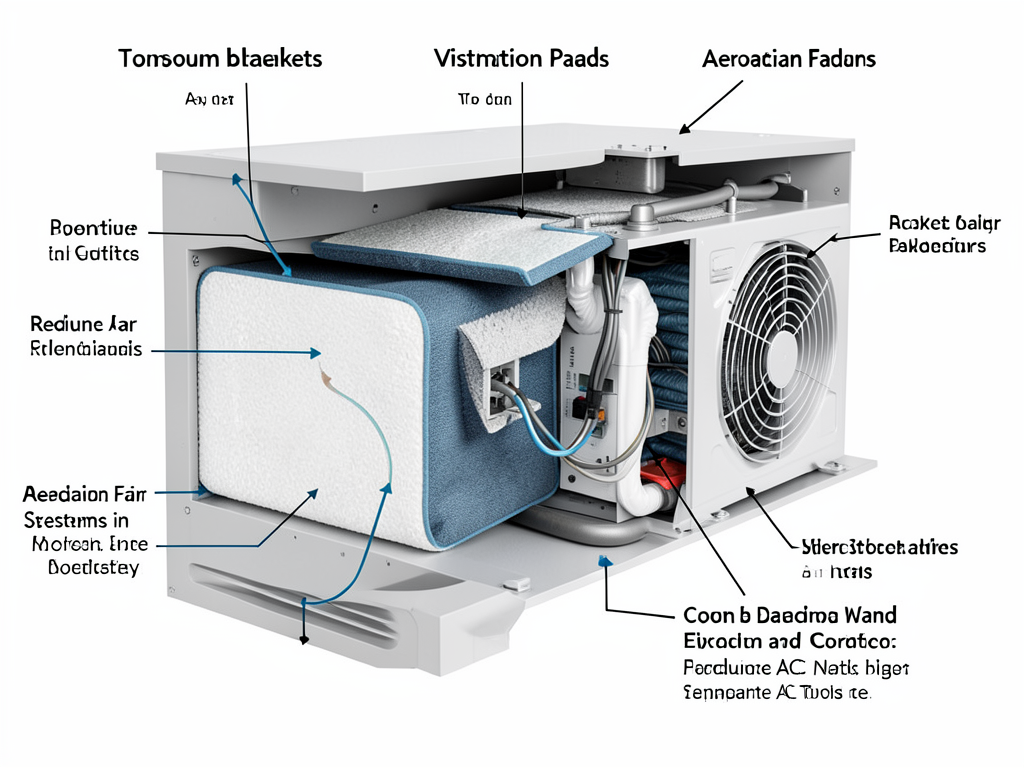
A cross-section diagram showing how sound blankets, vibration pads, and aerodynamic fans work together to reduce AC noise.
Why Installation Matters More Than the Model
Even the quietest AC unit can become a neighborhood nuisance if installed incorrectly. In Troy Hill’s narrow streets, proper installation is critical for maintaining peace with your neighbors.
Proper Sizing (Manual J Calculation): An oversized unit cycles on and off frequently, creating noise spikes and reducing efficiency. A correctly sized system runs longer cycles at lower speeds, which is inherently quieter. The Manual J calculation considers your home’s specific characteristics—something crucial for Troy Hill’s diverse housing stock ranging from century-old brick row homes to newer constructions.
Vibration Isolation Pads: These rubber or neoprene pads go under the outdoor unit to prevent vibrations from traveling through the concrete pad into the ground and nearby homes. In Troy Hill’s closely-packed housing, this simple addition can make the difference between a peaceful summer and angry neighbors.
Strategic Placement: The outdoor compressor should be positioned away from bedroom windows and property lines. In Troy Hill’s tight lots, this might mean creative solutions like rooftop installations or side-yard placements with sound barriers.
Ductwork Integrity: Leaky or poorly insulated ducts can create whistling sounds and allow noise to travel through your home’s walls. Proper duct sealing and insulation are essential for quiet operation.
According to the International Mechanical Code (IMC) Section 601.2, outdoor units must maintain specific clearances from property lines and windows to minimize noise impact on neighboring properties. In Troy Hill’s dense urban environment, these requirements become even more critical. International Mechanical Code Section 601.2.
Local Case Study: Reducing Noise in Troy Hill
Last summer, we helped a family on Lowrie Street dealing with a 15-year-old AC unit that was driving their neighbors crazy. The 70 dB unit sat just 8 feet from their neighbor’s bedroom window on a narrow shared driveway.
After a comprehensive assessment, we recommended a Mitsubishi MZ-FH mini-split system with the outdoor compressor relocated to the rear of the property. The installation included:
- Sound-dampening concrete pad with vibration isolation
- Strategic refrigerant line routing through existing wall cavities
- Indoor units placed in central locations to minimize airflow noise
- Decibel monitoring during testing to ensure compliance with local ordinances
The result? Indoor noise levels dropped to 22 dB (barely audible), and the outdoor unit operates at just 42 dB from the neighbor’s property line—about the sound level of a quiet refrigerator. The neighbors noticed the difference immediately, and the family reported significantly improved comfort without the constant hum they’d endured for years.
This is exactly the kind of solution Troy Hill homeowners need—systems that respect the neighborhood’s unique acoustic environment while providing reliable cooling during Pittsburgh’s humid summers.
Additional Considerations for Troy Hill Homes
Troy Hill’s unique characteristics create specific challenges for quiet AC installation:
Historic District Requirements: Parts of Troy Hill fall within Pittsburgh’s historic districts, which may have additional requirements for exterior modifications. Working with a contractor familiar with these regulations ensures your installation meets all guidelines.
Steep Terrain: Troy Hill’s hillside location affects outdoor unit placement. Units must be positioned to prevent water runoff issues while maintaining proper clearances for service and noise reduction.
Older Electrical Systems: Many Troy Hill homes have electrical systems that may need upgrades to support modern high-efficiency AC units. This is especially true for homes built before the 1960s when electrical demands were much lower.
Combined Sewer Systems: Some areas of Troy Hill still use combined sewer systems, which can affect drainage around outdoor units. Proper grading and drainage prevent water accumulation that could damage equipment or create breeding grounds for mosquitoes.
The EPA’s Section 608 regulations require proper refrigerant handling during installation and service. This is particularly important in Troy Hill’s older homes where refrigerant leaks could pose environmental hazards.
Financing and Incentives for Quiet AC Systems
High-efficiency, quiet AC systems often qualify for various incentives that can offset the initial investment. In Pennsylvania, homeowners may be eligible for:
- Federal tax credits for qualifying high-efficiency systems (check current year availability)
- Duquesne Light and FirstEnergy rebates for SEER2-rated equipment
- Utility company incentives for variable-speed technology installations
While specific dollar amounts change annually, investing in a premium quiet system often pays for itself through energy savings and increased home comfort within 3-5 years.
Maintenance Tips for Keeping Your AC Quiet
Even the best-installed quiet AC system needs regular maintenance to maintain its whisper-quiet operation. Here are essential maintenance tasks:
- Clean or replace air filters monthly during cooling season – Dirty filters force the system to work harder, increasing noise and reducing efficiency.
- Keep the outdoor unit clear of debris – Leaves, grass clippings, and other debris can get caught in the fan blades, creating rattling noises.
- Check refrigerant levels annually – Low refrigerant causes the compressor to work harder and can create unusual sounds.
- Inspect and tighten mounting hardware – Loose components can vibrate and create buzzing or rattling sounds.
- Schedule professional maintenance twice yearly – A technician can identify and address potential noise issues before they become problems.
Regular maintenance not only keeps your system quiet but also extends its lifespan and maintains efficiency—critical factors for Troy Hill’s climate where AC systems run heavily during humid summer months.
Making the Right Choice for Your Troy Hill Home
Selecting the quietest AC unit for your Troy Hill home involves balancing several factors:
Budget vs. Performance: While premium quiet systems cost more upfront, they often provide better long-term value through energy savings and reduced noise complaints from neighbors.
Home Characteristics: The age and construction of your home affect which systems work best. Older brick homes may benefit from ductless systems that don’t require extensive modifications.
Neighborhood Considerations: In Troy Hill’s close quarters, choosing a system that won’t disturb your neighbors is both courteous and practical—no one wants to be known as the house with the noisy AC.
Climate Adaptation: Pittsburgh’s humid summers require systems that can handle moisture removal effectively while maintaining quiet operation. Look for units with good dehumidification capabilities.
The best approach is to have a professional assessment of your specific situation. A qualified HVAC contractor can evaluate your home’s unique characteristics, discuss your noise concerns, and recommend the optimal solution for your Troy Hill property.
Frequently Asked Questions
How much quieter are premium AC units compared to standard models?
Premium quiet AC units typically operate 10-20 dB lower than standard models. This difference is significant—a 10 dB reduction makes the unit sound roughly half as loud to the human ear. While a standard unit might operate at 65-70 dB, quiet models can run at 45-55 dB.
Can I install a quiet AC unit myself to save money?
Professional installation is crucial for quiet operation. DIY installation often leads to vibration issues, improper sizing, and noise problems that negate the benefits of a quiet unit. Additionally, improper refrigerant handling violates EPA regulations and can result in fines.
How do I know if my current AC is too loud?
If you can hear your AC unit from inside your home when it’s running, or if neighbors have mentioned the noise, your system is likely too loud. Most modern quiet systems should be barely audible from just a few feet away.
Are ductless mini-splits always the quietest option?
While ductless mini-splits offer excellent quiet performance, especially indoors, they’re not always the best choice for every home. Central systems with variable-speed technology can also provide whisper-quiet operation when properly installed and sized. Understanding Ductless Systems.
What’s the typical cost difference between quiet and standard AC units?
Quiet AC systems typically cost 15-30% more than standard units. However, they often qualify for higher efficiency rebates and provide better energy savings, which can offset the initial price difference over time.
Ready to enjoy peaceful, efficient cooling in your Troy Hill home? Call (412) 387-0477 today to schedule your free consultation. Our experienced team understands the unique challenges of urban HVAC installation and can help you find the perfect quiet cooling solution for your specific needs.
Don’t let another noisy summer disrupt your neighborhood’s charm. Pick up the phone and call (412) 387-0477 before the next heat wave hits. We’ll help you select and install a system that keeps you cool while maintaining the peaceful atmosphere that makes Troy Hill special.
{
“@context”: “https://schema.org”,
“@type”: “BlogPosting”,
“headline”: “Finding the Quietest AC Units for Narrow Streets in Troy Hill”,
“description”: “Discover the quietest air conditioning systems for Troy Hill’s narrow streets. Learn about decibel ratings, installation techniques, and local noise considerations for peaceful cooling.”,
“wordCount”: 1965,
“datePublished”: “2026-03-19T12:27:00.000Z”,
“dateModified”: “2026-03-19T12:27:00.000Z”,
“inLanguage”: “en-US”,
“mainEntityOfPage”: {
“@type”: “WebPage”,
“@id”: “https://apexhvacpittsburgh.com”
},
“publisher”: {
“@type”: “LocalBusiness”,
“name”: “Apex HVAC Pittsburgh”,
“url”: “https://apexhvacpittsburgh.com”
},
“author”: {
“@type”: “Organization”,
“name”: “Apex HVAC Pittsburgh”,
“url”: “https://apexhvacpittsburgh.com”
},
“image”: {
“@type”: “ImageObject”,
“url”: “https://apexhvacpittsburgh.com/wp-content/uploads/2026/03/finding-the-quietest-ac-units-for-narrow-streets-i-1.png”
}
}
{
“@context”: “https://schema.org”,
“@type”: “HVACBusiness”,
“name”: “Apex HVAC Pittsburgh”,
“url”: “https://apexhvacpittsburgh.com”,
“address”: {
“@type”: “PostalAddress”,
“addressLocality”: “Pittsburgh”
},
“areaServed”: {
“@type”: “City”,
“name”: “Pittsburgh”
}
}
{
“@context”: “https://schema.org”,
“@type”: “FAQPage”,
“mainEntity”: [
{
“@type”: “Question”,
“name”: “How much quieter are premium AC units compared to standard models?”,
“acceptedAnswer”: {
“@type”: “Answer”,
“text”: “Premium quiet AC units typically operate 10-20 dB lower than standard models. This difference is significant—a 10 dB reduction makes the unit sound roughly half as loud to the human ear. While a standard unit might operate at 65-70 dB, quiet models can run at 45-55 dB.”
}
},
{
“@type”: “Question”,
“name”: “Can I install a quiet AC unit myself to save money?”,
“acceptedAnswer”: {
“@type”: “Answer”,
“text”: “Professional installation is crucial for quiet operation. DIY installation often leads to vibration issues, improper sizing, and noise problems that negate the benefits of a quiet unit. Additionally, improper refrigerant handling violates EPA regulations and can result in fines.”
}
},
{
“@type”: “Question”,
“name”: “How do I know if my current AC is too loud?”,
“acceptedAnswer”: {
“@type”: “Answer”,
“text”: “If you can hear your AC unit from inside your home when it’s running, or if neighbors have mentioned the noise, your system is likely too loud. Most modern quiet systems should be barely audible from just a few feet away.”
}
},
{
“@type”: “Question”,
“name”: “Are ductless mini-splits always the quietest option?”,
“acceptedAnswer”: {
“@type”: “Answer”,
“text”: “While ductless mini-splits offer excellent quiet performance, especially indoors, they’re not always the best choice for every home. Central systems with variable-speed technology can also provide whisper-quiet operation when properly installed and sized. Understanding Ductless Systems.”
}
},
{
“@type”: “Question”,
“name”: “What’s the typical cost difference between quiet and standard AC units?”,
“acceptedAnswer”: {
“@type”: “Answer”,
“text”: “Quiet AC systems typically cost 15-30% more than standard units. However, they often qualify for higher efficiency rebates and provide better energy savings, which can offset the initial price difference over time.”
}
}
]
}
{
“@context”: “https://schema.org”,
“@type”: “BreadcrumbList”,
“itemListElement”: [
{
“@type”: “ListItem”,
“position”: 1,
“name”: “Home”,
“item”: “https://apexhvacpittsburgh.com”
},
{
“@type”: “ListItem”,
“position”: 2,
“name”: “Blog”,
“item”: “https://apexhvacpittsburgh.com/blog”
},
{
“@type”: “ListItem”,
“position”: 3,
“name”: “Finding the Quietest AC Units for Narrow Streets in Troy Hill”
}
]
}
{
“@context”: “https://schema.org”,
“@type”: “Service”,
“serviceType”: “HVAC”,
“provider”: {
“@type”: “LocalBusiness”,
“name”: “Apex HVAC Pittsburgh”,
“url”: “https://apexhvacpittsburgh.com”
},
“areaServed”: {
“@type”: “City”,
“name”: “Pittsburgh”
},
“description”: “Discover the quietest air conditioning systems for Troy Hill’s narrow streets. Learn about decibel ratings, installation techniques, and local noise considerations for peaceful cooling.”
}