
Living in a Fineview row house means dealing with tight spaces and shared walls that can turn your HVAC system into an unwanted neighbor. That constant hum, rattle, or thump traveling through your walls isn’t just annoying—it’s a sign your system needs attention. Let’s fix this problem once and for all. Winterizing Your HVAC System.
Why Your Fineview Row House Amplifies HVAC Noise
Fineview’s historic row houses built between 1900 and 1940 have unique characteristics that make HVAC vibration issues more noticeable. These homes typically feature shared brick party walls, narrow floor plans, and original wood framing that’s dried and become more brittle over the past century. The combination of these factors creates perfect conditions for sound transmission.. Read more about How to Add Air Conditioning to a Braddock Row House Without Damaging Original Brick.
According to the International Building Code Section 1207.1, party walls between dwelling units must meet specific sound transmission requirements. However, many Fineview homes were built before these codes existed, leaving you with less sound isolation than modern construction provides. International Building Code Section 1207.1.
The hilly terrain of Fineview also affects outdoor unit placement. Many homes sit on slopes where the condenser pad can settle unevenly over time, causing compressor vibration that travels through the structure. This is especially problematic during Pittsburgh’s freeze-thaw cycles, which can shift even properly installed pads.. Read more about Smart Ways to Hide New Ductwork During a Lower Lawrenceville Loft Renovation.
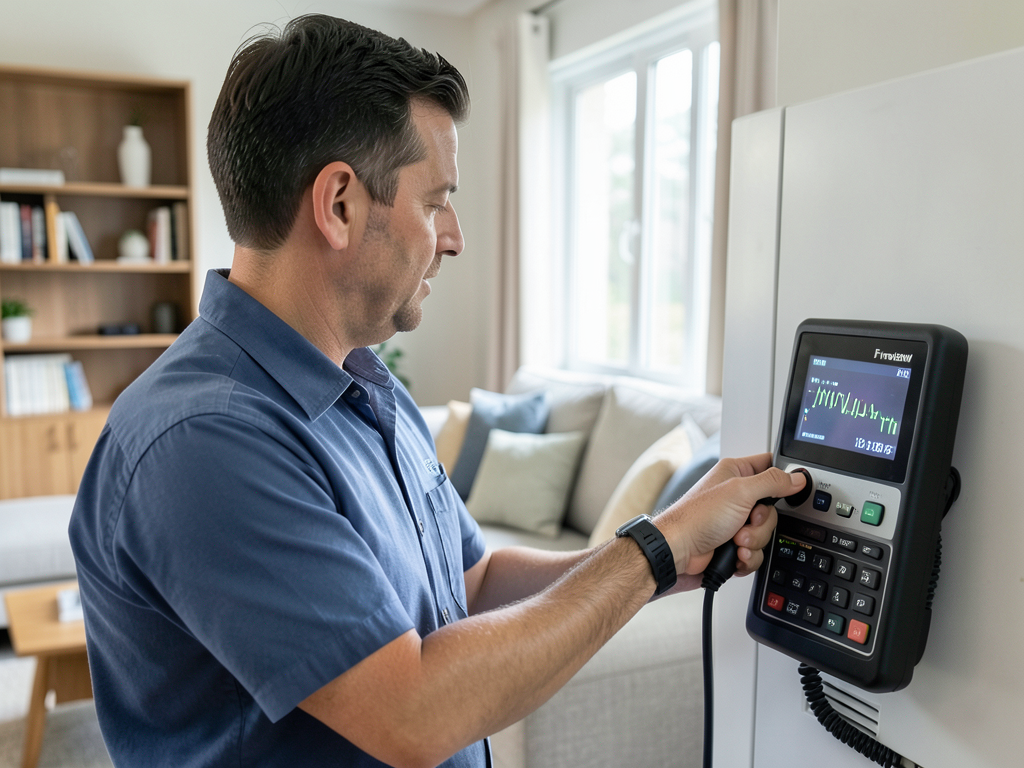
Image description: Technician using a vibration meter to measure HVAC system noise levels in a Fineview row house living room, showing decibel readings on a digital display.
Identifying the Sound: What’s Making That Noise?
Before you can fix the problem, you need to identify what type of noise you’re hearing. Different sounds indicate different issues:
| Sound Type | Common Causes | Diagnostic Test |
|---|---|---|
| Low hum | Transformer vibration, loose mounting bolts | Touch unit while running |
| Rattling | Loose panels, debris in fan, worn bearings | Visual inspection with flashlight |
| Thumping | Unbalanced blower wheel, loose ductwork | Listen near air handler |
| Clicking | Relay issues, capacitor problems | Check electrical panel |
Place your hand on different components while the system runs. A healthy system should feel smooth with minimal vibration. If you feel a noticeable buzz or shake, you’ve found your problem area.
Common Causes of HVAC Vibration in Pittsburgh Homes
1. Unbalanced Blower Fans and Motor Wear
Blower wheels can become unbalanced from dirt buildup, especially during Pittsburgh’s pollen season when fine particles accumulate on fan blades. A wheel that’s just 1/8 inch off-balance can create significant vibration that travels through your ductwork and into your living spaces.
Motor bearings wear out over time, typically lasting 8-12 years in Pittsburgh’s climate. When bearings fail, they create a distinctive high-pitched whine that gets louder as the problem worsens. This isn’t just noise—it’s a warning that your motor could fail completely, leaving you without heat or AC.
2. Improperly Secured Ductwork (The Drumming Effect)
Ducts that aren’t properly secured can act like drums, amplifying even small vibrations. In Fineview homes, where original ductwork often runs through shared walls or between floors, this drumming effect can be particularly noticeable.
Look for ducts that are touching wood framing or other rigid surfaces. Every point of contact becomes a potential vibration transmitter. The National Comfort Institute recommends using rubber isolation pads at all duct support points to prevent this issue. National Fire Protection Association HVAC electrical fires.
3. Compressor Hard-Starting and Age
Older compressors, especially those over 10 years old, often develop hard-starting issues. This means the compressor struggles to start up, creating a distinctive clicking sound followed by a loud thump when it finally engages.
Hard-starting puts extra stress on the compressor and can lead to complete failure. According to HVAC industry data, compressors in Pittsburgh’s climate typically last 12-15 years due to the extreme temperature swings we experience.
4. Structural Bridging: When the Unit Touches the Frame
This is the most common issue in Fineview row houses. When your outdoor unit, air handler, or even refrigerant lines touch the building structure, vibrations travel directly into your home.
Check if your outdoor condenser has rubber isolation feet. Many Fineview homes still have the original metal feet that transmit every compressor vibration into the concrete pad and then into your foundation.
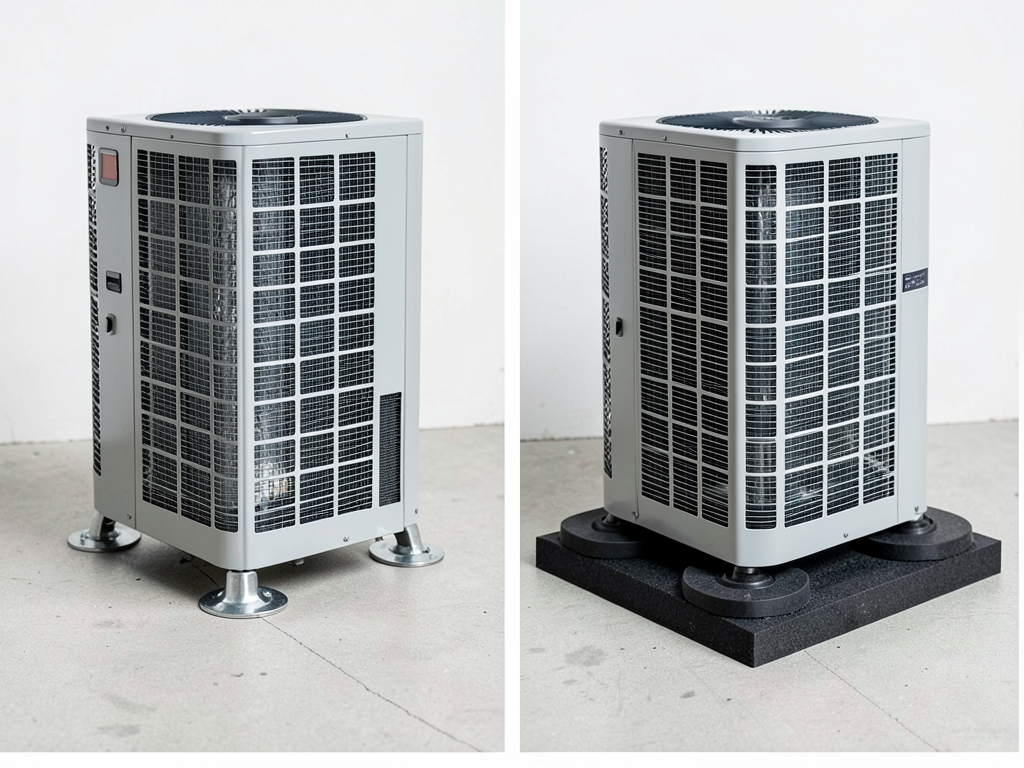
Image description: Side-by-side comparison showing a vibrating HVAC unit with metal feet touching concrete versus the same unit with proper rubber isolation pads installed.
DIY Troubleshooting: What You Can Check Today
Before calling a professional, try these simple checks to identify obvious problems:
- Visual Inspection
Turn off power at the breaker. Check for loose panels, screws, or visible damage. Look for debris around the outdoor unit.
- Level Check
Place a small bubble level on your outdoor unit’s pad. If it’s not level, the compressor works harder and vibrates more.
- Mounting Check
Inspect rubber isolation feet or pads. If they’re cracked, compressed, or missing, they need replacement.
- Line Set Check
Feel the refrigerant lines where they enter your home. If they’re vibrating against the wall, they need insulation or isolation.
Be careful when inspecting electrical components. If you’re unsure about anything involving wiring or the electrical panel, stop and call a professional. The National Fire Protection Association reports that HVAC electrical issues cause thousands of house fires annually.
Professional Solutions for Sound Isolation
When DIY checks don’t solve the problem, professional intervention becomes necessary. Here are the solutions HVAC technicians use to eliminate vibration noise:
Vibration Isolation Pads and Mounts
Modern vibration isolation technology has come a long way. Today’s HVAC isolation pads use materials like recycled rubber compounds, cork-rubber blends, and even spring isolators for severe cases.
For Fineview row houses, we typically recommend 1-inch thick recycled rubber pads with a durometer rating between 40-60 Shore A. This provides the right balance of vibration absorption without being too soft, which could cause the unit to shift.
Duct Isolation and Support
Professional duct isolation involves several steps:
- Installing rubber isolation hangers at all support points
- Adding vibration-dampening duct liner material
- Ensuring proper duct sizing to reduce airflow noise
- Sealing all joints to prevent whistling sounds
The Sheet Metal and Air Conditioning Contractors’ National Association (SMACNA) standards require specific isolation techniques for commercial applications, but these same principles apply to residential systems.
Compressor and Motor Mount Replacement
Compressor mounts wear out just like car engine mounts. When they fail, the compressor can actually move during operation, creating loud banging sounds.
Professional replacement involves:
- Removing the old compressor
- Installing new vibration-dampening mounts
- Using rubber grommets for all electrical connections
- Ensuring proper refrigerant line support
Sound Barrier Installation
In extreme cases, especially in Fineview homes where bedroom walls back up to mechanical rooms, sound barrier installation may be necessary. This involves:
- Installing mass-loaded vinyl barriers
- Adding resilient channels to decouple drywall from studs
- Using acoustic caulk at all penetrations
- Installing solid-core doors with proper seals
Image description: Technician installing rubber isolation pads under an outdoor HVAC condenser unit, demonstrating proper leveling and spacing techniques.
When to Call a Pittsburgh HVAC Specialist
While some vibration issues are simple fixes, others indicate serious problems that require immediate professional attention. Call (412) 387-0477 today if you notice:
- Grinding or metal-on-metal sounds
- Vibration that’s getting progressively worse
- System short-cycling (turning on and off rapidly)
- Visible damage to any component
- Electrical issues like tripped breakers
Fineview’s unique housing stock requires technicians who understand the specific challenges of older row houses. The combination of shared walls, original construction methods, and Pittsburgh’s climate creates vibration problems that generic solutions won’t fix.
Professional diagnosis typically takes 30-45 minutes and includes using specialized tools like vibration meters, thermal cameras, and sound level meters to pinpoint the exact source of the problem.
Don’t let HVAC noise continue to disrupt your home life. Call (412) 387-0477 to schedule your inspection before the problem gets worse.
Frequently Asked Questions
How much does it cost to fix HVAC vibration noise?
Costs vary widely depending on the cause. Simple fixes like replacing isolation pads might cost $150-300, while comprehensive sound isolation for an entire system could range from $800-2,500. Most Fineview homeowners spend between $400-800 for professional vibration reduction. The Homeowners Guide to Replacing an Aging Boiler in Bloomfield.
Can I install vibration pads myself?
Yes, if you’re comfortable with basic DIY tasks. However, proper installation requires leveling the unit, ensuring proper drainage, and sometimes modifying electrical connections. DIY installation voids manufacturer warranties on many systems.
How long do vibration isolation pads last?
Quality rubber isolation pads typically last 8-12 years in Pittsburgh’s climate. The freeze-thaw cycles and UV exposure from our four-season weather accelerate deterioration compared to milder climates.
Will fixing vibration noise improve my system’s efficiency?
Absolutely. Vibration often indicates misalignment, loose components, or airflow restrictions that make your system work harder. Fixing these issues can improve efficiency by 5-15% and extend equipment life.
Is the noise worse in winter or summer?
Most homeowners notice vibration noise more in summer when windows are open and outdoor units run constantly. However, heat pump systems can be noisier in winter due to defrost cycles. Pittsburgh’s temperature swings can also cause expansion and contraction noises year-round.
Remember, persistent HVAC vibration isn’t just a noise problem—it’s often a warning sign of bigger issues developing in your system. Don’t ignore it. Call (412) 387-0477 for a professional diagnosis today.
{
“@context”: “https://schema.org”,
“@type”: “BlogPosting”,
“headline”: “How to Stop HVAC Vibrations and Noise from Traveling Through Your Fineview Row House”,
“description”: “Fineview row houses face unique HVAC vibration challenges. Learn how to diagnose and fix noisy HVAC systems with Pittsburgh-specific solutions.”,
“wordCount”: 1519,
“datePublished”: “2026-05-30T11:35:00.000Z”,
“dateModified”: “2026-05-30T11:35:00.000Z”,
“inLanguage”: “en-US”,
“mainEntityOfPage”: {
“@type”: “WebPage”,
“@id”: “https://apexhvacpittsburgh.com”
},
“publisher”: {
“@type”: “LocalBusiness”,
“name”: “Apex HVAC Pittsburgh”,
“url”: “https://apexhvacpittsburgh.com”
},
“author”: {
“@type”: “Organization”,
“name”: “Apex HVAC Pittsburgh”,
“url”: “https://apexhvacpittsburgh.com”
},
“image”: {
“@type”: “ImageObject”,
“url”: “https://apexhvacpittsburgh.com/wp-content/uploads/2026/03/how-to-stop-hvac-vibrations-and-noise-from-traveli-1.png”
}
}
{
“@context”: “https://schema.org”,
“@type”: “HVACBusiness”,
“name”: “Apex HVAC Pittsburgh”,
“url”: “https://apexhvacpittsburgh.com”,
“address”: {
“@type”: “PostalAddress”,
“addressLocality”: “Pittsburgh”
},
“areaServed”: {
“@type”: “City”,
“name”: “Pittsburgh”
}
}
{
“@context”: “https://schema.org”,
“@type”: “FAQPage”,
“mainEntity”: [
{
“@type”: “Question”,
“name”: “Identifying the Sound: What’s Making That Noise?”,
“acceptedAnswer”: {
“@type”: “Answer”,
“text”: “Before you can fix the problem, you need to identify what type of noise you’re hearing. Different sounds indicate different issues:”
}
},
{
“@type”: “Question”,
“name”: “How much does it cost to fix HVAC vibration noise?”,
“acceptedAnswer”: {
“@type”: “Answer”,
“text”: “Costs vary widely depending on the cause. Simple fixes like replacing isolation pads might cost $150-300, while comprehensive sound isolation for an entire system could range from $800-2,500. Most Fineview homeowners spend between $400-800 for professional vibration reduction. The Homeowners Guide to Replacing an Aging Boiler in Bloomfield.”
}
},
{
“@type”: “Question”,
“name”: “Can I install vibration pads myself?”,
“acceptedAnswer”: {
“@type”: “Answer”,
“text”: “Yes, if you’re comfortable with basic DIY tasks. However, proper installation requires leveling the unit, ensuring proper drainage, and sometimes modifying electrical connections. DIY installation voids manufacturer warranties on many systems.”
}
},
{
“@type”: “Question”,
“name”: “How long do vibration isolation pads last?”,
“acceptedAnswer”: {
“@type”: “Answer”,
“text”: “Quality rubber isolation pads typically last 8-12 years in Pittsburgh’s climate. The freeze-thaw cycles and UV exposure from our four-season weather accelerate deterioration compared to milder climates.”
}
},
{
“@type”: “Question”,
“name”: “Will fixing vibration noise improve my system’s efficiency?”,
“acceptedAnswer”: {
“@type”: “Answer”,
“text”: “Absolutely. Vibration often indicates misalignment, loose components, or airflow restrictions that make your system work harder. Fixing these issues can improve efficiency by 5-15% and extend equipment life.”
}
},
{
“@type”: “Question”,
“name”: “Is the noise worse in winter or summer?”,
“acceptedAnswer”: {
“@type”: “Answer”,
“text”: “Most homeowners notice vibration noise more in summer when windows are open and outdoor units run constantly. However, heat pump systems can be noisier in winter due to defrost cycles. Pittsburgh’s temperature swings can also cause expansion and contraction noises year-round.”
}
}
]
}
{
“@context”: “https://schema.org”,
“@type”: “HowTo”,
“name”: “DIY HVAC Vibration Troubleshooting”,
“step”: [
{
“@type”: “HowToStep”,
“position”: 1,
“name”: “Visual Inspection”,
“text”: “Turn off power at the breaker. Check for loose panels, screws, or visible damage. Look for debris around the outdoor unit.”
},
{
“@type”: “HowToStep”,
“position”: 2,
“name”: “Level Check”,
“text”: “Place a small bubble level on your outdoor unit’s pad. If it’s not level, the compressor works harder and vibrates more.”
},
{
“@type”: “HowToStep”,
“position”: 3,
“name”: “Mounting Check”,
“text”: “Inspect rubber isolation feet or pads. If they’re cracked, compressed, or missing, they need replacement.”
},
{
“@type”: “HowToStep”,
“position”: 4,
“name”: “Line Set Check”,
“text”: “Feel the refrigerant lines where they enter your home. If they’re vibrating against the wall, they need insulation or isolation.”
}
],
“image”: “https://apexhvacpittsburgh.com/wp-content/uploads/2026/03/how-to-stop-hvac-vibrations-and-noise-from-traveli-1.png”
}
{
“@context”: “https://schema.org”,
“@type”: “BreadcrumbList”,
“itemListElement”: [
{
“@type”: “ListItem”,
“position”: 1,
“name”: “Home”,
“item”: “https://apexhvacpittsburgh.com”
},
{
“@type”: “ListItem”,
“position”: 2,
“name”: “Blog”,
“item”: “https://apexhvacpittsburgh.com/blog”
},
{
“@type”: “ListItem”,
“position”: 3,
“name”: “How to Stop HVAC Vibrations and Noise from Traveling Through Your Fineview Row House”
}
]
}
{
“@context”: “https://schema.org”,
“@type”: “Service”,
“serviceType”: “HVAC”,
“provider”: {
“@type”: “LocalBusiness”,
“name”: “Apex HVAC Pittsburgh”,
“url”: “https://apexhvacpittsburgh.com”
},
“areaServed”: {
“@type”: “City”,
“name”: “Pittsburgh”
},
“description”: “Fineview row houses face unique HVAC vibration challenges. Learn how to diagnose and fix noisy HVAC systems with Pittsburgh-specific solutions.”
}