
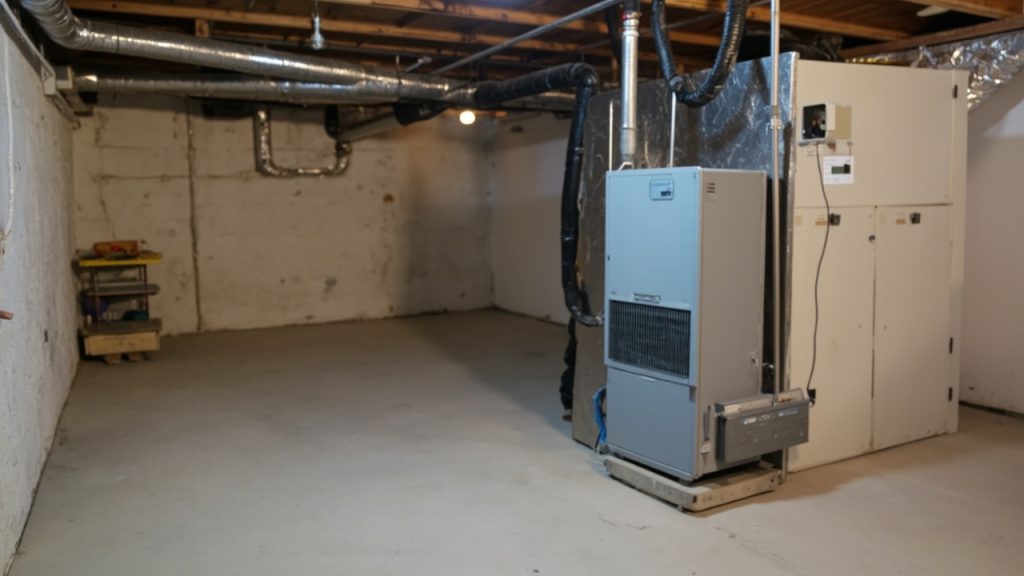
Keeping Your South Side Slopes Basement Dry and Mold Free With Better Airflow
Living on the South Side Slopes in 2026 presents specific home maintenance challenges that differ from other Pittsburgh neighborhoods. The steep terrain and unique geological makeup of Allegheny County create an environment where basement moisture becomes a constant struggle. Many homes built into these hillsides feature foundations that are partially underground and partially exposed. This arrangement leads to significant temperature imbalances. When warm humid air hits the cool foundation walls of a Slopes home, condensation forms almost immediately. This moisture serves as the primary fuel for mold growth and structural decay. You must address the root cause of this dampness through strategic airflow and advanced dehumidification to keep your home healthy.
Pittsburgh experienced record levels of humidity throughout the current 2026 summer season. This weather pattern forces homeowners to look beyond simple fixes. Managing a dry basement in the Slopes requires an understanding of how air moves through your specific floor plan. Older homes in this area often lack the ventilation found in modern builds. Without proper movement, air remains stagnant in corners and behind storage bins. This trapped air holds water vapor which eventually seeps into porous materials like wood framing and drywall. High humidity levels also place an enormous burden on your air conditioning system. When your AC has to remove gallons of water from the air while trying to cool the rooms, it consumes significantly more energy.
The Impact of Pittsburgh Topography on Basement Moisture
The South Side Slopes sit on a mix of clay-heavy soil and rock layers that retain water long after a rainstorm ends. In 2026, we see that runoff from the top of the hill often finds its way against the uphill side of foundation walls. This creates hydrostatic pressure which pushes liquid water through microscopic cracks in your basement walls. Even if you do not see standing water, the vapor is likely present. You can identify this by looking for efflorescence. This white powdery substance appears on brick or stone when water evaporates and leaves minerals behind. It is a clear sign that your basement needs better humidity management.
The stack effect plays a massive role in how your home breathes. This physical phenomenon occurs when warm air rises and exits through the upper levels of your house. As that air leaves, it creates a vacuum that pulls air up from the basement. If your basement is damp and filled with mold spores, those contaminants move directly into your living room and bedrooms. This makes your basement air quality a concern for the entire household. Proper ventilation ensures that the air being pulled upward is dry and filtered. You might find that improving the air quality in your older shadyside home through better filtration helps in similar ways by capturing particles before they circulate.
Advanced Humidity Sensor Technology in 2026
Modern moisture control relies on precision data provided by the latest 2026 sensor arrays. Gone are the days of simple analog hygrometers that only provide a general idea of room conditions. Current technology uses capacitive humidity mapping to track water vapor at specific points along your South Side Slopes foundation. These sensors connect to your home network and provide real-time updates to your smartphone. You can see exactly when the dew point in your basement reaches a level that allows mold to grow. This allows for proactive management instead of reacting after you smell a musty odor.
Some 2026 systems use ultrasonic sensors to detect the earliest stages of condensation on cool surfaces like copper pipes or stone walls. These devices measure the microscopic thickness of water films before they become visible droplets. By integrating these sensors with your HVAC system, the fans can ramp up automatically to increase airflow the moment moisture begins to accumulate. This level of automation is essential for homes on steep grades like Josephine Street or Eleanor Street where groundwater pressure varies hourly during the spring thaw.
Comparing Dehumidification Options for Slopes Homeowners
Many residents rely on portable dehumidifiers purchased at big box stores. While these units offer a temporary fix, they rarely solve the problem in a large or partitioned Pittsburgh basement. Portable units often struggle to maintain consistent humidity levels across different rooms. They also require frequent emptying which leads to periods where the machine is not running at all. A whole home dehumidification system integrates directly with your existing HVAC ductwork. This setup allows the system to pull air from every corner of the basement, process it, and distribute dry air throughout the space. It operates automatically based on precise sensors that monitor current 2026 indoor air conditions.
| Feature | Portable Dehumidifier Units | Whole Home Integrated Systems |
|---|---|---|
| Daily Water Removal | 20 to 50 pints | 90 to 135 pints |
| Drainage Method | Manual bucket or small hose | Direct plumbed into floor drain |
| Air Filtration | Basic mesh filter | MERV 11 or higher filtration |
| Coverage Area | Single room focus | Entire basement and upper floors |
| Noise Level | High internal fan noise | Quiet operation via ductwork |
The efficiency of your home depends on maintaining a relative humidity level between 30 and 50 percent. When levels climb above 60 percent, mold begins to colonize surfaces within 48 hours. In 2026, advanced HVAC systems use inverter technology to maintain these levels with minimal power consumption. These systems communicate with your thermostat to ensure that humidity stays low even when the air conditioner is not actively cooling the home. This is especially important during the spring and fall in Pittsburgh when temperatures are mild but the air remains damp.
Case Study regarding a South Side Slopes Foundation Repair
We recently addressed a severe moisture issue in a home located on the upper section of South 18th Street. The property featured a traditional stone foundation that suffered from significant water seepage during the current 2026 rainy season. The homeowner noticed that the air felt heavy and their first floor hardwood boards started to cup. Our team performed a comprehensive assessment using thermal imaging to identify cold spots where water moved through the masonry. We found that the lack of airflow in the back corner of the basement allowed mold to grow behind several storage cabinets.
The solution involved a two-pronged approach. First, we installed a high-capacity industrial dehumidifier capable of removing 120 pints of water daily. Second, we modified the ductwork to include two new return vents near the floor level where the dampest air settles. We also added a small air-circulating fan to move air out of the stagnant corners. After thirty days of operation, the humidity levels dropped from a dangerous 78 percent to a stable 45 percent. The homeowner reported a significant improvement in air quality and a noticeable drop in their monthly cooling costs because the air conditioner no longer struggled with excess water vapor.
Advanced Ventilation with Energy Recovery Ventilators
In 2026, many Pittsburgh homeowners are installing Energy Recovery Ventilators or ERVs. These devices bring fresh outdoor air into the basement while exhausting stale damp air. The process happens in the heat exchanger where the outgoing air pre-conditions the incoming air. This means you get fresh air without losing the cooling or heating you have already paid for. For a basement in the South Side Slopes, an ERV helps flush out the musty odors that often linger in hillside foundations. This continuous air exchange prevents the buildup of radon and other soil gases that are prevalent in Allegheny County. According to EPA guidelines on moisture control, ventilation is a key pillar in maintaining a healthy indoor environment.
ERVs require specific maintenance to keep them running at peak efficiency in the current climate. You should clean the air filters every three months to prevent dust from clogging the system. The internal exchange core needs a thorough inspection and vacuuming at least once a year. You also need to check the exterior intake and exhaust hoods to ensure that leaves or nesting birds do not block the airflow. If you neglect these tasks, the unit will consume more power and fail to balance the humidity correctly.
The installation cost for an ERV system in 2026 depends on several factors. The complexity of your existing ductwork determines the amount of labor required. If your basement is finished, we may need to install dedicated ventilation pipes, which adds to the initial investment. You also need to account for the electrical work required to provide a dedicated circuit for the unit. Most homeowners find that the long-term energy savings and improved health outcomes justify the professional installation expenses.
The Financial Impact of High Humidity on Pittsburgh Energy Bills
Excess humidity does more than make you uncomfortable. It costs you money every month. In the current 2026 energy market, Pittsburgh residents pay approximately 19 cents per kilowatt hour for electricity. When your basement is damp, your air conditioner must run longer cycles to dehumidify the air. We see that a typical South Side Slopes home with unmanaged humidity spends about 25 percent more on cooling during the summer months compared to a dry home. Maintaining a dry basement reduces the total workload on your HVAC equipment and prevents premature failure of expensive components.
| Humidity Level | AC Run Time Increase | Average Monthly Cost Impact |
|---|---|---|
| 45 Percent | Baseline | Standard Billing |
| 55 Percent | 15 Percent Increase | $35 Estimated Increase |
| 65 Percent | 35 Percent Increase | $85 Estimated Increase |
| 75 Percent Plus | 50 Percent Increase | $125 Estimated Increase |
If you notice that some rooms stay humid while others feel cold, you might be dealing with airflow imbalances. This is a common issue in larger properties. You can find more information on effective ways to fix uneven temperatures in a multi level fox chapel house to see how ductwork adjustments solve these problems. Proper balancing ensures that the dry air produced by your dehumidifier actually reaches the areas that need it most. In the Slopes, where basements are often divided into small utility rooms and storage areas, this airflow is vital for preventing hidden mold growth.
Signs Your Basement Airflow Needs Professional Attention
You do not always need a flood to have a moisture problem. Many homeowners miss the subtle signs that their HVAC system is failing to manage humidity. If you walk into your basement and immediately feel a heavy or thick sensation in the air, your humidity is likely above 60 percent. Other signs include condensation on cold water pipes or windows. In 2026, we also look for signs of rust on metal objects like tools or water heater jackets. This indicates that the air is consistently holding too much water.
- Musty or earthy odors that persist even after cleaning surfaces
- Damp spots on the floor after a heavy Pittsburgh rainstorm
- Peeling paint or wallpaper on basement partitions
- Visible mold growth on cardboard boxes or wooden furniture
- Allergy symptoms that improve when you leave the house
- Cupping or warping of hardwood floors on the first level
If you experience these issues, the first step is a professional assessment of your current airflow. We use thermal imaging and hygrometers to map the moisture levels in your basement. This data allows us to see exactly where the air is stagnating. Often, the solution involves adding a dedicated return vent or installing a whole home dehumidifier that works in tandem with your furnace. Modern controls make this easy to manage. You might consider upgrading older point breeze heating systems with modern smart thermostats to gain better control over your humidity sensors and fan speeds.
Practical Steps for Better Basement Air Quality
While mechanical solutions are the most effective, you can take several steps to assist your HVAC system. Start by ensuring that your gutters and downspouts are clear. In the South Side Slopes, water should be directed at least ten feet away from the foundation. This reduces the amount of moisture the soil holds against your walls. Inside the basement, keep furniture and storage bins away from the exterior walls. Leaving a gap of three to four inches allows air to circulate behind these objects. This simple change can prevent mold from growing in dark, hidden spaces.
Check your floor drain to ensure it is clear and functioning. If you install a whole home dehumidifier, it will need a reliable place to discharge the water it collects. Many 2026 models can pump water vertically to a laundry sink or directly into a sump pump basin. This eliminates the need for manual maintenance and ensures the system runs 24 hours a day during the peak of the Pittsburgh humidity season. Regular maintenance of your HVAC filters is also required. A clogged filter restricts airflow and makes it impossible for your system to remove moisture effectively.
Professional standards set by ASHRAE residential air quality standards suggest that basement air should be exchanged multiple times per hour. Achieving this in a Slopes home often requires a combination of high static pressure fans and dedicated duct runs. When these systems are balanced correctly, the basement feels just as fresh and dry as the upstairs living areas. This turns a damp storage space into a functional part of your home where you can safely store valuables or set up a home office.
Your Local Partner for Pittsburgh Humidity Solutions
Securing your home against the unique environmental pressures of the South Side Slopes requires a specialized approach. The combination of hillside drainage, older foundation materials, and the current 2026 climate trends makes basement moisture a complex issue. Our team has spent over fifteen years navigating these specific local challenges. We understand that every home in the Slopes has a different story based on its position on the hill and its architectural history. We provide the technical expertise needed to design an airflow strategy that keeps your basement dry, your air clean, and your HVAC system running at peak efficiency. Contact us today to schedule a comprehensive humidity assessment and take the first step toward a healthier Pittsburgh home.