
Protecting the Original Hardwood in Your Regent Square Home from Bone Dry Winter Air
Winter in Pittsburgh turns your Regent Square home into a moisture-sucking machine. When outdoor temperatures drop below freezing, your forced-air heating system blasts warm air through your home while simultaneously stripping away humidity. Your beautiful original hardwood floors pay the price. Winterizing Your HVAC System.
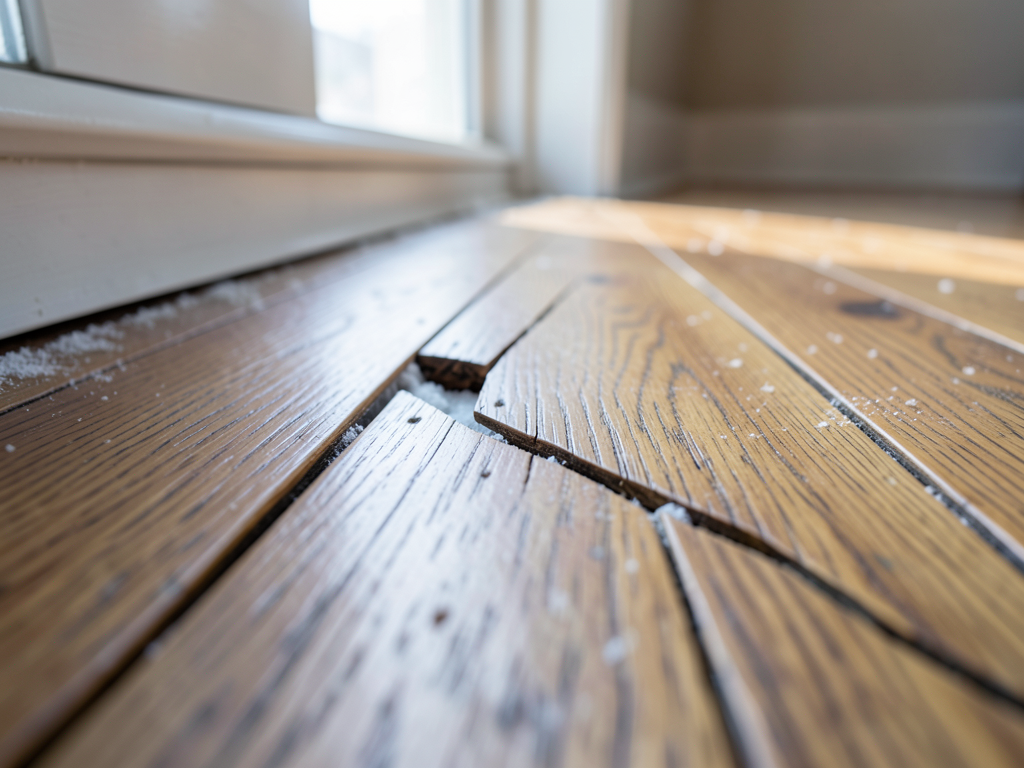
The problem starts with wood’s natural properties. Hardwood is hygroscopic, meaning it constantly absorbs and releases moisture based on the surrounding air. In winter, your indoor air can drop to 15-20% relative humidity while the ideal range for wood floors sits between 35-50%. This massive moisture differential causes your floorboards to shrink, creating gaps that can become permanent damage.
Regent Square homes built before 1940 often feature quarter-sawn oak or maple flooring that was never designed for modern heating systems. These boards respond dramatically to humidity changes. You might hear a sharp cracking sound as boards separate overnight, or notice daylight showing between planks near doorways where gaps form. EPA Section 608 certification.
The National Wood Flooring Association recommends maintaining 35-50% relative humidity to prevent wood movement. Below 30%, boards can shrink so severely that finish cracks and structural integrity suffers. Above 60%, the opposite problem occurs with expansion and cupping. National Wood Flooring Association.
Whole-home humidifiers offer the most effective protection. Unlike portable units that only treat one room, these systems connect to your existing ductwork and maintain consistent humidity throughout your entire Regent Square home. They work by introducing water vapor into the heated air stream, replacing what your furnace removes. Emergency Furnace Services for Families Living in Baldwin and Whitehall.
Installation costs range from $800 to $2,500 depending on your home’s size and existing HVAC configuration. The investment pales compared to floor refinishing, which can cost $3 to $8 per square foot for homes with extensive original hardwood.
Call (412) 387-0477 today to schedule your inspection and protect your floors before winter damage becomes permanent.
Understanding How Wood Responds to Pittsburgh’s Winter Air
Wood cells contain microscopic channels that transport water when the tree is alive. After harvesting and milling, these channels remain. In humid conditions, wood absorbs moisture and swells. In dry conditions, it releases moisture and shrinks.
The amount of dimensional change depends on the wood species and cut. Plain-sawn boards show more movement across their width than quarter-sawn boards. Oak typically moves about 8% across its width between fully saturated and oven-dry conditions.
Temperature affects the process too. Warm air holds more moisture than cold air. When you heat cold outdoor air from 20°F to 70°F, its relative humidity drops dramatically even if no moisture is added or removed.
Your Regent Square home likely experiences indoor humidity levels of 15-25% during peak winter without intervention. This compares to the comfortable human range of 30-60% and the wood floor ideal of 35-50%.
Static electricity becomes noticeable around 20% relative humidity. If you’re getting shocks from doorknobs or seeing your cat’s fur stand on end, your air is too dry for both comfort and your floors.

Signs Your Hardwood Floors Are Suffering from Dry Air
Gapping between boards represents the most obvious symptom. These separations typically appear worst near heat vents, exterior walls, and in rooms with the highest temperatures.
Cracks in the finish indicate boards have shrunk enough to break through the protective coating. These often appear as fine lines running with the grain.
Splitting occurs when boards dry too quickly or unevenly. This creates small fissures that can extend through the entire board thickness.
Cupping in winter seems counterintuitive but happens when moisture from a damp basement or crawl space rises through the subfloor while the top surface dries excessively.
Creaking and popping sounds intensify when humidity drops. Wood literally moves and rubs against neighboring boards or fasteners.
Doors that suddenly fit tighter or won’t close properly may indicate floor shrinkage affecting the surrounding framing.
Baseboards separating from walls show the same moisture loss affecting trim materials.
Checking for these symptoms early helps prevent permanent damage. Use a digital hygrometer to monitor your indoor humidity levels throughout the heating season.. Read more about How to Prevent Fireplace Smoke from Getting Trapped in Your Stanton Heights HVAC System.
Ideal Humidity Levels for Pittsburgh Homes with Original Hardwood
The sweet spot for both human comfort and wood preservation sits at 35-50% relative humidity. This range prevents excessive wood movement while avoiding condensation issues.
During Pittsburgh’s winter months, maintaining this level requires active humidification. Outdoor air at 20°F contains very little moisture. Heating it to room temperature without adding moisture drops relative humidity to desert-like levels.
Whole-home systems typically include a humidistat that monitors indoor humidity and activates the humidifier when levels drop below your set point. Quality units maintain accuracy within plus or minus 5%.
Water hardness affects humidifier performance. Pittsburgh’s water contains minerals that can build up on humidifier components. Units in areas with harder water may need more frequent cleaning or water treatment.. Read more about Cleaning the Grime and Paint Off Your Larimer Floor Vents Safely.
Ventilation rates impact humidity maintenance. Tightly sealed modern homes hold humidity better than drafty older homes. Your Regent Square home’s original construction may require higher humidification output to compensate for air infiltration.
Temperature settings also matter. Each degree you lower your thermostat reduces the moisture removal rate of your heating system, making humidity control easier.. Read more about Settings You Should Use for Your Valencia Home While You Are Away for the Winter.
Monitoring with a hygrometer helps you understand your home’s specific needs. Place meters in several rooms to identify problem areas where humidity fluctuates most.
How Your Heating System Creates the Problem
Forced-air furnaces operate by heating cold outdoor air and distributing it throughout your home. This process inherently removes moisture because cold air holds less water vapor than warm air.
A pound of air at 0°F can hold about 0.001 ounces of water. The same pound at 70°F can hold 0.016 ounces. When your furnace heats that cold air, the relative humidity plummets.
Burner efficiency affects humidity levels. Higher efficiency units extract more heat from combustion gases, leaving cooler exhaust. This can slightly reduce the moisture-stripping effect compared to older, less efficient models.
Ductwork location influences humidity distribution. Ducts in unconditioned spaces like attics or crawl spaces can lose heat before reaching living areas, reducing their ability to maintain indoor humidity.
Air filtration impacts system performance. High-efficiency filters capture more particles but may slightly reduce airflow, affecting how quickly conditioned air circulates and equalizes humidity.
Zone control systems can help by allowing different humidity setpoints in various areas of your home. Bedrooms might need less humidification than living areas with extensive hardwood flooring.
Heat recovery ventilators (HRVs) and energy recovery ventilators (ERVs) can help maintain humidity while providing fresh air exchange. ERVs transfer some moisture between exhaust and intake air streams.. Read more about Stylish Ways to Cover Ugly Radiators in Your Historic Friendship House.
Understanding these factors helps you work with your HVAC system rather than against it when protecting your floors. Protecting Your McCandless Home from Seasonal Allergies with Better Air Filtration.
Permanent Solutions: Whole-Home Humidifiers vs Portable Units
Whole-home humidifiers integrate with your existing HVAC system. They connect to your ductwork and water supply, automatically maintaining consistent humidity levels throughout your entire home.
Bypass humidifiers use your furnace’s blower to move air through a water panel. They’re less expensive but only work when your furnace runs. Power humidifiers include their own fan and can operate independently.
Steam humidifiers boil water to create pure vapor. They offer the most precise control and work well in homes with hard water or specific humidity requirements.
Installation typically takes 2-4 hours for a professional HVAC technician. The unit mounts near your furnace with water supply and drainage connections.
Maintenance involves replacing water panels annually and cleaning mineral deposits quarterly in areas with hard water.
Portable humidifiers treat individual rooms. They’re less expensive initially but require frequent refilling and cleaning. Most units need daily attention during peak winter months.
Coverage area limits portable units. A typical console model might treat 1,000 square feet, while your Regent Square home could exceed 2,000 square feet.
Noise levels differ significantly. Whole-home units operate nearly silently, while portable units can be quite noisy, especially on higher settings.
Energy efficiency varies. Whole-home units use minimal electricity since they rely on your furnace’s airflow. Portable units consume more energy relative to the moisture they add.
Cost comparison shows whole-home systems costing $800-2,500 installed versus $100-500 for portable units. However, whole-home systems typically use less water and require less maintenance over time.
- Assess Your Home Size
Calculate total square footage and number of levels to determine coverage needs.
- Evaluate Existing HVAC
Check if your furnace has space for humidifier installation and adequate airflow.
- Consider Water Quality
Test your water hardness to determine if you need special filtration or more frequent cleaning.
- Review Usage Patterns
Determine if you need humidity control when heating isn’t running.
- Calculate Long-term Costs
Factor in maintenance, water usage, and replacement parts over 5-10 years.
Cost Considerations and Return on Investment
Whole-home humidifier installation costs vary based on system type and home configuration. Basic bypass units start around $800, while steam systems can exceed $2,500.
Installation complexity affects pricing. Homes with easy furnace access and existing water lines cost less to equip than those requiring extensive modifications.
Operating costs remain relatively low. A typical whole-home humidifier uses $3-5 per month in electricity and minimal water during peak winter months.
Maintenance expenses include annual water panel replacement ($30-50) and periodic cleaning supplies. Hard water areas may need additional filtration ($100-300).
Floor refinishing costs provide perspective on potential savings. Professional refinishing for a 1,000-square-foot area ranges from $3,000 to $8,000 depending on stain choices and repair needs.
Insurance implications matter too. Some policies may not cover damage from humidity-related issues if you haven’t maintained proper moisture levels.
Energy savings represent an indirect benefit. Properly humidified air feels warmer at lower temperatures, potentially allowing thermostat adjustments that reduce heating costs.
Comfort improvements have value beyond floor protection. Proper humidity reduces static electricity, alleviates dry skin and respiratory irritation, and protects musical instruments and artwork.
Resale value considerations apply. Homes with well-maintained original features, including hardwood floors, often command premium prices in Regent Square’s historic housing market.
Financing options may be available through HVAC contractors or home improvement lenders, making the investment more manageable.
Tax credits or rebates occasionally apply to energy-efficient HVAC upgrades. Check current Pennsylvania and federal programs for potential savings.
Professional Installation and Maintenance Requirements
EPA Section 608 certification requires technicians handling refrigerants to demonstrate proper handling knowledge. While humidifiers don’t use refrigerants, this certification indicates professional training standards.
Pennsylvania Uniform Construction Code compliance affects HVAC installations. Local HVAC contractors must follow state regulations for mechanical system modifications.
Water supply connections require proper shutoff valves and leak protection. Professional installation includes these safety features to prevent water damage.
Drainage considerations matter. Humidifiers produce condensate that must drain properly. Installation includes appropriate drainage routing to prevent water accumulation.
Electrical connections must meet National Electrical Code requirements. Professional installation ensures proper grounding and circuit protection.
Testing procedures verify system operation. Technicians check humidity output, water flow rates, and control function before completing installation.
Initial setup includes programming the humidistat for your specific home conditions. This process considers outdoor temperature sensors and indoor humidity targets.
Maintenance schedules vary by system type. Steam units need more frequent cleaning than bypass units. Water quality significantly impacts maintenance frequency.
DIY maintenance limitations exist. While homeowners can replace water panels, professional service ensures proper system function and identifies potential issues early. The Homeowners Guide to Replacing an Aging Boiler in Bloomfield.
Warranty considerations favor professional installation. Many manufacturers require professional installation to maintain full warranty coverage.
Emergency service availability matters. Choose contractors offering 24/7 support for unexpected issues during peak winter months.
Documentation provides important records. Professional installation includes detailed system information for future reference and maintenance.
Additional Winter Protection Strategies
Area rugs in high-traffic zones reduce wear on hardwood while providing some insulation against temperature fluctuations.
Door mats at entrances capture moisture and debris before it reaches your floors. Choose breathable materials that won’t trap water underneath.
Area humidity monitoring helps identify problem rooms. Bathrooms and kitchens often maintain higher humidity levels naturally.
Houseplants contribute minimal moisture but can help stabilize humidity in small areas. Group plants together for maximum effect.
Indoor drying racks for laundry add moisture while reducing energy use from electric dryers. This works best with small loads in problem areas.
Aquariums and water features provide localized humidification. The effect remains limited to immediate surroundings.
Shower steam management helps. Leave bathroom doors open after showers to distribute moisture to adjacent rooms.
Cooking generates steam and moisture. Use stovetop cooking more frequently during dry periods for natural humidification.
Window insulation reduces cold surface temperatures that can create condensation issues when indoor humidity rises.
Basement moisture control prevents unintended humidity sources. Address any water intrusion or high humidity in below-grade spaces.
Air sealing reduces uncontrolled air exchange that strips moisture from your home. Weatherstripping and caulking help maintain consistent humidity.
Thermostat programming can help. Lower nighttime temperatures reduce heating system run time and moisture removal.
Understanding these complementary strategies helps you create a comprehensive approach to floor protection. Understanding Ductless Systems.
Frequently Asked Questions
How quickly can dry air damage hardwood floors?
Significant damage can occur within one heating season if humidity drops below 25% for extended periods. Gapping typically appears within weeks of sustained low humidity.
Can I use a hygrometer to monitor humidity levels?
Yes, digital hygrometers provide accurate readings and help you understand your home’s specific humidity patterns. Place them away from direct heat sources for best results.
Will a whole-home humidifier increase my energy bills?
Operating costs are minimal, typically $3-5 per month in electricity. Many homeowners find they can lower thermostat settings slightly due to improved comfort, potentially offsetting the cost.
How often should I replace the water panel in my humidifier?
Annual replacement is standard, typically before the heating season begins. Homes with hard water may need more frequent changes or additional cleaning.
Can I install a humidifier myself?
While possible, professional installation ensures proper integration with your HVAC system, compliance with building codes, and maintains warranty coverage. Incorrect installation can cause water damage or system problems.
What humidity level should I target during Pittsburgh winters?
Aim for 35-45% relative humidity. This range protects wood floors while minimizing condensation risks on cold windows and exterior surfaces.
Will a humidifier help with other winter comfort issues?
Yes, proper humidity reduces static electricity, alleviates dry skin and respiratory irritation, and protects other moisture-sensitive items like musical instruments and artwork.
Don’t wait until your floors show permanent damage. Call (412) 387-0477 today to schedule your inspection and protect your Regent Square home’s original hardwood from Pittsburgh’s harsh winter air.
Pick up the phone and call (412) 387-0477 before the next cold snap hits. Our experienced technicians understand the unique challenges of maintaining historic homes in Pittsburgh’s climate and can recommend the perfect humidification solution for your specific situation.
You may also find this helpful. Preparing the Nursery in Your Seven Fields Home for Your New Arrival.
{
“@context”: “https://schema.org”,
“@type”: “BlogPosting”,
“headline”: “Protecting the Original Hardwood in Your Regent Square Home from Bone Dry Winter Air”,
“description”: “Learn how Pittsburgh’s harsh winters damage Regent Square hardwood floors and how whole-home humidification can protect your investment.”,
“wordCount”: 2468,
“datePublished”: “2026-05-16T08:59:00.000Z”,
“dateModified”: “2026-05-16T08:59:00.000Z”,
“inLanguage”: “en-US”,
“mainEntityOfPage”: {
“@type”: “WebPage”,
“@id”: “https://apexhvacpittsburgh.com”
},
“publisher”: {
“@type”: “LocalBusiness”,
“name”: “Apex HVAC Pittsburgh”,
“url”: “https://apexhvacpittsburgh.com”
},
“author”: {
“@type”: “Organization”,
“name”: “Apex HVAC Pittsburgh”,
“url”: “https://apexhvacpittsburgh.com”
},
“image”: {
“@type”: “ImageObject”,
“url”: “https://apexhvacpittsburgh.com/wp-content/uploads/2026/03/protecting-the-original-hardwood-in-your-regent-sq-1.png”
}
}
{
“@context”: “https://schema.org”,
“@type”: “HVACBusiness”,
“name”: “Apex HVAC Pittsburgh”,
“url”: “https://apexhvacpittsburgh.com”,
“address”: {
“@type”: “PostalAddress”,
“addressLocality”: “Pittsburgh”
},
“areaServed”: {
“@type”: “City”,
“name”: “Pittsburgh”
}
}
{
“@context”: “https://schema.org”,
“@type”: “FAQPage”,
“mainEntity”: [
{
“@type”: “Question”,
“name”: “How quickly can dry air damage hardwood floors?”,
“acceptedAnswer”: {
“@type”: “Answer”,
“text”: “Significant damage can occur within one heating season if humidity drops below 25% for extended periods. Gapping typically appears within weeks of sustained low humidity.”
}
},
{
“@type”: “Question”,
“name”: “Can I use a hygrometer to monitor humidity levels?”,
“acceptedAnswer”: {
“@type”: “Answer”,
“text”: “Yes, digital hygrometers provide accurate readings and help you understand your home’s specific humidity patterns. Place them away from direct heat sources for best results.”
}
},
{
“@type”: “Question”,
“name”: “Will a whole-home humidifier increase my energy bills?”,
“acceptedAnswer”: {
“@type”: “Answer”,
“text”: “Operating costs are minimal, typically $3-5 per month in electricity. Many homeowners find they can lower thermostat settings slightly due to improved comfort, potentially offsetting the cost.”
}
},
{
“@type”: “Question”,
“name”: “How often should I replace the water panel in my humidifier?”,
“acceptedAnswer”: {
“@type”: “Answer”,
“text”: “Annual replacement is standard, typically before the heating season begins. Homes with hard water may need more frequent changes or additional cleaning.”
}
},
{
“@type”: “Question”,
“name”: “Can I install a humidifier myself?”,
“acceptedAnswer”: {
“@type”: “Answer”,
“text”: “While possible, professional installation ensures proper integration with your HVAC system, compliance with building codes, and maintains warranty coverage. Incorrect installation can cause water damage or system problems.”
}
},
{
“@type”: “Question”,
“name”: “What humidity level should I target during Pittsburgh winters?”,
“acceptedAnswer”: {
“@type”: “Answer”,
“text”: “Aim for 35-45% relative humidity. This range protects wood floors while minimizing condensation risks on cold windows and exterior surfaces.”
}
},
{
“@type”: “Question”,
“name”: “Will a humidifier help with other winter comfort issues?”,
“acceptedAnswer”: {
“@type”: “Answer”,
“text”: “Yes, proper humidity reduces static electricity, alleviates dry skin and respiratory irritation, and protects other moisture-sensitive items like musical instruments and artwork.”
}
}
]
}
{
“@context”: “https://schema.org”,
“@type”: “HowTo”,
“name”: “How to Choose Between Humidifier Types”,
“step”: [
{
“@type”: “HowToStep”,
“position”: 1,
“name”: “Assess Your Home Size”,
“text”: “Calculate total square footage and number of levels to determine coverage needs.”
},
{
“@type”: “HowToStep”,
“position”: 2,
“name”: “Evaluate Existing HVAC”,
“text”: “Check if your furnace has space for humidifier installation and adequate airflow.”
},
{
“@type”: “HowToStep”,
“position”: 3,
“name”: “Consider Water Quality”,
“text”: “Test your water hardness to determine if you need special filtration or more frequent cleaning.”
},
{
“@type”: “HowToStep”,
“position”: 4,
“name”: “Review Usage Patterns”,
“text”: “Determine if you need humidity control when heating isn’t running.”
},
{
“@type”: “HowToStep”,
“position”: 5,
“name”: “Calculate Long-term Costs”,
“text”: “Factor in maintenance, water usage, and replacement parts over 5-10 years.”
}
],
“image”: “https://apexhvacpittsburgh.com/wp-content/uploads/2026/03/protecting-the-original-hardwood-in-your-regent-sq-1.png”
}
{
“@context”: “https://schema.org”,
“@type”: “BreadcrumbList”,
“itemListElement”: [
{
“@type”: “ListItem”,
“position”: 1,
“name”: “Home”,
“item”: “https://apexhvacpittsburgh.com”
},
{
“@type”: “ListItem”,
“position”: 2,
“name”: “Blog”,
“item”: “https://apexhvacpittsburgh.com/blog”
},
{
“@type”: “ListItem”,
“position”: 3,
“name”: “Protecting the Original Hardwood in Your Regent Square Home from Bone Dry Winter Air”
}
]
}
{
“@context”: “https://schema.org”,
“@type”: “Service”,
“serviceType”: “HVAC”,
“provider”: {
“@type”: “LocalBusiness”,
“name”: “Apex HVAC Pittsburgh”,
“url”: “https://apexhvacpittsburgh.com”
},
“areaServed”: {
“@type”: “City”,
“name”: “Pittsburgh”
},
“description”: “Learn how Pittsburgh’s harsh winters damage Regent Square hardwood floors and how whole-home humidification can protect your investment.”
}