
Smart Ways to Hide New Ductwork During a Lower Lawrenceville Loft Renovation
Lower Lawrenceville lofts present unique HVAC challenges. High ceilings and exposed brick walls demand creative ductwork solutions that balance industrial aesthetics with modern comfort. You need ductwork that works efficiently without disrupting your loft’s character.
Smart ductwork concealment in Lower Lawrenceville means understanding local building codes, humidity control needs, and the specific structural quirks of century-old buildings. The right approach preserves your loft’s industrial charm while delivering whisper-quiet, energy-efficient heating and cooling. Understanding Ductless Systems.
Whether you’re restoring a historic brick building near Butler Street or converting a warehouse space by the Allegheny River, proper ductwork planning prevents costly retrofits and ensures your system performs optimally for decades. Winterizing Your HVAC System.
Understanding Lower Lawrenceville’s Unique HVAC Challenges
Lower Lawrenceville’s historic buildings were constructed before central air conditioning existed. These structures feature thick masonry walls, heavy timber framing, and open floor plans that complicate modern HVAC installation.
Humidity control becomes critical in these older buildings. Pittsburgh’s annual average relative humidity hovers around 70%, creating condensation risks for exposed metal ductwork. Without proper insulation, cold metal ducts sweat profusely during summer months, potentially damaging drywall and creating mold conditions.
The Pennsylvania Uniform Construction Code (UCC) requires specific clearances and fire-rated assemblies for ductwork penetrations through walls and floors. Local inspections in Allegheny County often mandate additional protection for exposed systems in mixed-use buildings. Pennsylvania Energy Code.
Exposed Ductwork: Industrial Chic Meets Functionality
Exposed spiral ductwork has become the signature look for Lower Lawrenceville lofts. The circular profile and raw metal finish complement exposed brick and timber beams perfectly. But exposed systems require specific engineering considerations.
Spiral ducting costs approximately $10-15 per linear foot installed in Pittsburgh, compared to $8-12 for rectangular sheet metal. The price difference reflects specialized fabrication and the need for vibration isolation hangers that prevent metal-on-metal contact with structural elements.
Sound transmission presents a significant challenge. Uninsulated exposed ducts can transmit HVAC noise throughout open spaces. Professional installation includes sound attenuation lining and strategic placement away from quiet zones like bedrooms.
Maintenance accessibility becomes a design feature. Exposed systems allow visual inspection for dust accumulation and easy access for cleaning. Professional duct cleaning services recommend annual inspection for exposed systems, compared to every 3-5 years for concealed ductwork.
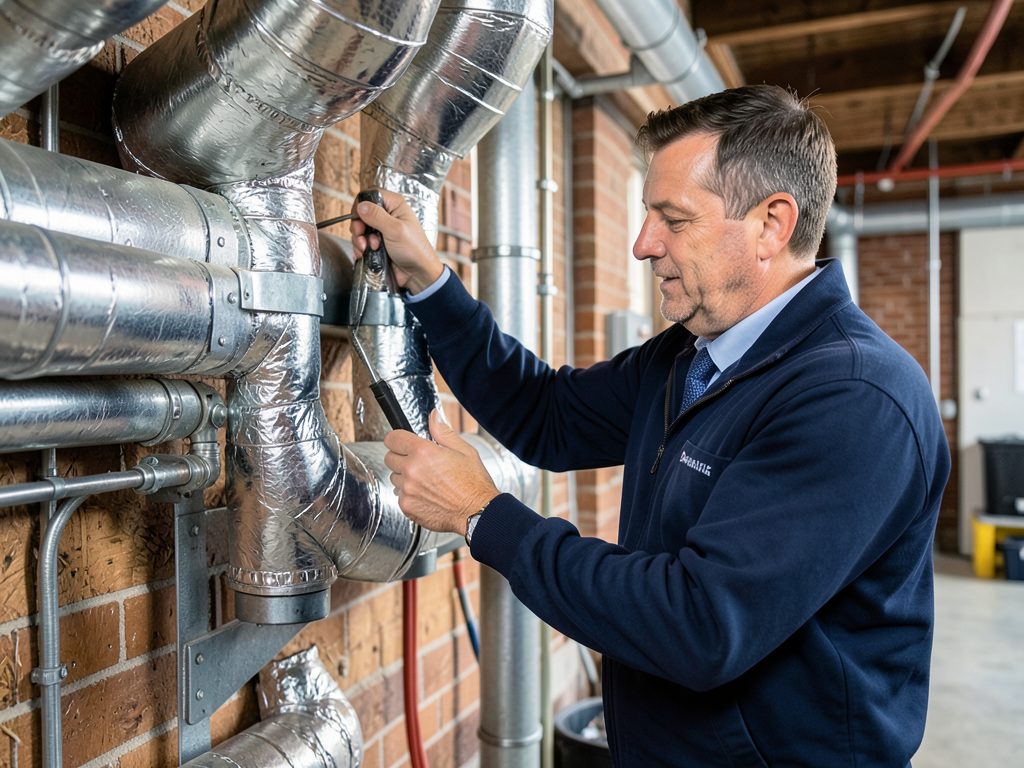
A technician inspects exposed spiral ductwork in a Lower Lawrenceville loft, checking for proper insulation and vibration isolation mounting systems.
Hidden Ductwork Solutions for Clean Lines
Hidden ductwork offers the cleanest aesthetic for loft renovations. Building soffits, bulkheads, and ceiling chases conceal HVAC components while maintaining your loft’s open feel. This approach requires careful planning during demolition phases.
Construction costs for hidden systems run 20-30% higher than exposed alternatives. The additional expense covers framing lumber, drywall installation, joint compound, and paint. However, hidden systems often qualify for better energy efficiency ratings due to improved insulation options.
Drop ceiling systems provide another concealment option. Modern grid systems can support ductwork while maintaining ceiling heights of 7-8 feet. This approach works well in areas where exposed ducts would reduce headroom below 6’8".
Building chases within existing walls maximizes space efficiency. This method requires careful routing to avoid structural members and electrical systems. Professional HVAC designers use 3D modeling software to optimize duct routing before construction begins.
Cost Comparison: Exposed vs. Hidden Ductwork
| Feature | Exposed Spiral Duct | Hidden Ductwork |
|---|---|---|
| Material Cost | $10-15/linear foot | $8-12/linear foot |
| Labor Cost | $15-20/linear foot | $25-35/linear foot |
| Total Installation | $25-35/linear foot | $35-50/linear foot |
| Additional Framing | None required | $3-5/linear foot |
| Insulation Options | External wrap only | Internal + external |
| Energy Efficiency | R-4 to R-6 | R-8 to R-12 |
| Maintenance Access | Excellent | Limited |
| Noise Levels | 45-55 dB | 35-45 dB |
Energy Efficiency and Insulation Requirements
Pennsylvania Energy Code mandates minimum R-values for ductwork based on location and application. Exposed ducts in unconditioned spaces require R-6 minimum insulation, while concealed ducts in conditioned spaces need R-4.2.
Heat loss calculations become critical in Pittsburgh’s climate. Winter design temperatures reach -4°F, requiring properly sized equipment and well-insulated distribution systems. Undersized ducts increase operating costs by 15-25% and reduce equipment lifespan.
Condensation control requires understanding dew point calculations. When duct surface temperature drops below ambient dew point, moisture forms. Pittsburgh’s summer dew points regularly exceed 65°F, necessitating vapor barriers and proper insulation thickness.
Professional Manual J load calculations determine exact equipment sizing. These calculations consider building orientation, window area, insulation levels, and occupancy patterns. Oversized equipment cycles frequently, reducing efficiency and comfort.
Painting and Finishing Exposed Ductwork
Raw galvanized steel develops a protective zinc patina over time. Many Lower Lawrenceville renovations embrace this natural aging process. However, painted ductwork offers better corrosion resistance and aesthetic control.
Industrial epoxy coatings provide superior durability for exposed systems. These finishes resist moisture, cleaning chemicals, and UV degradation. Application requires professional spray equipment and proper surface preparation for adhesion. EPA Section 608 certification.
Color selection impacts both aesthetics and heat absorption. Dark colors absorb more radiant heat, potentially increasing attic temperatures in summer. Light colors reflect heat but may show dirt more readily. Professional designers often recommend neutral tones that complement exposed brick.
Textured finishes add visual interest while hiding minor imperfections. Orange peel or knockdown textures mask fabrication marks and installation tolerances. These finishes also improve light diffusion in industrial spaces.
Ceiling Height and Bulkhead Considerations
Lower Lawrenceville lofts typically feature 12-15 foot ceilings. Exposed ductwork can reduce usable height by 8-12 inches when accounting for proper clearances and insulation. This reduction rarely impacts the industrial aesthetic.
Bulkhead construction requires structural engineering approval in historic buildings. Load-bearing walls cannot support additional framing without proper reinforcement. Professional contractors use laser levels to ensure bulkheads maintain consistent heights throughout spaces.
Access panels become mandatory for hidden systems. Building codes require removable access for equipment maintenance and filter changes. These panels must match surrounding finishes while providing adequate clearance for service personnel.
Lighting coordination prevents conflicts between HVAC and electrical systems. Recessed fixtures cannot penetrate ductwork enclosures. Professional coordination ensures proper spacing and avoids costly rework.
Professional Installation vs. DIY Limitations
DIY ductwork installation violates multiple building codes and insurance requirements. Professional HVAC contractors carry liability insurance and workers’ compensation coverage that protects property owners from accidents and installation failures.
Refrigerant handling requires EPA Section 608 certification. Improper charging causes system failures and environmental damage. Professional technicians use calibrated gauges and follow manufacturer specifications for optimal performance.
Sheet metal fabrication demands specialized tools and skills. Professional shops use plasma cutters, press brakes, and Pittsburgh machines to create precise fittings. Improper cuts and joints reduce system efficiency by 20-30%.
Permit requirements vary by municipality. Allegheny County requires mechanical permits for all HVAC installations. Professional contractors handle permit applications, inspections, and code compliance documentation.
Maintenance and Air Quality Considerations
Exposed ductwork accumulates dust more rapidly than concealed systems. Pittsburgh’s industrial heritage means higher particulate counts in many Lower Lawrenceville buildings. Professional cleaning every 12-18 months prevents buildup that restricts airflow.
Filter selection impacts both system performance and indoor air quality. MERV 8-11 filters balance airflow restriction with particle capture. Higher MERV ratings require larger filter areas to prevent pressure drops.
Condensation prevention requires regular inspection of insulation integrity. Damaged vapor barriers allow moisture migration that creates mold conditions. Professional technicians use infrared cameras to detect temperature variations indicating insulation problems.
Air balancing ensures even distribution throughout spaces. Professional technicians use flow hoods and manometers to measure and adjust airflow at each register. Proper balancing prevents hot and cold spots that reduce comfort.
Choosing the Right Approach for Your Loft
Your decision between exposed and hidden ductwork depends on multiple factors. Consider your budget, aesthetic preferences, and long-term maintenance plans. Professional consultation helps evaluate all options before committing to construction.
Building age influences system selection. Pre-1920 structures often lack adequate structural support for heavy concealed systems. Professional assessment determines feasibility and identifies potential complications before construction begins.
Future renovation plans impact ductwork routing. Flexible layouts accommodate changing space configurations without major system rework. Professional designers plan for adaptability during initial installation.
Energy efficiency goals drive insulation and equipment selection. High-efficiency systems reduce operating costs but require larger initial investments. Professional analysis calculates payback periods based on your specific usage patterns.
Frequently Asked Questions
How much does ductwork concealment add to renovation costs?
Hidden ductwork typically adds $10-15 per linear foot to exposed system costs. This includes framing, drywall, finishing, and additional insulation. Total project costs increase 20-30% for complete concealment.
Can I paint exposed ductwork myself?
DIY painting risks improper surface preparation and coating failure. Professional epoxy finishes require specific temperature and humidity conditions for proper curing. Improper application leads to peeling and corrosion within months.
How often should exposed ductwork be cleaned?
Professional cleaning every 12-18 months prevents dust accumulation that restricts airflow. Pittsburgh’s industrial environment may require more frequent cleaning. Regular inspection helps determine optimal cleaning intervals.
Does exposed ductwork affect property values?
Exposed ductwork can increase property values in industrial-chic markets like Lower Lawrenceville. The aesthetic appeals to buyers seeking authentic loft character. However, poor installation or maintenance can negatively impact appraisals.
What building permits are required for ductwork installation?
Allegheny County requires mechanical permits for all HVAC installations. Additional permits may be needed for structural modifications, electrical work, or gas line changes. Professional contractors handle permit acquisition and inspections.
Professional HVAC Services for Your Lower Lawrenceville Loft
Smart ductwork concealment requires expertise in both HVAC engineering and historic building renovation. Professional contractors understand Lower Lawrenceville’s unique challenges and provide solutions that balance aesthetics with performance.
Proper ductwork installation prevents future problems and ensures optimal system efficiency. Professional assessment identifies potential issues before construction begins, saving time and money on costly retrofits.
Call (412) 387-0477 today to schedule your free consultation. Our experienced technicians will evaluate your loft’s specific needs and recommend the best ductwork solution for your renovation project.
Don’t let ductwork concerns delay your Lower Lawrenceville loft renovation. Professional guidance ensures your HVAC system enhances rather than detracts from your space’s industrial character. Pick up the phone and call (412) 387-0477 before the next storm hits.
{
“@context”: “https://schema.org”,
“@type”: “BlogPosting”,
“headline”: “Smart Ways to Hide New Ductwork During a Lower Lawrenceville Loft Renovation”,
“description”: “Expert HVAC strategies for hiding ductwork in Lower Lawrenceville lofts. Learn industrial chic vs. traditional options, costs, and Pittsburgh-specific installation tips.”,
“wordCount”: 1670,
“datePublished”: “2026-06-13T13:20:00.000Z”,
“dateModified”: “2026-06-13T13:20:00.000Z”,
“inLanguage”: “en-US”,
“mainEntityOfPage”: {
“@type”: “WebPage”,
“@id”: “https://apexhvacpittsburgh.com”
},
“publisher”: {
“@type”: “LocalBusiness”,
“name”: “Apex HVAC Pittsburgh”,
“url”: “https://apexhvacpittsburgh.com”
},
“author”: {
“@type”: “Organization”,
“name”: “Apex HVAC Pittsburgh”,
“url”: “https://apexhvacpittsburgh.com”
},
“image”: {
“@type”: “ImageObject”,
“url”: “https://apexhvacpittsburgh.com/wp-content/uploads/2026/03/smart-ways-to-hide-new-ductwork-during-a-lower-law-1.png”
}
}
{
“@context”: “https://schema.org”,
“@type”: “HVACBusiness”,
“name”: “Apex HVAC Pittsburgh”,
“url”: “https://apexhvacpittsburgh.com”,
“address”: {
“@type”: “PostalAddress”,
“addressLocality”: “Pittsburgh”
},
“areaServed”: {
“@type”: “City”,
“name”: “Pittsburgh”
}
}
{
“@context”: “https://schema.org”,
“@type”: “FAQPage”,
“mainEntity”: [
{
“@type”: “Question”,
“name”: “How much does ductwork concealment add to renovation costs?”,
“acceptedAnswer”: {
“@type”: “Answer”,
“text”: “Hidden ductwork typically adds $10-15 per linear foot to exposed system costs. This includes framing, drywall, finishing, and additional insulation. Total project costs increase 20-30% for complete concealment.”
}
},
{
“@type”: “Question”,
“name”: “Can I paint exposed ductwork myself?”,
“acceptedAnswer”: {
“@type”: “Answer”,
“text”: “DIY painting risks improper surface preparation and coating failure. Professional epoxy finishes require specific temperature and humidity conditions for proper curing. Improper application leads to peeling and corrosion within months.”
}
},
{
“@type”: “Question”,
“name”: “How often should exposed ductwork be cleaned?”,
“acceptedAnswer”: {
“@type”: “Answer”,
“text”: “Professional cleaning every 12-18 months prevents dust accumulation that restricts airflow. Pittsburgh’s industrial environment may require more frequent cleaning. Regular inspection helps determine optimal cleaning intervals.”
}
},
{
“@type”: “Question”,
“name”: “Does exposed ductwork affect property values?”,
“acceptedAnswer”: {
“@type”: “Answer”,
“text”: “Exposed ductwork can increase property values in industrial-chic markets like Lower Lawrenceville. The aesthetic appeals to buyers seeking authentic loft character. However, poor installation or maintenance can negatively impact appraisals.”
}
},
{
“@type”: “Question”,
“name”: “What building permits are required for ductwork installation?”,
“acceptedAnswer”: {
“@type”: “Answer”,
“text”: “Allegheny County requires mechanical permits for all HVAC installations. Additional permits may be needed for structural modifications, electrical work, or gas line changes. Professional contractors handle permit acquisition and inspections.”
}
}
]
}
{
“@context”: “https://schema.org”,
“@type”: “BreadcrumbList”,
“itemListElement”: [
{
“@type”: “ListItem”,
“position”: 1,
“name”: “Home”,
“item”: “https://apexhvacpittsburgh.com”
},
{
“@type”: “ListItem”,
“position”: 2,
“name”: “Blog”,
“item”: “https://apexhvacpittsburgh.com/blog”
},
{
“@type”: “ListItem”,
“position”: 3,
“name”: “Smart Ways to Hide New Ductwork During a Lower Lawrenceville Loft Renovation”
}
]
}
{
“@context”: “https://schema.org”,
“@type”: “Service”,
“serviceType”: “HVAC”,
“provider”: {
“@type”: “LocalBusiness”,
“name”: “Apex HVAC Pittsburgh”,
“url”: “https://apexhvacpittsburgh.com”
},
“areaServed”: {
“@type”: “City”,
“name”: “Pittsburgh”
},
“description”: “Expert HVAC strategies for hiding ductwork in Lower Lawrenceville lofts. Learn industrial chic vs. traditional options, costs, and Pittsburgh-specific installation tips.”
}