
Stop Your North Side Basement from Smelling Like Mildew This Summer
North Side homeowners know the struggle. As summer heat rolls in, your basement transforms from a storage space into a damp, musty cave that smells like old socks and mildew. That earthy odor isn’t just unpleasant—it signals a moisture problem that can damage your home’s foundation, ruin stored belongings, and create unhealthy air quality throughout your house. The Homeowners Guide to Replacing an Aging Boiler in Bloomfield.
Pittsburgh’s humid continental climate creates the perfect breeding ground for basement mildew. The Ohio River Valley’s high dew points in July and August push indoor relative humidity levels well above the EPA’s recommended 30-50% range. When that warm, moist air hits your cool basement walls—especially in North Side homes with their historic stone and brick foundations—condensation forms, and mildew begins to grow. EPA’s guide to mold and moisture in homes.
Before you reach for another jug of bleach or plug in another cheap dehumidifier, understand this: your North Side basement needs a professional solution designed for Pittsburgh’s specific challenges. The combination of century-old construction methods, high clay content soil, and our infamous summer humidity creates conditions that generic solutions simply cannot address.. Read more about Does Your Plum Home Actually Need Professional Duct Cleaning?.
Why North Side Basements Are Especially Vulnerable to Summer Mildew
The North Side’s unique vulnerability stems from several factors working together. First, many homes here were built between 1880 and 1930 using stone foundations and brick construction—materials that naturally absorb and retain moisture. Second, Pittsburgh’s high clay content soil expands when wet and contracts when dry, creating pressure against foundation walls that can cause hairline cracks where moisture seeps in.
Third, the “stack effect” in multi-story homes pulls basement air upward through the house. That means the musty basement air you smell downstairs eventually becomes the air you breathe in your living room and bedrooms. According to the EPA, indoor air can be two to five times more polluted than outdoor air when moisture problems exist.
Finally, many North Side homes sit near the Ohio River or in low-lying areas where the water table is naturally higher. Combined with our combined sewer system—where stormwater and sewage share the same pipes—heavy summer rains can overwhelm drainage and push moisture into basements through the floor. Winterizing Your HVAC System.
Common Causes of Basement Mildew in Pittsburgh Homes
Understanding what causes your basement’s musty smell is the first step to eliminating it. Here are the most frequent culprits we see in North Side homes: Understanding Ductless Systems.
- High Indoor Humidity: Summer humidity often exceeds 70-80% in Pittsburgh, far above the 30-50% range recommended by ASHRAE for preventing mold growth.
- Foundation Cracks: Even hairline fractures in stone or concrete foundations allow moisture to enter, especially during wet seasons.
- Poor Ventilation: Basements without proper air exchange trap moisture and create stagnant conditions perfect for mildew.
- Condensation on Cold Surfaces: When warm air contacts cool basement walls, pipes, or ductwork, moisture condenses and provides water for mildew growth.
- Plumbing Leaks: Hidden leaks in supply lines or drains create constant moisture sources that fuel mildew growth.
The good news? Each of these problems has a specific solution when addressed by professionals who understand Pittsburgh’s unique building challenges.
Professional Solutions for North Side Basement Moisture Control
Stop wasting money on portable dehumidifiers that run constantly but barely make a dent. Professional basement dehumidification systems are designed to handle Pittsburgh’s specific climate conditions and your home’s unique construction.
Whole-Home Dehumidification Systems integrate with your existing HVAC equipment to remove excess moisture from your entire home’s air supply. These systems use commercial-grade refrigeration coils and energy-efficient compressors to maintain optimal humidity levels year-round. Unlike portable units that only treat one room, whole-home systems work continuously to keep your entire house within the healthy 30-50% relative humidity range.
Point-of-Use Dehumidifiers are ideal for finished basements or specific problem areas. High-capacity units from manufacturers like Santa Fe and Aprilaire can remove 70-135 pints of water per day—far more than the 30-50 pint capacity of typical retail units. These systems include built-in condensate pumps to automatically drain collected water, eliminating the need to empty buckets.
Foundation Sealing and Drainage Improvements address the root cause of moisture intrusion. This might include exterior waterproofing, interior drainage systems, or sump pump installation with battery backup. For North Side homes with stone foundations, specialized sealing techniques preserve the historic character while preventing moisture entry.
The Installation Process: What to Expect
When you call Apex HVAC Pittsburgh for basement dehumidification, here’s what happens:
- Comprehensive Assessment: Our technicians use moisture meters and thermal imaging to identify problem areas and measure current humidity levels. We check for foundation cracks, drainage issues, and ventilation problems specific to your home’s construction.
- System Design: Based on your basement’s square footage, current humidity levels, and Pittsburgh’s climate data, we select the appropriate system size and configuration. A 1,500 square foot basement in Pittsburgh typically needs a unit rated for 70+ pints per day.
- Professional Installation: Our NATE-certified technicians install the system according to Pennsylvania UCC building codes and manufacturer specifications. This includes proper condensate drainage, electrical connections, and integration with existing HVAC equipment if applicable.
- Testing and Calibration: We verify the system removes moisture effectively and maintains target humidity levels. We also check for any new air quality issues that moisture removal might reveal.
- Maintenance Planning: We provide a seasonal maintenance schedule and teach you how to monitor system performance during Pittsburgh’s high-humidity months of June through September.
Energy Efficiency and Cost Savings
Professional dehumidification systems aren’t just about comfort—they can actually save you money. When humidity levels are controlled, your air conditioner doesn’t have to work as hard to cool damp air. According to the Department of Energy, every degree you can raise your thermostat while maintaining comfort saves about 3-5% on cooling costs.
Energy Star-certified dehumidifiers use advanced refrigeration technology that consumes less electricity than older models. A properly sized system for a typical North Side basement might cost $30-50 per month to operate during peak summer months, but this is often offset by reduced air conditioning costs and prevented damage to stored items.
Many North Side homeowners qualify for energy efficiency rebates through Duquesne Light or FirstEnergy’s Pennsylvania utilities. These programs offer incentives for installing high-efficiency HVAC equipment, including dehumidification systems that meet specific performance standards.
Local Case Study: Eliminating Mildew in a Deutschtown Basement
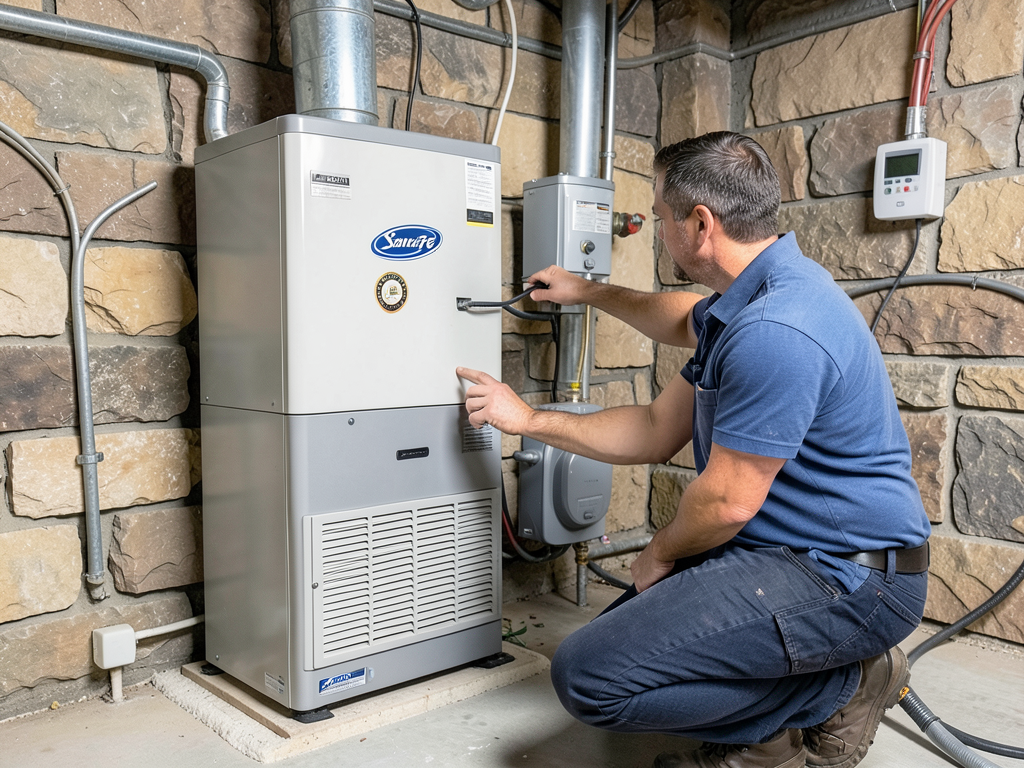
We recently helped a family on East Ohio Street whose 1920s stone foundation basement had persistent mildew problems. The 1,200 square foot space smelled musty year-round, and stored cardboard boxes would get damp and moldy within weeks.
Our assessment revealed 78% relative humidity—well above the safe range. The home’s original stone foundation had several small cracks, and poor ventilation meant moist air had nowhere to escape. We installed a Santa Fe Rx commercial-grade dehumidifier with a built-in air filter and condensate pump.
Within 48 hours, humidity dropped to 45%, and the musty smell disappeared. The family reported their upstairs air felt fresher too, since the stack effect was no longer pulling damp basement air through the house. Six months later, they haven’t had a single mildew problem, and their energy bills during the humid summer months actually decreased by about 12%.
Maintenance Tips for Pittsburgh’s Humid Season
Even with a professional system, some seasonal maintenance helps ensure optimal performance during Pittsburgh’s humid months:
- Clean or Replace Filters Monthly: During June through September, check your system’s air filter every 30 days. Pittsburgh’s pollen season means more airborne particles that can clog filters.
- Check Condensate Lines: Ensure drain lines are clear and flowing freely. A clogged condensate line can cause water backup and defeat the entire purpose of dehumidification.
- Monitor Humidity Levels: Use a hygrometer to verify your system maintains 30-50% relative humidity. Levels consistently above 60% indicate a problem.
- Inspect Foundation Walls: After heavy rains, check for new moisture spots or efflorescence (white, powdery mineral deposits) on foundation walls.
- Schedule Professional Service: Annual professional maintenance ensures your system operates at peak efficiency when you need it most.
Frequently Asked Questions
How do I know if my basement has a moisture problem?
Signs include musty odors, visible mold or mildew growth, condensation on windows or pipes, warped wood, peeling paint, and a general feeling of dampness. You can use a hygrometer to measure relative humidity—levels above 50% indicate a problem.
Can’t I just use a portable dehumidifier from the store?
Portable units work for very small spaces but lack the capacity and efficiency for most basements. A typical 1,500 square foot basement needs a commercial-grade unit that removes 70+ pints per day. Portable units also require frequent emptying and don’t integrate with your home’s air system.
How much does professional basement dehumidification cost?
Costs vary based on basement size and system type, but most North Side homeowners invest $2,500-4,500 for a complete professional installation. This includes equipment, labor, and integration with existing systems. Energy savings and prevented damage often offset much of this cost over time.
Will a dehumidifier fix foundation cracks?
No. Dehumidifiers remove moisture from the air but don’t stop water from entering through cracks. Foundation issues require separate repair. However, controlling humidity prevents mildew growth even if minor moisture intrusion continues.
How long does installation take?
Most installations are completed in one day. The process includes assessment, equipment setup, integration with existing systems, and testing. Larger or more complex installations might require two days.
Is professional dehumidification worth it for a finished basement?
Absolutely. Finished basements with carpeting, drywall, and furniture are especially vulnerable to moisture damage. Professional systems protect your investment and maintain the comfort and usability of your finished space.
Take Control of Your Basement’s Air Quality Today
Don’t let another Pittsburgh summer turn your basement into a mildew factory. The musty smell isn’t just unpleasant—it’s a warning sign of moisture problems that can damage your home and affect your family’s health. Professional dehumidification addresses the root cause, not just the symptoms.
Apex HVAC Pittsburgh has been helping North Side homeowners solve moisture problems for over 15 years. We understand the unique challenges of Pittsburgh’s climate, soil conditions, and historic home construction. Our NATE-certified technicians use commercial-grade equipment and follow all Pennsylvania building codes to ensure lasting results.
Call (412) 387-0477 today to schedule your basement moisture assessment. We’ll measure your current humidity levels, identify problem sources, and recommend the right solution for your specific situation. Don’t wait until mildew damages your belongings or affects your family’s health—take action now and enjoy a fresh, dry basement all summer long.
Pick up the phone and call (412) 387-0477 before the next humid spell hits. Your nose—and your home—will thank you. For more information, visit ASHRAE standards for indoor humidity control.
You may also find this helpful. Turning Your Bridgeville Garage into a Year Round Workspace with Mini Splits.
You may also find this helpful. What Brookline Families Should Look for in an HVAC Maintenance Plan.
You may also find this helpful. Why a Manual J Load Calculation Matters for Your New Monroeville Home.
{
“@context”: “https://schema.org”,
“@type”: “BlogPosting”,
“headline”: “Stop Your North Side Basement from Smelling Like Mildew This Summer”,
“description”: “Get rid of musty basement odors in your North Side home this summer. Learn how Pittsburgh’s humid climate and old foundations cause mildew and how to fix it.”,
“wordCount”: 1796,
“datePublished”: “2026-03-06T07:57:00.000Z”,
“dateModified”: “2026-03-06T07:57:00.000Z”,
“inLanguage”: “en-US”,
“mainEntityOfPage”: {
“@type”: “WebPage”,
“@id”: “https://apexhvacpittsburgh.com”
},
“publisher”: {
“@type”: “LocalBusiness”,
“name”: “Apex HVAC Pittsburgh”,
“url”: “https://apexhvacpittsburgh.com”
},
“author”: {
“@type”: “Organization”,
“name”: “Apex HVAC Pittsburgh”,
“url”: “https://apexhvacpittsburgh.com”
},
“image”: {
“@type”: “ImageObject”,
“url”: “https://apexhvacpittsburgh.com/wp-content/uploads/2026/03/stop-your-north-side-basement-from-smelling-like-m-1.png”
}
}
{
“@context”: “https://schema.org”,
“@type”: “HVACBusiness”,
“name”: “Apex HVAC Pittsburgh”,
“url”: “https://apexhvacpittsburgh.com”,
“address”: {
“@type”: “PostalAddress”,
“addressLocality”: “Pittsburgh”
},
“areaServed”: {
“@type”: “City”,
“name”: “Pittsburgh”
}
}
{
“@context”: “https://schema.org”,
“@type”: “FAQPage”,
“mainEntity”: [
{
“@type”: “Question”,
“name”: “How do I know if my basement has a moisture problem?”,
“acceptedAnswer”: {
“@type”: “Answer”,
“text”: “Signs include musty odors, visible mold or mildew growth, condensation on windows or pipes, warped wood, peeling paint, and a general feeling of dampness. You can use a hygrometer to measure relative humidity—levels above 50% indicate a problem.”
}
},
{
“@type”: “Question”,
“name”: “Can’t I just use a portable dehumidifier from the store?”,
“acceptedAnswer”: {
“@type”: “Answer”,
“text”: “Portable units work for very small spaces but lack the capacity and efficiency for most basements. A typical 1,500 square foot basement needs a commercial-grade unit that removes 70+ pints per day. Portable units also require frequent emptying and don’t integrate with your home’s air system.”
}
},
{
“@type”: “Question”,
“name”: “How much does professional basement dehumidification cost?”,
“acceptedAnswer”: {
“@type”: “Answer”,
“text”: “Costs vary based on basement size and system type, but most North Side homeowners invest $2,500-4,500 for a complete professional installation. This includes equipment, labor, and integration with existing systems. Energy savings and prevented damage often offset much of this cost over time.”
}
},
{
“@type”: “Question”,
“name”: “Will a dehumidifier fix foundation cracks?”,
“acceptedAnswer”: {
“@type”: “Answer”,
“text”: “No. Dehumidifiers remove moisture from the air but don’t stop water from entering through cracks. Foundation issues require separate repair. However, controlling humidity prevents mildew growth even if minor moisture intrusion continues.”
}
},
{
“@type”: “Question”,
“name”: “How long does installation take?”,
“acceptedAnswer”: {
“@type”: “Answer”,
“text”: “Most installations are completed in one day. The process includes assessment, equipment setup, integration with existing systems, and testing. Larger or more complex installations might require two days.”
}
},
{
“@type”: “Question”,
“name”: “Is professional dehumidification worth it for a finished basement?”,
“acceptedAnswer”: {
“@type”: “Answer”,
“text”: “Absolutely. Finished basements with carpeting, drywall, and furniture are especially vulnerable to moisture damage. Professional systems protect your investment and maintain the comfort and usability of your finished space.”
}
}
]
}
{
“@context”: “https://schema.org”,
“@type”: “BreadcrumbList”,
“itemListElement”: [
{
“@type”: “ListItem”,
“position”: 1,
“name”: “Home”,
“item”: “https://apexhvacpittsburgh.com”
},
{
“@type”: “ListItem”,
“position”: 2,
“name”: “Blog”,
“item”: “https://apexhvacpittsburgh.com/blog”
},
{
“@type”: “ListItem”,
“position”: 3,
“name”: “Stop Your North Side Basement from Smelling Like Mildew This Summer”
}
]
}
{
“@context”: “https://schema.org”,
“@type”: “Service”,
“serviceType”: “HVAC”,
“provider”: {
“@type”: “LocalBusiness”,
“name”: “Apex HVAC Pittsburgh”,
“url”: “https://apexhvacpittsburgh.com”
},
“areaServed”: {
“@type”: “City”,
“name”: “Pittsburgh”
},
“description”: “Get rid of musty basement odors in your North Side home this summer. Learn how Pittsburgh’s humid climate and old foundations cause mildew and how to fix it.”
}