
Why Putting Your Thermostat in the Wrong Spot is Costing You Money in Perry North
Your thermostat controls when your heating and cooling systems turn on and off. When it sits in the wrong location, it reads the wrong temperature and makes your HVAC system work harder than necessary. In Perry North homes, this simple mistake can add hundreds of dollars to your annual energy bills while creating uncomfortable hot and cold spots throughout your house. Winterizing Your HVAC System.
Perry North sits on Pittsburgh’s North Side with its mix of historic brick homes and newer construction. The neighborhood’s varied housing stock creates unique thermostat placement challenges. Older homes built before the 1950s often have different wall thicknesses and insulation levels than modern construction. These differences affect how temperatures vary room to room, making proper thermostat placement even more critical.. Read more about Why Your Newer Harrison City Home Has Uneven Temperatures Between Floors.
The Golden Rules of Thermostat Placement
Proper thermostat placement follows basic principles that work in any home. The device needs to read the true average temperature of your living space to make smart decisions about when to run your HVAC system.. Read more about Connecting Your Garfield Smart Home to Your Heating and Cooling System.
Interior walls work best because they maintain more consistent temperatures than exterior walls. Exterior walls can be 5 to 10 degrees colder or hotter than the rest of your home depending on the season. This temperature difference creates false readings that make your system run when it doesn’t need to.
Mount your thermostat about five feet from the floor. This height puts it at the average breathing zone where people spend most of their time. Too high and it reads warmer air that rises. Too low and it picks up cooler air near the floor.
Central locations in frequently used rooms give the most accurate readings. Living rooms and family rooms work well because they see regular use throughout the day. Hallways often seem convenient but they lack the air circulation needed for accurate temperature sensing.
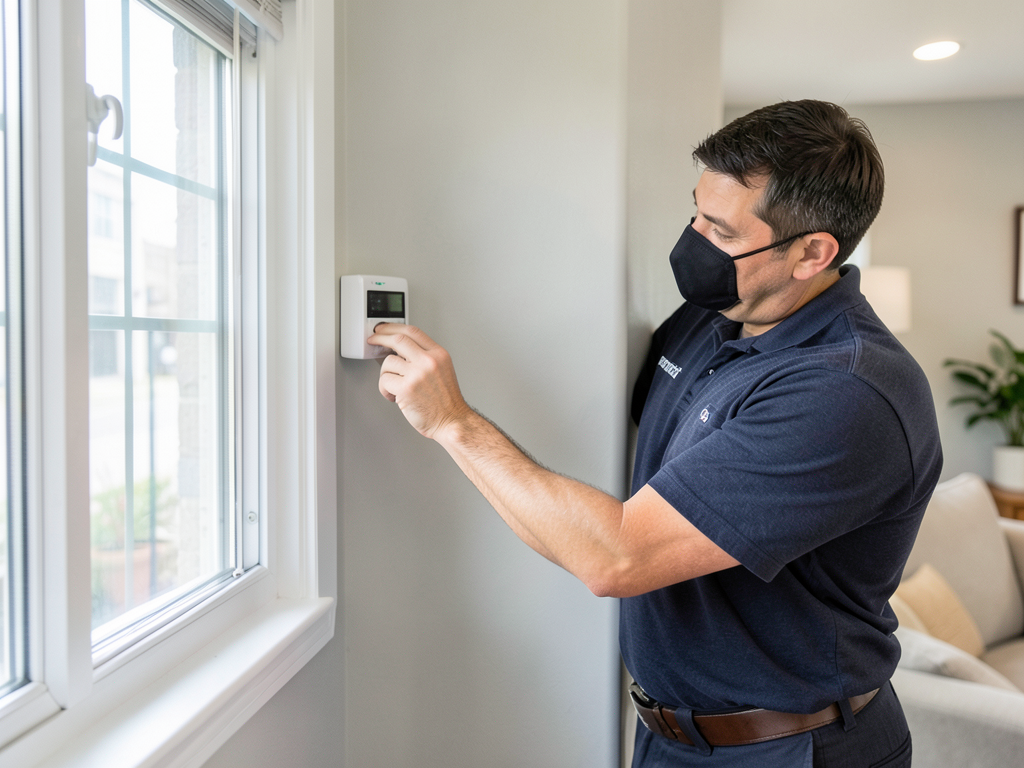
Image: A professional HVAC technician installing a thermostat on an interior wall in a Perry North living room, showing proper height and location away from windows and vents.
5 Places You Should NEVER Install a Thermostat
Certain locations guarantee inaccurate readings and higher energy bills. These spots seem logical at first glance but create problems that cost you money every month.
Direct sunlight causes the most common thermostat placement mistake. When sunlight hits your thermostat, the built-in thermometer thinks your entire house is warmer than it actually is. Your air conditioner runs longer than necessary, cooling empty rooms while the sunny spot returns to normal temperature.
Kitchens create heat problems from multiple sources. Ovens, stoves, and even refrigerators generate enough heat to trick your thermostat. During cooking, your thermostat might think your whole house needs cooling when only the kitchen area is warm.
Above air vents or registers creates a feedback loop that wastes energy. The thermostat reads the conditioned air coming directly from your HVAC system and thinks your house has reached the set temperature. Your system shuts off before the rest of your home gets comfortable.
Drafty windows and doors fool thermostats into thinking your house is colder than it is. Cold drafts from leaky windows make your furnace run longer than necessary, heating rooms that already feel comfortable while trying to warm the drafty area. Emergency Furnace Services for Families Living in Baldwin and Whitehall.
Hallways lack the air circulation needed for accurate readings. These narrow spaces often become dead zones where air doesn’t move freely. Your thermostat might read 70 degrees while your living room sits at 65 degrees.
Energy Savings: Correct vs Incorrect Placement
| Placement Type | Annual Energy Cost | System Runtime | Comfort Level |
|---|---|---|---|
| Correct Placement | $1,200 | Normal | Consistent |
| Near Window | $1,500 | 20% Higher | Uneven |
| Above Vent | $1,400 | 15% Higher | Spotty |
| Kitchen Wall | $1,350 | 12% Higher | Variable |
| Hallway | $1,280 | 7% Higher | Delayed |
Pittsburgh-Specific Considerations
Pittsburgh’s humid continental climate creates unique challenges for thermostat placement. The city experiences wide temperature swings throughout the year, from summer highs in the 90s to winter lows below zero. These extremes make accurate temperature sensing even more important.
Perry North homes built before 1940 often lack proper insulation in exterior walls. This creates larger temperature differences between inside and outside than newer construction. A thermostat on an exterior wall in these homes might read 10 degrees colder than the actual living space temperature.
Multi-story homes in Perry North face additional challenges with convection currents. Heat rises naturally, making upper floors warmer than lower floors. A single thermostat on the first floor might not accurately represent conditions on the second floor, leading to uneven heating and cooling.
Boiler systems common in older Pittsburgh homes require different thermostat strategies than forced air systems. Boiler thermostats need to account for the slower response time of radiant heat. Forced air systems respond more quickly, so thermostat placement affects them differently.
High summer humidity in Pittsburgh affects how we perceive temperature. A thermostat might read 75 degrees, but high humidity can make it feel like 80 degrees. This perception difference means proper placement becomes even more critical during humid summer months.
Smart Thermostats and Remote Sensors
Smart thermostats like Nest and Ecobee have changed the placement game with remote sensors. These battery-powered devices can be placed in different rooms to get a more accurate picture of your home’s temperature.
Ecobee sensors measure both temperature and occupancy, allowing the system to heat or cool rooms based on whether people are actually using them. This technology helps solve the multi-story problem common in Perry North homes.
Nest thermostats use learning algorithms to understand your home’s unique patterns. They can compensate for minor placement issues by learning how long it takes to heat or cool different areas of your home.
Zone control systems take smart technology further by creating independent heating and cooling zones throughout your home. Each zone has its own thermostat, allowing you to heat the upstairs bedroom without warming the downstairs living room.
Remote sensors work best when placed in rooms you use most often. Living rooms, bedrooms, and home offices are good candidates. Avoid placing sensors in kitchens or near heat-generating electronics.

Image: A technician installing a remote temperature sensor in a Perry North bedroom, demonstrating how modern smart home technology improves comfort and efficiency.
Professional Thermostat Assessment Process
Professional HVAC technicians use specific diagnostic procedures to evaluate thermostat placement. This process goes beyond just looking at the wall location.
First, technicians measure temperature variations throughout your home using specialized thermometers. They check different rooms at different times of day to understand how your home heats and cools.
Next, they assess air flow patterns using smoke pencils or thermal cameras. These tools reveal drafts, dead zones, and areas where air doesn’t circulate properly.
Technicians also check your home’s insulation levels and air sealing. Poor insulation magnifies the problems caused by bad thermostat placement.
The final step involves running your HVAC system through its cycles while monitoring temperatures in different rooms. This reveals how your current setup performs under actual operating conditions.
According to Pennsylvania Uniform Construction Code requirements, thermostats must be installed according to manufacturer specifications and local building codes. Improper installation can void warranties and create safety hazards.
Common Thermostat Problems We See in Perry North
Many Perry North homes have thermostats placed in problematic locations due to renovations or additions. Here are the most common issues we encounter:
Thermostats installed above kitchen cabinets pick up heat from cooking appliances. This causes air conditioning to run longer than necessary during meal preparation. EPA thermostat energy savings information.
Living room thermostats near large windows get direct sunlight in the afternoon. This makes your air conditioner think your entire house is too warm.
Hallway thermostats in multi-story homes can’t accurately represent temperatures on different floors. This leads to cold first floors and hot second floors.
Thermostats near supply vents read the conditioned air directly, shutting off your system before the rest of your home gets comfortable.
Basement thermostats in homes with finished upper levels can’t accurately control temperatures where people actually spend time.
These placement issues often compound each other in older homes with multiple additions or renovations.
Quick Thermostat Check You Can Do Today
You can perform a simple test to see if your thermostat might be in a bad location. This takes about 15 minutes and requires only a basic thermometer.
Place a thermometer in your living room about five feet from the floor. Wait 10 minutes for it to stabilize. Then check your thermostat reading.
If the difference is more than 3 degrees, your thermostat might be in a problematic location. Larger differences indicate more serious placement issues.
Also check if your thermostat is near any heat sources like electronics, appliances, or direct sunlight. Even small heat sources can affect readings.
Listen to your HVAC system. If it cycles on and off frequently, your thermostat might be getting false readings from its location.
Feel for drafts near your thermostat. Cold air from windows or doors can make your heating system run longer than necessary.
Check if your thermostat is level. Some older mercury switch thermostats need to be perfectly level to work correctly.
Frequently Asked Questions
How much can bad thermostat placement really cost me?
Improper thermostat placement typically increases energy bills by 10 to 25 percent annually. For an average Pittsburgh home spending $1,500 per year on heating and cooling, that’s $150 to $375 wasted on unnecessary runtime.
Can I just move my thermostat myself?
Moving a thermostat involves running new thermostat wire and possibly cutting into walls. It also requires proper calibration and testing. Most homeowners find professional installation saves time and prevents damage to their HVAC system. The Homeowners Guide to Replacing an Aging Boiler in Bloomfield.
Will a smart thermostat fix bad placement?
Smart thermostats help but don’t eliminate the problems caused by poor placement. They can learn your home’s patterns and compensate somewhat, but they still need accurate temperature readings to work effectively.
How long does professional thermostat relocation take?
Most thermostat relocations take 2 to 4 hours depending on the complexity of the wiring and the new location. This includes testing and calibration to ensure proper operation.
Is thermostat relocation expensive?
Professional thermostat relocation typically costs between $150 and $400 depending on the complexity of the job. This investment often pays for itself within one to two years through energy savings.
Don’t Let Bad Thermostat Placement Cost You Another Dollar
Wrong thermostat placement wastes energy, creates uncomfortable rooms, and shortens your HVAC system’s lifespan. In Perry North’s varied housing stock, this problem affects more homes than you might think.
Older homes with their unique construction methods and newer additions with their own heating and cooling challenges create perfect conditions for thermostat placement problems.
The solution starts with a professional assessment of your current setup. Our technicians understand Perry North’s specific housing patterns and can recommend the best location for your thermostat based on your home’s unique characteristics.
We’ll show you exactly how your current placement affects your energy bills and comfort. Then we’ll move your thermostat to the optimal location, test the system, and ensure everything works perfectly.
Stop paying for energy you don’t need and stop living with uncomfortable rooms. Call (412) 387-0477 today to schedule your thermostat assessment. Our Perry North HVAC experts will help you save money and stay comfortable year-round.
Pick up the phone and call (412) 387-0477 before the next season hits. Whether you need cooling for the humid Pittsburgh summer or heating for the bitter winter, proper thermostat placement makes all the difference.
Image: Before and after comparison showing a thermostat moved from a problematic location near a window to an optimal interior wall location in a Perry North home. For more information, visit U.S. Department of Energy thermostat guide.
{
“@context”: “https://schema.org”,
“@type”: “BlogPosting”,
“headline”: “Why Putting Your Thermostat in the Wrong Spot is Costing You Money in Perry North”,
“description”: “Discover how thermostat placement in Perry North homes affects energy bills. Learn the right spots and avoid costly mistakes. Call (412) 387-0477 for expert HVAC help.”,
“wordCount”: 1961,
“datePublished”: “2026-05-27T07:28:00.000Z”,
“dateModified”: “2026-05-27T07:28:00.000Z”,
“inLanguage”: “en-US”,
“mainEntityOfPage”: {
“@type”: “WebPage”,
“@id”: “https://apexhvacpittsburgh.com”
},
“publisher”: {
“@type”: “LocalBusiness”,
“name”: “Apex HVAC Pittsburgh”,
“url”: “https://apexhvacpittsburgh.com”
},
“author”: {
“@type”: “Organization”,
“name”: “Apex HVAC Pittsburgh”,
“url”: “https://apexhvacpittsburgh.com”
},
“image”: {
“@type”: “ImageObject”,
“url”: “https://apexhvacpittsburgh.com/wp-content/uploads/2026/03/why-putting-your-thermostat-in-the-wrong-spot-is-c-1.png”
}
}
{
“@context”: “https://schema.org”,
“@type”: “HVACBusiness”,
“name”: “Apex HVAC Pittsburgh”,
“url”: “https://apexhvacpittsburgh.com”,
“address”: {
“@type”: “PostalAddress”,
“addressLocality”: “Pittsburgh”
},
“areaServed”: {
“@type”: “City”,
“name”: “Pittsburgh”
}
}
{
“@context”: “https://schema.org”,
“@type”: “FAQPage”,
“mainEntity”: [
{
“@type”: “Question”,
“name”: “How much can bad thermostat placement really cost me?”,
“acceptedAnswer”: {
“@type”: “Answer”,
“text”: “Improper thermostat placement typically increases energy bills by 10 to 25 percent annually. For an average Pittsburgh home spending $1,500 per year on heating and cooling, that’s $150 to $375 wasted on unnecessary runtime.”
}
},
{
“@type”: “Question”,
“name”: “Can I just move my thermostat myself?”,
“acceptedAnswer”: {
“@type”: “Answer”,
“text”: “Moving a thermostat involves running new thermostat wire and possibly cutting into walls. It also requires proper calibration and testing. Most homeowners find professional installation saves time and prevents damage to their HVAC system. The Homeowners Guide to Replacing an Aging Boiler in Bloomfield.”
}
},
{
“@type”: “Question”,
“name”: “Will a smart thermostat fix bad placement?”,
“acceptedAnswer”: {
“@type”: “Answer”,
“text”: “Smart thermostats help but don’t eliminate the problems caused by poor placement. They can learn your home’s patterns and compensate somewhat, but they still need accurate temperature readings to work effectively.”
}
},
{
“@type”: “Question”,
“name”: “How long does professional thermostat relocation take?”,
“acceptedAnswer”: {
“@type”: “Answer”,
“text”: “Most thermostat relocations take 2 to 4 hours depending on the complexity of the wiring and the new location. This includes testing and calibration to ensure proper operation.”
}
}
]
}
{
“@context”: “https://schema.org”,
“@type”: “BreadcrumbList”,
“itemListElement”: [
{
“@type”: “ListItem”,
“position”: 1,
“name”: “Home”,
“item”: “https://apexhvacpittsburgh.com”
},
{
“@type”: “ListItem”,
“position”: 2,
“name”: “Blog”,
“item”: “https://apexhvacpittsburgh.com/blog”
},
{
“@type”: “ListItem”,
“position”: 3,
“name”: “Why Putting Your Thermostat in the Wrong Spot is Costing You Money in Perry North”
}
]
}
{
“@context”: “https://schema.org”,
“@type”: “Service”,
“serviceType”: “HVAC”,
“provider”: {
“@type”: “LocalBusiness”,
“name”: “Apex HVAC Pittsburgh”,
“url”: “https://apexhvacpittsburgh.com”
},
“areaServed”: {
“@type”: “City”,
“name”: “Pittsburgh”
},
“description”: “Discover how thermostat placement in Perry North homes affects energy bills. Learn the right spots and avoid costly mistakes. Call (412) 387-0477 for expert HVAC help.”
}