
Fix Common Airflow Problems in Your Bellevue Victorian Without Adding More Vents
If your Bellevue Victorian feels like a sauna on the second floor and an icebox on the first floor you are not alone. These grand old homes were built before central air conditioning existed and their tall ceilings wide hallways and balloon framing create airflow patterns that modern HVAC systems struggle to overcome. The good news You can fix these airflow problems without cutting into your historic plaster walls or adding more vents. This guide shows you how. The Homeowners Guide to Replacing an Aging Boiler in Bloomfield.
Why Bellevue Victorians Struggle with Airflow
Bellevue Pennsylvania sits just north of Pittsburgh along the Ohio River and its housing stock includes hundreds of Victorian era homes built between 1880 and 1920. These homes share common architectural features that create unique airflow challenges
- Tall ceilings that trap hot air on upper floors
- Narrow stairwells that restrict vertical air movement
- Original plaster and lath walls that cannot accommodate standard ductwork
- Balloon framing that allows air to move freely between floors
- Large single-pane windows that create drafts and temperature differentials
Combine these factors with Bellevue’s humid continental climate and you get rooms that are either stifling or freezing depending on the season. The stack effect in these tall homes pulls warm air up and out in winter and pushes hot air down in summer making temperature control nearly impossible without proper airflow management.. Read more about The Best Ways to Keep Your Morningside Home Office Cool Without Increasing the Noise.
Diagnosing Your Airflow Problems the Right Way
Before you add more vents or replace your entire system you need to understand what is actually causing your airflow issues. Guessing leads to wasted money and still uncomfortable rooms. Winterizing Your HVAC System.
Step 1: Check Your Static Pressure
Static pressure is the resistance to airflow in your duct system. Think of it like blood pressure for your HVAC system. When static pressure is too high your system works harder than it should and airflow suffers.. Read more about Does Your HVAC System Actually Help with Radon Mitigation in Marshall Township.
A technician uses a manometer to measure static pressure at the air handler. Normal residential static pressure should be between 0.5 and 0.7 inches of water column. If your reading is above 0.8 you have a restriction somewhere.
Step 2: Use a Thermal Camera to Find Hidden Leaks
Old plaster walls hide duct leaks that waste conditioned air. A thermal imaging camera shows temperature differences that reveal where your expensive cooled or heated air is escaping into wall cavities instead of reaching your rooms.
Look for cold spots around ductwork in summer and warm spots in winter. These temperature anomalies indicate air leakage that reduces system efficiency by up to 30 percent according to the Department of Energy. Department of Energy duct sealing information.
Step 3: Test Your Return Air Balance
Many Victorian homes have only one central return air grille. This creates negative pressure in rooms with closed doors and starves your system of the air it needs to function properly.
Use a flow hood to measure how much air is returning to your system. If return air is less than 70 percent of supply air you have an imbalance that causes pressure problems throughout your home.

Image description: Technician using a thermal imaging camera to scan ductwork in a plaster wall showing temperature differentials that reveal air leaks.
Three Proven Solutions That Do Not Require New Vents
1. Seal and Insulate Your Existing Ductwork
Before you add anything new fix what you already have. Duct sealing with mastic or specialized tape can reduce air leakage by up to 20 percent. This means more of your conditioned air actually reaches your rooms.
Focus on these areas
- Joints between duct sections
- Connections to registers and grilles
- Where ducts pass through unconditioned spaces
EPA studies show that sealing duct leaks can save homeowners 10 to 30 percent on heating and cooling costs while improving comfort. EPA Section 608 certification requirements.
2. Install a High-Velocity HVAC System
High-velocity systems use small flexible ducts that can be run through existing wall cavities without removing plaster. These systems operate at higher pressures than conventional systems which helps overcome the resistance in old homes.
The Unico System and SpacePak are two brands designed specifically for historic homes. They use two inch diameter supply tubes that snake through walls like electrical wiring. This means you can add air conditioning or improve heating without destroying your original woodwork.. Read more about Protecting the Original Hardwood in Your Regent Square Home from Bone Dry Winter Air.
High-velocity systems also remove more humidity than conventional systems which is crucial in Bellevue’s muggy summers. They can remove up to 30 percent more moisture from the air which makes your home feel cooler at higher temperatures.
3. Add a Zoned System with Smart Thermostats
Zone control lets you heat or cool different areas of your home independently. This solves the problem of your second floor being 10 degrees warmer than your first floor without running your system constantly.
Modern zoning systems use electronic dampers in your ductwork and smart thermostats that communicate with each other. You can set your upstairs thermostat to 72 degrees and your downstairs to 68 degrees and the system automatically adjusts airflow to maintain both temperatures.
Zone control can reduce energy consumption by 25 percent according to the Air Conditioning Contractors of America because you are not heating or cooling empty rooms.. Read more about Understanding Why Your Heating Bills in South Fayette are Suddenly Spiking.
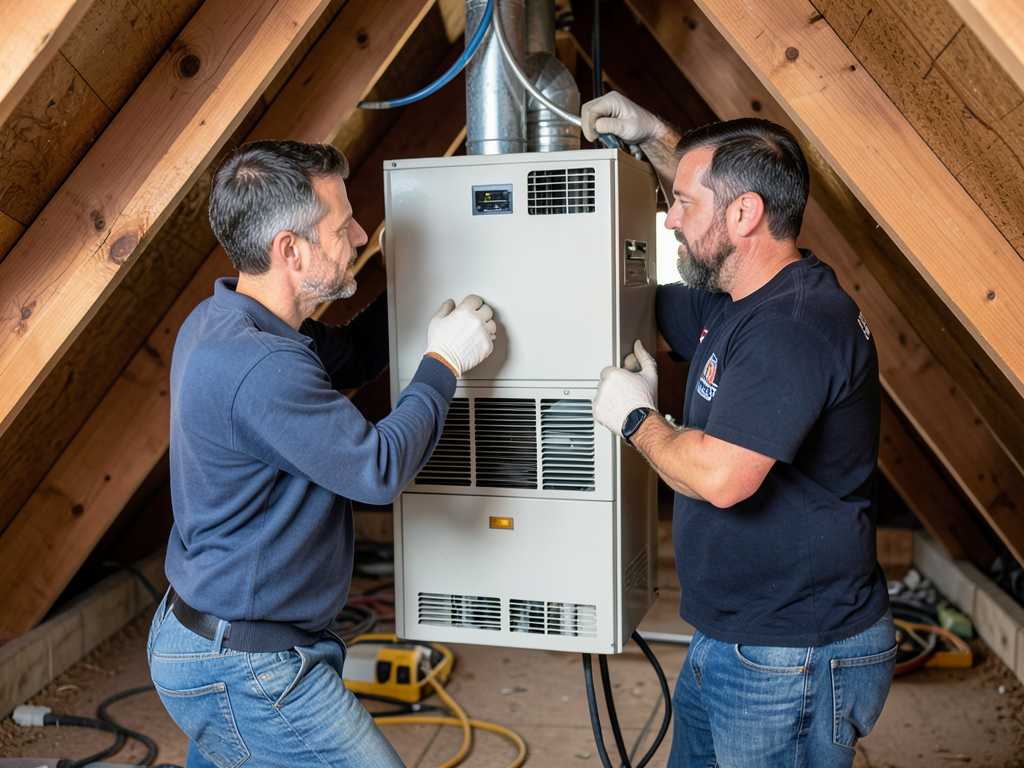
Image description: Technician installing a high-velocity air handler in an attic space showing the compact equipment that fits in tight historic home spaces.
Preserving Your Victorian Character While Improving Comfort
The biggest fear for Bellevue homeowners is destroying the historic character of their Victorian homes during HVAC upgrades. You can improve airflow without sacrificing your home’s charm.
Work With Your Architecture Not Against It
Your tall ceilings and large windows are not problems to overcome they are features to work with. Use ceiling fans to push hot air down in winter and create a cooling breeze in summer. Install window film that blocks UV rays without changing the appearance of your historic windows.
Hide Modern Equipment Creatively
High-velocity air handlers are much smaller than conventional units. They can fit in attic spaces crawl spaces or even closets. Supply outlets can be painted to match your wall colors or disguised as decorative elements.. Read more about Why an Attic Fan is Not a Substitute for a Good AC Unit in the West End.
Return air pathways can be created using existing architectural features. A bookcase with a hidden return grille or a decorative screen can provide the airflow your system needs without looking like a modern addition.
Choose Materials That Match Your Home
When you must add visible components choose materials that complement your Victorian architecture. Brass registers instead of standard aluminum ones. Wooden grilles that can be stained to match your trim. Even thermostat covers can be chosen to look like antique objects.. Read more about Why a Standard Dehumidifier Is Not Enough for Your Squirrel Hill Finished Basement.
A Real Bellevue Victorian Airflow Success Story
The Johnson family lives in a 1905 Queen Anne Victorian on Lincoln Avenue in Bellevue. Their three story home had chronic airflow problems with the second floor being 15 degrees warmer than the first floor in summer.
They tried adding more supply vents but this made the problem worse by creating pressure imbalances. A duct cleaning company told them they needed to replace all their ductwork which would have meant removing all the plaster walls.. Read more about Why Spring Allergies are Worse in the Allegheny Valley and How Your HVAC System Can Help.
Instead they called Apex HVAC Pittsburgh. We performed a complete static pressure test and found their system was operating at 1.2 inches of water column nearly double the recommended level.
We sealed their existing ductwork which reduced leakage by 25 percent. Then we installed a high-velocity system that could deliver the airflow their home needed without adding more vents. We also added a zoning system so they could control temperatures on each floor independently.
The result Their summer electric bills dropped by 30 percent and both floors stay within 3 degrees of their thermostat settings. Best of all we preserved all their original plaster and woodwork.
Image description: Before and after thermal imaging showing temperature distribution in a Victorian home before and after high-velocity system installation.
Local Rebates and Incentives for Bellevue Homeowners
Improving your HVAC system is not just about comfort it is about energy efficiency. Several local programs can help offset the cost of upgrades.
| Program | Benefit | Eligibility |
|---|---|---|
| Duquesne Light Energy Audit | Free energy assessment and rebates up to 400 | Bellevue residents with electric heating |
| Peoples Gas High Efficiency Rebates | Up to 300 for high efficiency furnaces | Natural gas customers in Allegheny County |
| PA Energy Development Authority | Low interest financing for energy improvements | Pennsylvania homeowners |
These programs change annually so check current offerings before starting your project. Many high-velocity systems qualify for these rebates because they are significantly more efficient than conventional systems.
Maintenance Tips to Keep Your Airflow Optimal
Once you have solved your airflow problems keep them solved with regular maintenance. Here is a simple schedule to follow
- Monthly Filter Changes
Replace your air filter every 30 days. This is the single most important thing you can do for airflow. A dirty filter can reduce airflow by 15 percent.
- Seasonal Vent Cleaning
Remove and vacuum your supply and return vents. Dust buildup restricts airflow and reduces system efficiency.
- Annual Professional Tune Up
Have a technician check your static pressure clean your coils and verify your system is operating at peak efficiency. This prevents small problems from becoming big ones.. Read more about How to Prevent Fireplace Smoke from Getting Trapped in Your Stanton Heights HVAC System.
- Monitor Your Energy Bills
If your bills suddenly increase or your home becomes less comfortable you may have an airflow problem developing. Early detection saves money.
Why DIY Vent Additions Often Make Things Worse
Many Bellevue homeowners try to fix airflow problems by adding more supply vents. This seems logical but often creates bigger problems.
When you add a vent without understanding your system’s capacity you can create pressure imbalances. Your system may not be able to supply enough air to the new vent which starves other rooms. This leads to whistling noises from registers and reduced overall comfort. Understanding Ductless Systems.
Adding vents also increases the total air volume your system must heat or cool. If your furnace or air conditioner is not sized for this additional load it will run constantly without ever reaching your desired temperature. Emergency Furnace Services for Families Living in Baldwin and Whitehall.
Finally cutting into plaster walls to add vents destroys the very character you are trying to preserve. A high-velocity system can deliver the same or better airflow without any wall damage.
The Cost Factor: What to Expect
High-velocity systems cost more upfront than conventional systems typically 8000 to 12000 for a complete installation. However they often pay for themselves through energy savings and avoided renovation costs.
Traditional duct replacement in a Victorian home can cost 15000 to 25000 and requires extensive plaster repair painting and trim work. High-velocity installation usually takes 2 to 3 days with no wall repair needed.
Factor in energy savings of 20 to 30 percent and available rebates and the total cost of ownership becomes competitive with conventional systems.
Frequently Asked Questions
Can I keep my radiators and add air conditioning?
Yes. High-velocity systems work perfectly with existing hot water or steam radiators. You get air conditioning in summer without removing your beloved radiators.. Read more about Stylish Ways to Cover Ugly Radiators in Your Historic Friendship House.
How long does installation take?
Most high-velocity installations in Bellevue Victorians take 2 to 3 days. The work is minimally invasive and you can usually stay in your home during installation.
Will this increase my home’s value?
Energy efficient HVAC systems are attractive to buyers especially in historic homes. The combination of preserved character and modern comfort is a strong selling point.
What about noise levels?
High-velocity systems are actually quieter than conventional systems because they move air at higher speeds through smaller ducts. The outlets are also much smaller and can be placed where noise is less noticeable.
Take the First Step Toward Better Airflow
Your Bellevue Victorian deserves to be comfortable without sacrificing its historic character. Stop guessing about airflow solutions and get a professional diagnosis. Our team understands the unique challenges of Pittsburgh’s historic homes and we have the tools to fix airflow problems without adding more vents.
Call (412) 387-0477 today to schedule your airflow assessment. We will test your static pressure check for hidden leaks and show you exactly what is causing your comfort problems. No pressure no sales gimmicks just honest advice from local experts who understand your home.
Pick up the phone and call (412) 387-0477 before the next heat wave or cold snap makes your home unbearable. Your Victorian will thank you.
This article is for informational purposes only. Always consult with a licensed HVAC professional before making changes to your home’s heating and cooling system.
You may also find this helpful. Finding an HVAC Company That Specializes in Kennedy Township Split Level Homes.
{
“@context”: “https://schema.org”,
“@type”: “BlogPosting”,
“headline”: “Fix Common Airflow Problems in Your Bellevue Victorian Without Adding More Vents”,
“description”: “Discover why your Bellevue Victorian struggles with airflow and how to fix it without invasive vent additions. Learn diagnostic tools, preservation techniques, and local solutions.”,
“wordCount”: 2088,
“datePublished”: “2026-05-08T07:08:00.000Z”,
“dateModified”: “2026-05-08T07:08:00.000Z”,
“inLanguage”: “en-US”,
“mainEntityOfPage”: {
“@type”: “WebPage”,
“@id”: “https://apexhvacpittsburgh.com”
},
“publisher”: {
“@type”: “LocalBusiness”,
“name”: “Apex HVAC Pittsburgh”,
“url”: “https://apexhvacpittsburgh.com”
},
“author”: {
“@type”: “Organization”,
“name”: “Apex HVAC Pittsburgh”,
“url”: “https://apexhvacpittsburgh.com”
},
“image”: {
“@type”: “ImageObject”,
“url”: “https://apexhvacpittsburgh.com/wp-content/uploads/2026/03/fix-common-airflow-problems-in-your-bellevue-victo-1.png”
}
}
{
“@context”: “https://schema.org”,
“@type”: “HVACBusiness”,
“name”: “Apex HVAC Pittsburgh”,
“url”: “https://apexhvacpittsburgh.com”,
“address”: {
“@type”: “PostalAddress”,
“addressLocality”: “Pittsburgh”
},
“areaServed”: {
“@type”: “City”,
“name”: “Pittsburgh”
}
}
{
“@context”: “https://schema.org”,
“@type”: “FAQPage”,
“mainEntity”: [
{
“@type”: “Question”,
“name”: “Can I keep my radiators and add air conditioning?”,
“acceptedAnswer”: {
“@type”: “Answer”,
“text”: “Yes. High-velocity systems work perfectly with existing hot water or steam radiators. You get air conditioning in summer without removing your beloved radiators.”
}
},
{
“@type”: “Question”,
“name”: “How long does installation take?”,
“acceptedAnswer”: {
“@type”: “Answer”,
“text”: “Most high-velocity installations in Bellevue Victorians take 2 to 3 days. The work is minimally invasive and you can usually stay in your home during installation.”
}
},
{
“@type”: “Question”,
“name”: “Will this increase my home’s value?”,
“acceptedAnswer”: {
“@type”: “Answer”,
“text”: “Energy efficient HVAC systems are attractive to buyers especially in historic homes. The combination of preserved character and modern comfort is a strong selling point.”
}
}
]
}
{
“@context”: “https://schema.org”,
“@type”: “HowTo”,
“name”: “HVAC Maintenance Schedule”,
“step”: [
{
“@type”: “HowToStep”,
“position”: 1,
“name”: “Monthly Filter Changes”,
“text”: “Replace your air filter every 30 days. This is the single most important thing you can do for airflow. A dirty filter can reduce airflow by 15 percent.”
},
{
“@type”: “HowToStep”,
“position”: 2,
“name”: “Seasonal Vent Cleaning”,
“text”: “Remove and vacuum your supply and return vents. Dust buildup restricts airflow and reduces system efficiency.”
},
{
“@type”: “HowToStep”,
“position”: 3,
“name”: “Annual Professional Tune Up”,
“text”: “Have a technician check your static pressure clean your coils and verify your system is operating at peak efficiency. This prevents small problems from becoming big ones.”
},
{
“@type”: “HowToStep”,
“position”: 4,
“name”: “Monitor Your Energy Bills”,
“text”: “If your bills suddenly increase or your home becomes less comfortable you may have an airflow problem developing. Early detection saves money.”
}
],
“image”: “https://apexhvacpittsburgh.com/wp-content/uploads/2026/03/fix-common-airflow-problems-in-your-bellevue-victo-1.png”
}
{
“@context”: “https://schema.org”,
“@type”: “BreadcrumbList”,
“itemListElement”: [
{
“@type”: “ListItem”,
“position”: 1,
“name”: “Home”,
“item”: “https://apexhvacpittsburgh.com”
},
{
“@type”: “ListItem”,
“position”: 2,
“name”: “Blog”,
“item”: “https://apexhvacpittsburgh.com/blog”
},
{
“@type”: “ListItem”,
“position”: 3,
“name”: “Fix Common Airflow Problems in Your Bellevue Victorian Without Adding More Vents”
}
]
}
{
“@context”: “https://schema.org”,
“@type”: “Service”,
“serviceType”: “HVAC”,
“provider”: {
“@type”: “LocalBusiness”,
“name”: “Apex HVAC Pittsburgh”,
“url”: “https://apexhvacpittsburgh.com”
},
“areaServed”: {
“@type”: “City”,
“name”: “Pittsburgh”
},
“description”: “Discover why your Bellevue Victorian struggles with airflow and how to fix it without invasive vent additions. Learn diagnostic tools, preservation techniques, and local solutions.”
}